

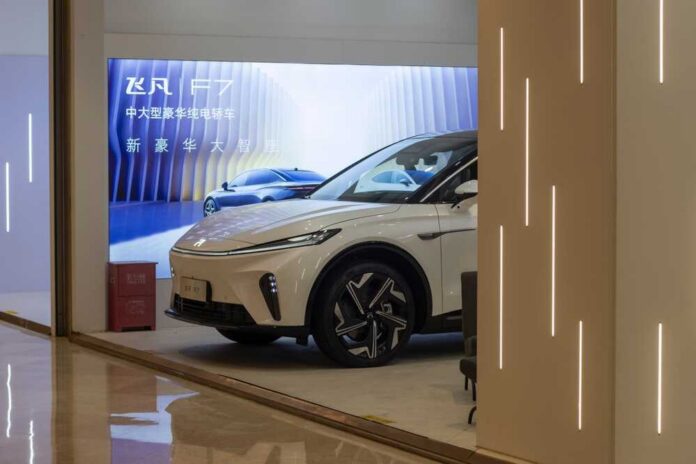
American consumers crave affordable Chinese electric vehicles showcased on YouTube, yet ironclad U.S. bans shield national security at the cost of choice and innovation.
Story Snapshot
- U.S. imposes 100% tariffs and phased bans on Chinese EVs, blocking software in 2027 models and hardware by 2030.
- YouTube fans express frustration over missing “world-class” tech at half the price due to protectionist policies.
- Senator Bernie Moreno pushes full ban on Chinese cars and parts, echoing President Trump’s data security priorities.
- Canada allows 49,000 Chinese cars yearly, tantalizing U.S. drivers with visible alternatives across the border.
U.S. Barriers Block Chinese EV Imports
U.S. policymakers enforce 100% tariffs on Chinese electric vehicles, raised from 25% in 2024 by the prior administration to counter massive state subsidies that artificially lower prices. Phased bans prohibit Chinese connected vehicle software starting with 2027 models and hardware by 2030. These measures target any technology with a “nexus to China,” even in vehicles assembled in the U.S. or Mexico. Customs agents confiscate and destroy unauthorized imports, ensuring zero market share for brands like BYD and NIO.
National Security Trumps Consumer Demand
Modern vehicles function as rolling smartphones equipped with cameras, microphones, and GPS systems. Chinese firms must cooperate with Beijing, raising fears of data spying and remote control vulnerabilities. President Trump emphasizes blocking these risks, aligning with Senator Moreno’s declaration: “There will not be a Chinese automobile here.” Experts like Lauren Fix highlight bans preventing data theft while protecting U.S. manufacturing jobs. This stance prioritizes American sovereignty over cheap imports fueled by unfair subsidies.
China’s Subsidized Dominance Fuels Frustration
China’s government propelled BYD to global export leadership through mandates like CAFC and NEV credits, forcing EV production or penalties on gas car sales. City license plate restrictions favor electric vehicles, combined with direct subsidies. YouTube creators showcase these advanced, half-priced EVs, sparking fan comments begging for U.S. access. Consumers feel tantalized, missing options that could lower costs amid high energy prices and inflation from past fiscal mismanagement.
Parallels emerge to 1980s Japanese import quotas, where protectionism preserved U.S. auto jobs but limited competition. Today, mutual distrust persists—China bans Tesla from military sites over similar camera concerns.
Impacts on Workers, Consumers, and Global Trade
U.S. workers benefit from shielded manufacturing, with supply chains reshoring to avoid Chinese components. Ford and Tesla remove prohibited parts to maintain market access. Consumers face higher prices without affordable rivals, though long-term innovation may spur domestic advances. Politically, tensions with China escalate, pressuring allies—Canada now permits 49,000 Chinese cars annually at 6.1% tariffs, allowing border visibility that teases American drivers without sales access.
Shared Concerns Over Government Priorities
Both conservatives frustrated by globalism and overspending, and liberals wary of corporate power, question if D.C. elites prioritize security over everyday Americans’ pocketbooks. Bans protect jobs and privacy, core conservative values of individual liberty and limited foreign influence, yet deny hard-working families cheaper vehicles. This reflects broader distrust in a federal government more focused on reelection than restoring the American Dream through fair competition and self-reliance.
Sources:
Kelley Blue Book on Canada trade deal