

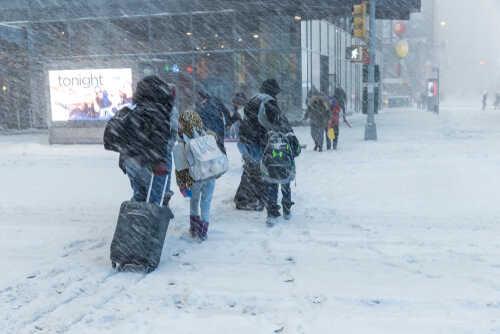
A historic winter storm stretching over 2,300 miles has placed 250 million Americans under weather advisories across 40 states, exposing critical vulnerabilities in our nation’s infrastructure despite years of promised improvements following previous disasters.
Story Snapshot
- Over 245 million Americans across 40 states impacted by massive winter storm system spanning from New Mexico to New England
- At least 18 deaths reported with hundreds of thousands still without power, revealing persistent grid vulnerabilities despite post-2021 winterization efforts
- Dual-hazard storm combines heavy snow in northern regions with crippling ice accumulations in the South, paralyzing transportation and infrastructure
- 21 states declared emergencies as the storm tests whether costly infrastructure improvements actually protected Americans from extreme weather
Massive Storm Exposes Infrastructure Weaknesses
The winter storm that began January 24, 2026, delivered a sobering reminder that despite billions spent on infrastructure improvements, American families remain vulnerable to severe weather. Over 190 million Americans found themselves under Winter Weather Alerts as the system unleashed heavy snow, dangerous ice, and life-threatening cold across a swath of territory unprecedented in recent memory. Twenty-one states declared emergencies, mobilizing resources to address widespread power failures and transportation chaos. This comes after government officials and utility companies assured citizens that lessons learned from Winter Storm Uri in 2021 and Winter Storm Elliott in 2022 would prevent such widespread disruption.
Power Grid Failures Leave Families in the Cold
Hundreds of thousands of Americans remain without electricity, raising serious questions about the effectiveness of grid winterization efforts implemented after previous storms exposed critical weaknesses. The current crisis particularly affects southern states and the Appalachian region, where ice accumulations between 0.25 and 0.5 inches have downed power lines and damaged infrastructure. Vulnerable populations dependent on electricity for heating and medical equipment face elevated risks as temperatures plummet. The situation recalls Winter Storm Elliott’s devastating impact on the PJM grid system, which lost approximately 57 gigawatts of generation capacity with 92 percent of forced outages occurring with little to no notice despite substantial reserve capacity.
Transportation Networks Paralyzed Nationwide
Major airports from Atlanta to New York experienced thousands of flight cancellations as the storm system wreaked havoc on transportation networks. Airlines including Delta and American issued travel advisories and waived rebooking fees, but these measures provided little comfort to stranded passengers. Airports particularly impacted included Hartsfield-Jackson Atlanta International, Nashville International, Raleigh-Durham, Philadelphia International, Reagan National, LaGuardia, Roanoke-Blacksburg, Kennedy International, and Newark Liberty. Matt Reagan, lead forecaster with the National Weather Service in Nashville, characterized the system as exceptionally large, fueled by cold northern air colliding with southwestern moisture. Road conditions deteriorated rapidly across Interstate 20 and Interstate 40 corridors, stranding motorists and disrupting supply chains critical to American commerce.
Historical Pattern Reveals Ongoing Vulnerabilities
This storm follows a troubling pattern established by Winter Storm Uri and Winter Storm Elliott, demonstrating that infrastructure improvements have reduced but not eliminated winter weather risks. Uri devastated the ERCOT region in Texas, causing widespread power failures that exposed fundamental weaknesses in cold-weather grid resilience. Elliott affected more than 40 states simultaneously, with the PJM region experiencing a catastrophic 29-degree temperature drop in just 12 hours. Risk management analysis identifies storm duration and infrastructure preparedness as critical factors determining severity, with longer freezing periods increasing the probability of pipe failures and outage-driven damage. The current storm’s extended timeline through Monday amplifies these concerns, particularly for communities experiencing consecutive days of subfreezing temperatures.
Regional Impacts Highlight Preparedness Gaps
The storm’s dual-hazard profile created distinct challenges across different regions, with northern areas facing heavy snowfall while southern states battled crippling ice accumulations. Central Texas, northern Louisiana, Arkansas, northern Mississippi, and northern Alabama experienced particularly severe ice impacts, with localized areas receiving 12 to 18 inches of snow from the Southern Plains through the lower Great Lakes, Mid-Atlantic, and Northeast. Parts of New England faced blinding snow squalls with peak intensity producing snow rates of two to three inches per hour. Property damage from frozen pipe fractures and downed tree limbs compounded infrastructure challenges, while long-duration power outages threatened extensive tree damage in areas with excessive ice accumulation. Extreme Cold Warnings extended across the Upper Midwest, Plains, and Northeast, affecting major population centers including Minneapolis, Detroit, Boston, and New York City.
Lessons From Previous Storms Apparently Ignored
The recurring nature of these infrastructure failures raises fundamental questions about government effectiveness and accountability. Following Winter Storm Uri, officials promised comprehensive grid winterization and enhanced cold-weather reliability measures. After Elliott demonstrated that even substantial reserve capacity could not prevent cascading generation failures during rapid temperature drops, additional improvements were supposedly implemented. Yet American families continue experiencing widespread power outages and infrastructure failures during severe weather events. This pattern suggests that despite significant expenditures and official assurances, critical vulnerabilities remain unaddressed. Energy infrastructure analysis indicates that weather-related generation failures remain difficult to predict and prevent despite winterization efforts, with renewable generation particularly vulnerable to temperature and precipitation impacts during extreme weather conditions.
Winter Storm Puts 250 Million Americans Under Advisories, Another One On The Way – Are You Prepared? | The Gateway Pundit | by Promoted Post
— GuitarMan (@palumb61466) January 26, 2026
The storm’s impact on critical infrastructure including hospitals, emergency services, and water treatment facilities underscores the cascading effects of grid failures. Insurance companies face significant claims processing requirements as property damage assessments begin, while the full economic toll remains unquantified pending comprehensive damage surveys. This event will likely inform future infrastructure investment decisions and risk assessment models, though whether government officials and utility companies will finally implement truly effective protections remains questionable given their track record of broken promises following previous disasters.
Sources:
Guy Carpenter – Event Report: Severe Cold & Winter Weather, Central & Eastern US
FOX Weather – Timeline: Looking Ahead at Massive Winter Storm Making Way Across US
Yes Energy – Winter Storm Elliott’s Impact on the North American Energy Market
WVTF – Tens of Millions of Americans Brace for Winter Weather Blast
CF Public – Hundreds of Thousands Without Power in the U.S. After a Powerful Winter Storm
RMI – Wasted Wind and Tenable Transmission During Winter Storm Elliott