

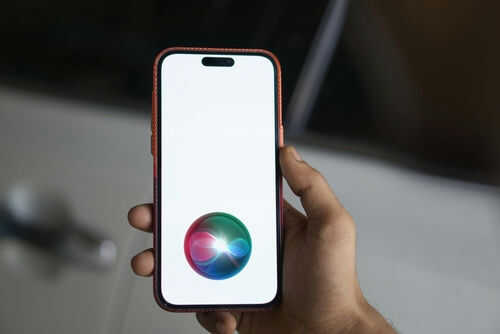
Apple’s “new” Siri leans on private clouds and tight ecosystem control, raising fresh privacy and speech concerns even as it promises smarter help.
Story Snapshot
- Apple unveils a rebuilt Siri with deeper conversation and on-screen awareness [5].
- Features roll out as a beta later this year, not a full launch today [1][5].
- Apple touts on-device processing and Private Cloud Compute for privacy [5].
- No independent tests yet prove gains over rival assistants [1][5].
What Apple Announced: A Rebuilt Siri With AI Upgrades
Apple announced a major Siri overhaul at its developer conference, promising a more capable assistant that can hold back-and-forth chats and tap what is on your screen. Apple called it an “entirely new” Siri with broader knowledge, new voices, and better dictation. The company said the assistant can use personal context like calendar, contacts, emails, and photos to get tasks done across apps. Apple framed this as a step from a basic helper to a real companion for daily work [5].
Apple said the upgrade adds “on-screen awareness,” which helps Siri understand what you are viewing and act on it without heavy copy and paste. This design aims to make routine tasks faster, like drafting replies or pulling details from a message into your calendar. Reporters who saw the event confirmed Apple’s pitch and described a broad software refresh built around the new assistant. Apple positioned the Siri revamp as the centerpiece of its next wave of devices and software [1][2][3].
Rollout Reality: A Beta First, Proof Later
Apple said developers can start working with the features now, while the public will get a beta later this year. That means most users will not see the full set on day one. TechCrunch also reported the revamp arrives “later this year” as a beta, which signals Apple is still ironing out bugs and scale issues. A beta can be useful, but it also means we do not yet have independent, head-to-head testing against other assistants in normal use [1][5].
Conservatives should treat the demos as demos, not proof. Apple’s launch playbook often shows polished features first and invites testing later. The company made bold claims about better conversation, smarter help across apps, and stronger privacy. Those can be real gains. But until third parties test accuracy, speed, and reliability across tasks, we will not know how it stacks up to market leaders. Apple set expectations high; now it must deliver under real pressure [1][5].
Privacy Pitch: On-Device First, Then Apple’s Private Cloud
Apple said Siri uses new foundation models that run on the device when possible and shift to Apple servers through something called Private Cloud Compute when needed. Apple described that cloud path as “uniquely designed” to protect user privacy. If Apple holds to that claim, this could reduce data exposure compared to big tech rivals that rely more on public clouds. Still, no independent privacy audit has been presented to confirm the limits and safeguards today [5].
For readers who value the Bill of Rights and limited government, the privacy stakes are clear. On-device processing keeps more of your life off remote servers. That is good. But when the assistant reaches into messages, emails, and photos, it touches very personal data. Apple says the design protects users, yet we need outside checks before we take that on faith. Trust, but verify. Ask for clear rules on data retention, access controls, and deletion, and demand outside scrutiny [5].
Ecosystem Strengths And Tradeoffs For Users
Apple built the assistant to work tightly with iPhone, iPad, and Mac apps. That can make daily tasks simple, since the assistant “knows” your device and data. It also deepens lock-in. If you use non-Apple services, you may see less benefit. Apple’s control can be a shield against ad tracking and data mining, but it can also limit choice. The company must prove it respects user freedom while it builds this more powerful layer on top of your digital life [1][5].
Apple used WWDC26 to showcase deeper AI integration across its ecosystem, enhanced Siri capabilities, and new tools to improve child safety. Analysts say Apple's ability to connect AI experiences across devices could become one of its biggest competitive advantages.… pic.twitter.com/C4D9vzBq8u
— TechNewsWorld (@technewsworld) June 9, 2026
Apple promised more expressive voices and big gains in dictation accuracy. These upgrades could help seniors, workers on the go, and families who need hands-free help. But the key question remains simple: does it work better than what you have now, and better than rivals? Until we see broad, fair testing after the beta lands, the answer is “maybe.” Apples’s words are strong; the evidence is still coming together in the months ahead [1][5].
What To Watch Next: Tests, Audits, And Real-World Use
Watch for independent labs and journalists to run side-by-side tests against leading assistants. Look for clear results on multi-step tasks, context accuracy, and error rates. Press Apple for an outside audit of the Private Cloud Compute system to confirm that sensitive data stays protected. Hold the company to its claims on privacy and performance. If Apple delivers, users could gain helpful tools without giving up control. If not, demand fixes before you trust it with more of your life [1][5].
Sources:
[1] YouTube – Apple gives Siri an AI makeover in bid to catch rivals
[2] Web – Apple’s long-awaited AI Siri overhaul is finally here
[3] Web – Apple debuts software updates amid Siri overhaul – Axios
[5] Web – How to use Apple’s Siri AI Overhaul | Problems & solutions | 2026