

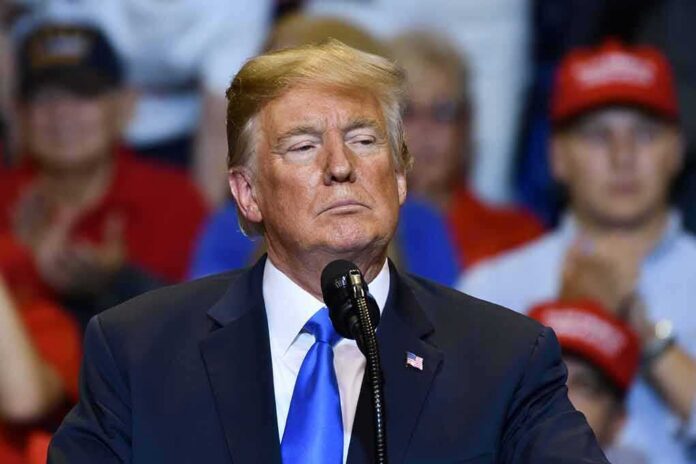
Pressed on a runway before an Alaska rally, President Trump denied a family tie to Kimberly Guilfoyle and said U.S. intelligence support to Ukraine continues — drawing sharp questions after a rocky 2025 pause.
Story Highlights
- Trump said Guilfoyle “wasn’t a member of my family” and addressed her resignation.
- Trump said the United States is helping Ukraine and still sharing intelligence.
- Earlier reports documented a 2025 pause in intelligence sharing later eased or lifted.
- Coverage shows confusion from mixed public statements and limited details on policy.
Trump Denies Guilfoyle Was Family Amid Resignation Fallout
President Trump told reporters that Kimberly Guilfoyle “wasn’t a member of my family,” drawing a clear line after the U.S. ambassador to Greece resigned under fire. Reports have described Guilfoyle as Donald Trump Jr.’s former fiancée and part of the family’s inner circle, but Trump’s on-record remark rejects that label. The White House said she was asked to resign. Guilfoyle vowed to challenge the allegations tied to her removal, according to contemporaneous reports.
Trump’s phrasing centers on status, not law. Engagements can blur public labels, which fuels media narratives. Trump’s comment set a boundary as his team moves to steady diplomatic operations. Reports focused on the sharp end to Guilfoyle’s tenure and the contrast with her once-close social role. The definitional dispute over “family” will linger, but the concrete action is done: the ambassador is out, and the administration is signaling standards for service and conduct going forward.
Intelligence Support to Ukraine: Trump Says It Continues
Asked if the United States stopped sharing intelligence with Ukraine, Trump answered, “No, we haven’t,” adding, “We are helping them, and we are sharing intel.” Independent outlets reproduced the exchange and framed it as a present-tense assurance of continued help. This statement came as the administration pushed for a deal to end strikes on energy sites and reduce risk to American interests and global markets. Trump cast Washington as engaged but cautious in a dangerous war.
Coverage this year reported that U.S.-Ukraine intelligence cooperation rebounded to “previous highs,” while also noting the White House did not share operational details. That supports the idea of renewed sharing, even if categories and limits remain classified. The practical takeaway is simple: cooperation today appears stronger than during past turbulence. Still, exact lines on targeting or sensitive feeds are not public, so outside observers must rely on named quotes and careful reporting.
The 2025 Pause: What Happened and Why It Matters Now
Public records from March 2025 show there was a pause in intelligence sharing. Reuters reported President Trump said the United States had “almost” ended that halt, after Central Intelligence Agency Director John Ratcliffe said sharing had ceased. Other reports suggested some information may have continued, while other categories were held back. That history undercuts any claim that sharing never paused at all, but it does not clash with statements about later restoration.
These mixed signals explain why some press questions turned sharp. One outlet reported the White House press secretary did not directly answer a question on sharing and said she would follow up later. Anonymous claims also alleged threats to cut off intelligence if Ukraine kept striking energy facilities. Such accounts are hard to weigh without documents. They do, however, add fog to a topic that is often classified, time-bound, and conditional by design.
What Conservative Readers Should Watch Next
Congress and the public deserve clarity on two points: what categories of intelligence were paused in 2025, and what is active now. Reliable reporting shows today’s cooperation is stronger than during the pause, but official, on-the-record detail remains thin. Conservative priorities are clear: protect American troops, avoid mission creep, keep taxpayer oversight, and insist that any help serves U.S. interests first. Those goals require firm lanes and honest timelines, not leaks and guesswork.
On personnel, the Guilfoyle exit underlines an important standard. Titles are a trust, not a perk. When questions arise, quick action protects U.S. credibility abroad. On policy, careful intelligence sharing can pressure bad actors while keeping America out of another open-ended war. The administration’s job now is to match strong talk with clear rules that defend the Constitution, respect the purse, and put American security and families first — without feeding globalist drift or endless conflict.
Sources:
youtube.com, reuters.com, en.interfax.com.ua, independent.co.uk, news-pravda.com, union-bulletin.com, politico.com, irishexaminer.com