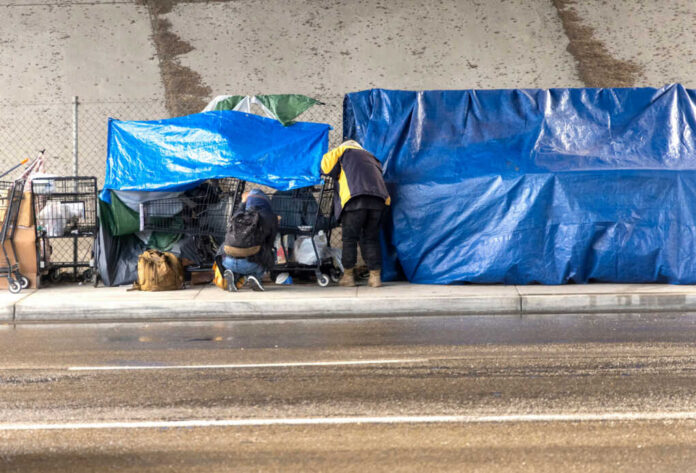
California’s homelessness numbers finally dipped, but the public trust deficit keeps growing faster than the tents disappear.
Quick Take
- California reported its first drop in homelessness in 15 years, yet still holds the nation’s largest unhoused population.
- Roughly three-quarters of California’s homeless population remains unsheltered, making the crisis impossible to ignore and hard to manage.
- Billions in state spending and aggressive encampment actions show measurable movement, but not a convincing “return on trust.”
- Housing costs, addiction, and untreated mental illness keep reloading the problem even when outreach and shelter expand.
The West Coast Paradox: Better Metrics, Worse Mood
California’s headline sounds like a turning point: a first statewide decline in homelessness in 15 years. The fine print lands harder. The state still carries an enormous share of America’s unhoused population, and most people living without housing remain outside, not in shelters. That mismatch—between statistical progress and visible street disorder—explains why voters keep hearing “billions spent” and replying, “Then why does it look worse?”
Why “Unsheltered” Changes Everything You See and Pay For
When a large majority of the homeless population lives unsheltered, policy stops being theoretical. Sidewalks, parks, underpasses, and business corridors become the stage where government competence gets judged. Unsheltered homelessness also drives costs in ways that do not feel like “services”: emergency room use, police calls, sanitation, lawsuits, and constant cleanups. Sheltered systems cost money too, but they look like an organized response. Encampments look like abandonment.
California’s unsheltered share also creates a brutal measurement problem. Counting people outside varies by method, weather, and local capacity, so year-to-year changes can spark suspicion even when the trend is real. That suspicion feeds the narrative that agencies “cook the books,” while agencies counter that they face federal reporting rules and local variations. Both can be partly true, and the average taxpayer just sees the same freeway ramp again.
Billions Spent: What Government Can Prove, and What It Can’t
State leaders point to large funding streams, behavioral health investments, and more aggressive encampment strategies. Operational agencies describe thousands of encampments cleared and tens of thousands of people connected to help through targeted programs. Those are tangible actions, and conservative common sense should credit measurable outputs: beds created, people placed, treatment slots funded, encampments removed from public rights-of-way. The problem is that outputs do not automatically become outcomes.
Outcomes are what the public actually buys with taxes: fewer people living outside long-term, safer public spaces, fewer overdoses, fewer mentally ill people cycling through jail and ERs, and neighborhoods that stay clean after the cameras leave. Many West Coast programs struggle at the “stickiness” step—keeping someone housed and stable. If a person returns to the street after placement, government can claim a success on paper while residents experience it as churn.
The Three Drivers That Keep Reloading the Crisis
Housing costs keep acting like a conveyor belt into homelessness. When rents and home prices rise faster than wages, one layoff, divorce, illness, or eviction can start a downward slide. Addiction then turns a financial crisis into a behavioral spiral, especially with fentanyl and meth ravaging physical and mental stability. Untreated mental illness finishes the trap: a person cannot comply with paperwork, appointments, or rules long enough to stabilize without sustained help.
The West Coast wrestles with another hard reality: good weather lowers the immediate survival pressure to enter shelter, while high shelter demand collides with neighborhood opposition and bureaucratic delays. That combination pushes leaders toward faster, more visible actions like encampment sweeps. Sweeps can restore order in specific areas, but they can also produce displacement, not resolution, if housing and treatment capacity do not keep pace.
Accountability vs. Compassion: The False Choice Voters Reject
Voters over 40 remember an older civic bargain: compassion paired with boundaries. The current debate too often demands you choose between being “kind” or being “tough.” That framing collapses in real life. Residents want sidewalks back and want suffering reduced; those goals align. A conservative lens favors clear standards: measurable results, transparent spending, and consequences for programs that cannot prove effectiveness. Compassion without accountability becomes a permanent tax; accountability without compassion becomes a revolving jail door.
The strongest case for reform is not partisan sniping about “Demo-taurs” or any other label. The strongest case is the gap between promises and lived experience. When officials announce billions allocated, the public expects a visible, sustained change. When the change arrives as a slightly better chart but the same street-level chaos, trust collapses. Once trust collapses, even smart programs lose political oxygen, and the cycle tightens.
What a Real Turnaround Would Look Like in 12 Months
A credible turnaround would show up in three places at once: a sustained reduction in unsheltered counts, fewer repeat encampments in the same hotspots, and a public dashboard that ties dollars to outcomes people can understand. That means separating “inputs” (money spent) from “deliverables” (beds, clinicians, housing units) and from “end results” (retention rates, overdose reductions, fewer crisis calls). If officials cannot explain that chain simply, they do not control it.
The West Coast can claim progress and still be on trial. California’s first drop in 15 years matters, but it does not close the case. The case closes when regular people believe the system works: when public spaces stay usable, when relapse does not equal a return to tent life, and when taxpayers can see that compassion came with rules, results, and a clear end point.
Sources:
California Records First Drop in Homelessness in 15 Years, But Crisis Persists
An Update on Homelessness in California
California sees drop in unsheltered homelessness, bucking national trend and federal headwinds
Which states have the highest and lowest rates of homelessness?
New homelessness data: How does California compare to the rest of the country?