

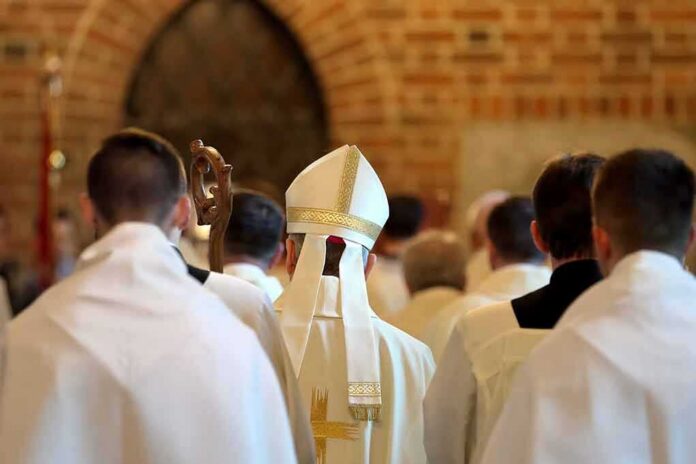
A Brazilian bishop suggested the devil is “imaginary” while urging churches to swap St. Michael devotion for activism against social ills.
Story Highlights
- A Brazilian bishop questioned consecration to St. Michael and called the devil “rather imaginary”.
- He urged a “greater exorcism” focused on homophobia, femicide, racism, and crimes against Indigenous people.
- Catholic commentators stressed long-standing teaching that the devil is real and personal, not a symbol.
- The dust-up reflects a wider struggle over faith, culture, and what the Church should emphasize today.
Brazilian Bishop Challenges St. Michael Devotion and Devil’s Reality
On August 8, Bishop Vicente de Paula Ferreira of Livramento de Nossa Senhora questioned the practice of consecrating dioceses to St. Michael the Archangel. Reports quote him asking if such consecrations have sound theology, saying consecration belongs to God alone. He also suggested the devil is “rather imaginary,” and urged a shift toward fighting social evils in public life, placing cultural activism where spiritual warfare normally stands in Catholic practice.
A separate analysis clarified the bishop did not flatly declare “the devil does not exist,” but pressed doubts about the focus on St. Michael and urged attention to present social harms. That piece framed his point as a push to recalibrate devotion, not a formal doctrinal denial. Still, the takeaway many readers heard was a downgrade of the devil’s reality and a push to redefine “exorcism” as a metaphor for social campaigns rather than an act against a real spiritual enemy.
Call for a “Greater Exorcism” Against Social Harms
The bishop proposed what he called a “greater exorcism” aimed at homophobia, femicide, racism, and crimes against Indigenous people. He tied this to a broader push in Brazil, where several dioceses have recently consecrated themselves to St. Michael. His remarks landed as a direct counter to that momentum, signaling a sharp turn from spiritual combat language to political causes. That contrast sparked strong reactions among Catholics who honor St. Michael’s role in defending the faithful.
For many believers, redefining exorcism risks hollowing out faith. They see sin as both personal and social, not either-or. They argue prayer and penance change hearts, and changed hearts fix broken laws and cultures. They also note that St. Michael devotion does not block care for victims or work for justice. It sits beside it. The concern is that swapping angels for slogans surrenders spiritual grounding for the latest activist list.
Long-Standing Teaching on the Devil and St. Michael
Catholic sources state the Church has always taught that the devil is real and personal, not a myth or symbol of evil. That baseline frames St. Michael’s prayer as part of real spiritual warfare, not poetry. Devotional publishers like EWTN present the prayer asking God to cast Satan and evil spirits into hell, reflecting this belief in a concrete foe, not an idea. These references anchor why many Catholics view the bishop’s framing as a serious theological misstep.
When the Devil Becomes “Imaginary”: Bishop Ferreira, St Michael and the Exorcism of the Supernatural https://t.co/YNtXlybSU4
— Nuntiatoria (@nuntiatoria) August 14, 2026
Some writers add that Catholics can use metaphor at times while keeping the core claim that Satan exists. But they warn that calling the devil “imaginary” confuses the flock and blurs the line between moral reform and spiritual combat. For conservatives in the pews, that confusion echoes a wider pattern. They see elites replacing timeless truths with vague activism that never seems to end real harm, while eroding faith, family, and moral clarity in the process.
Why This Matters Beyond Church Walls
This clash reflects a bigger divide about how we face evil in public life. One side centers repentance, prayer, and spiritual authority. The other side centers policy language and lists of social wrongs. Recent scholarship shows debates over exorcism often track broader fights between faith and secular frames in the culture. That is why this story resonates far beyond Brazil. It speaks to how institutions explain suffering and guide people toward change today.
For American readers, the stakes feel familiar. Families want churches to speak plain truth about sin and the devil and to defend the innocent. They also want leaders who fight real crime and protect the vulnerable without mocking faith. When clergy frame the devil as “imaginary,” people hear a shrug at spiritual danger. At a time of chaos, they want courage, not clever word games. They want St. Michael on the field, not on the shelf.
Bottom Line for Conservatives
Bishop Ferreira’s remarks push a swap: less St. Michael, more activism. But Catholic teaching holds that evil is not only structural; it is personal and deadly. The Church’s spiritual tools matter because souls matter. Efforts to trade them for rhetoric about systems will not heal hearts or homes. Prayer, conversion, and moral clarity are not distractions. They are the foundation. That is why this debate is not small. It goes to the core of how we fight evil itself.
Sources:
lifesitenews.com, nationalgallery.org.uk