
A Haitian immigrant in Ohio collapsed in tears after ICE fitted him with an ankle monitor, putting a sharp human face on a hard federal crackdown.
Quick Take
- Haitian immigrant Monsanto Maler broke down outside an Immigration and Customs Enforcement office in Blue Ash, Ohio, after receiving an ankle monitor.
- The check-ins came after the Supreme Court allowed President Trump’s administration to end Temporary Protected Status for roughly 350,000 Haitians.
- Reports say some Haitian recipients were told to accept monitoring or face detention or deportation.
- Federal officials say ankle monitors can be used as part of immigration supervision for people awaiting proceedings.
What Happened in Blue Ash
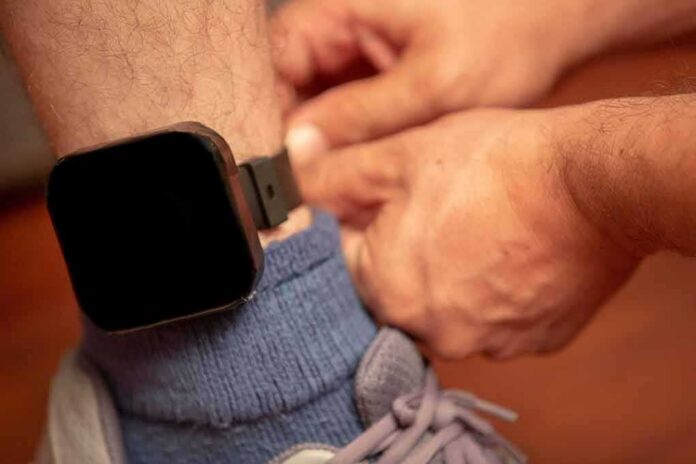
Video and photo coverage show Monsanto Maler collapsing to the ground in tears after leaving an Immigration and Customs Enforcement office in Blue Ash with an ankle monitor on his left ankle. The moment was captured by a photojournalist and quickly spread across social media and news outlets, turning one man’s grief into a national symbol of the fight over immigration enforcement. The scene has hit many viewers because it looks less like routine paperwork and more like public humiliation.
Reporting says Maler had reported for a scheduled check-in after his Temporary Protected Status ended, along with many other Haitian residents in Ohio. News outlets say the Department of Homeland Security has mailed out thousands of call-in letters, with many former Haitian TPS holders told to appear in person at federal offices. Some who arrived were fitted with ankle monitors before leaving, and several reports tie that practice to the end of the temporary legal shield.
Why the Federal Government Is Doing This
The immediate legal trigger was the Supreme Court’s decision allowing the Trump administration to end Temporary Protected Status for Haitians while litigation continued. Once that protection ended, Homeland Security moved former TPS holders into a more controlled enforcement track. Supporters of the policy will say that is what immigration law looks like when legal status expires: check-ins, supervision, and court dates. Critics see a harsh use of federal power that feels far more punitive than necessary.
Homeland Security has also pointed to its own general guidance on supervision. The Haitian Times reported that a department video says noncitizens awaiting immigration proceedings may be required to check in regularly and may be given ankle monitors or similar electronic devices. That gives the agency a plain administrative defense. It does not erase the emotional impact, but it does show that ICE is leaning on a standard enforcement tool rather than inventing a brand-new one for this case.
How Haitians in Ohio Say the Policy Feels
Advocates and local reporters describe the monitors as degrading and deeply unsettling. The Haitian Times quoted community voices calling them a “new humiliation,” and Scripps News reported that some recipients were told they could be deported or wear a monitor instead. One report said a monitored person faced a seventy-five-mile travel limit and needed permission to go farther. For families trying to work, travel, and keep life stable, that kind of restriction can change everything overnight.
That is why the Blue Ash video has struck such a nerve. The image of a man crying on the ground does more than show sadness. It captures the fear many immigrants feel when federal policy reaches into daily life with visible restraints. For conservative readers who favor order and lawful enforcement, the larger question is whether Washington is using the least intrusive tool possible, or whether it is adding stigma where simple supervision would do the job.
Haitian immigrant Monsanto Maler broke down in tears after leaving an Ohio ICE office with an ankle monitor. The moment comes after protections for roughly 350,000 Haitians ended.
Read more #OnTheGriohttps://t.co/I5tVLMIeJ0
— theGrio.com (@theGrio) August 10, 2026
The public record still leaves some important questions open. Reports vary on how many Haitians were called in, how many were fitted with monitors, and what exact criteria ICE used in each case. Some accounts describe a forced choice between detention and monitoring, while others focus on routine check-ins followed by release. Even so, the core facts are clear: after TPS ended, ICE began summoning Haitian residents in Ohio, and at least some left with ankle monitors on their legs.
Sources:
twitchy.com, abcnews.com, washingtonpost.com, youtube.com, instagram.com, inquirer.com, ms.now