

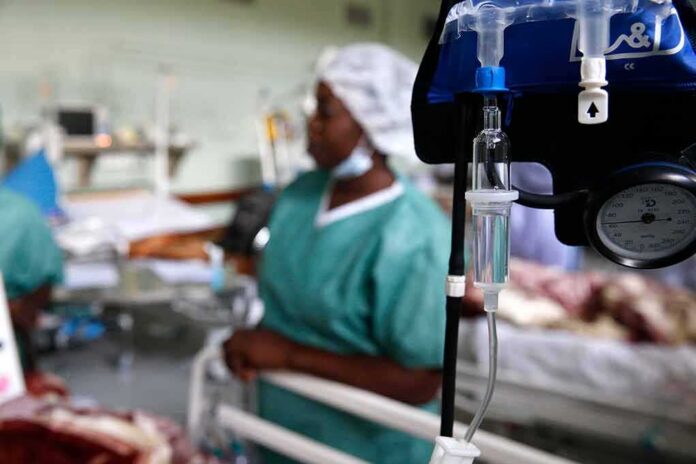
Ebola teams in Bunia are fighting more than a virus. They are racing cars, radios, and time to stop it.
Quick Take
- Officials in the Democratic Republic of the Congo and the World Health Organization say they are intensifying surveillance, testing, and patient care.
- Response teams have been sent to Bunia, Mongbwalu, and Rwampara, with tracing and border screening also under way.
- Field reporting from Bunia shows the response is strained by too few vehicles, patchy reporting, and patients who refuse testing.
- Public trust and community engagement remain central because Ebola control depends on people coming forward early.
Response Teams Push to Close the Gaps
Health authorities in the Democratic Republic of the Congo declared the country’s 17th Ebola outbreak in Ituri province on May 15, and the World Health Organization said the response has been expanded since then. The joint government and World Health Organization statement said officials are intensifying surveillance, laboratory testing, and patient care to break transmission as fast as possible. That effort now includes rapid response teams, contact tracing, and stronger screening at border points.
The outbreak remains centered in Ituri, where Bunia has emerged as a key hub for case-finding and treatment. Africa Centers for Disease Control and Prevention teams have also been deployed to Bunia to reinforce the response, including risk communication and community engagement. The scale of the effort shows how Ebola control now depends on more than medicine. It needs trained staff, steady transport, fast testing, and clear messages that people trust.
Field Work Is Slower Than the Plans On Paper
Reuters reported from Bunia that surveillance teams often have only a handful of cars available, which slows daily trips to track infections and follow contacts. The same reporting said some patients refuse tests and symptoms can be hard to spot, especially when workers are moving quickly through crowded neighborhoods. Those problems matter because a delay in finding one case can open the door to many more. Ebola spreads fastest when the response arrives late.
That problem is not new. The World Health Organization later noted that the outbreak had a critical detection gap early on, meaning transmission was already underway before surveillance systems fully activated. In plain terms, the outbreak had a head start. Once that happens, teams must chase the virus across homes, clinics, and transport routes while also trying to win over residents who may fear isolation or mistrust public health workers.
Why Community Trust Matters as Much as Testing
Response partners have repeatedly framed the outbreak as a logistics battle as much as a medical one. The International Organization for Migration highlighted surveillance along major corridors used by people, goods, and displaced families, showing how movement patterns shape the spread of disease. World Bank support has also focused on health systems, surveillance, and cross-border preparedness, which reflects the same basic lesson: Ebola cannot be contained by clinic care alone if contacts are missed in the field.
Our latest Behavioral Outbreak Sentinel Surveillance (BOSS) data come from two cities that are 550 kilometers apart: Bunia and Goma in DRC. Bunia is the capital city of Ituri Province, the epicenter of the current #Ebola outbreak. Our findings show that in this one Ebola… pic.twitter.com/YzpwTRFkCq
— Ifeanyi Nsofor (@ekemma) August 7, 2026
The public side of the response is just as important. The World Health Organization said risk communication campaigns and community messaging are active, and Africa Centers for Disease Control and Prevention said its teams worked with local health zones to strengthen community relays. That matters because families must report symptoms quickly, accept testing, and cooperate with tracing. When fear or confusion takes hold, the virus gains time. When communities trust the system, containment gets much easier.
Sources:
youtube.com, reuters.com, who.int, x.com, nature.com, africacdc.org