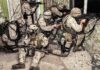


U.S. commanders have briefed President Trump on a daring ground raid to seize Iran’s near‑bomb‑grade uranium before the regime can ever turn it into nuclear weapons.
Story Snapshot
- Military planners have outlined a mission to grab roughly 1,000 pounds of highly enriched uranium inside Iran.
- The operation would require thousands of American troops, special forces, engineers, and nuclear experts working deep behind enemy lines.
- Experts say the mission could take weeks and would rank among the most complex and risky in U.S. military history.
- Supporters argue seizing the uranium could stop Iran’s bomb program more cleanly than endless airstrikes or weak diplomacy.
Trump Briefed on Plan to Physically Seize Iran’s Uranium
According to detailed reporting, U.S. military leaders have presented President Trump with a concrete plan to send American forces into Iran to capture almost 1,000 pounds of highly enriched uranium. This material, stored in pressurized cylinders as uranium hexafluoride gas, is close to bomb grade and could be used for multiple nuclear warheads if the regime crosses the line. For years, Iran’s advancing nuclear program has worried U.S. officials who see it as a direct threat to American lives, allies, and global stability.
The plan goes far beyond airstrikes or cyber attacks and focuses on taking the dangerous material out of Iran’s hands entirely. Reports say the Pentagon has mapped out how to insert ground forces, reach deep underground tunnels, find the uranium containers, and remove or destroy them. For many conservatives, this kind of direct action matches a long‑held view: real security comes from removing threats, not trusting promises from hostile regimes or weak international watchdogs that have failed again and again to rein in Tehran.
How the High-Risk Mission Would Work on the Ground
Military sources describe a mission that starts with heavy airstrikes to open safe corridors into Iran and damage defenses around key nuclear sites such as Isfahan and Fordo. After that, mixed teams of Navy SEALs, Army Rangers, and other special operators would be air‑dropped near the tunnels where uranium is believed to be stored hundreds of feet underground. These elite units would move in at night, establish defensive perimeters around the sites, and clear booby traps and mines laid by Iran to block any approach.
Once the perimeter is secure, the operation shifts from stealth to raw muscle. Bulldozers, rubble‑clearing machines, and other excavation gear would be flown in on transport aircraft using temporary runways built inside Iran. Engineers and nuclear specialists would then work under fire to break through concrete and rock to reach the buried cylinders. According to regulatory estimates, the highly enriched uranium might be stored in about 16 tall steel cylinders, each roughly the size of a large scuba tank and weighing around 25 kilograms. Those containers could be loaded on trucks or aircraft for removal, or destroyed in place if evacuation becomes impossible.
Why Commanders Say It Would Take an Army, Not Just Commandos
Defense officials stress that this is not a quick raid like past hostage rescues or terrorist strikes. To protect the small teams handling the uranium, the U.S. would need thousands of ground troops to ring each target with a strong defensive “blocking force,” hold roads, and secure convoy routes to airstrips. Reports mention units such as the Army’s 82nd Airborne Division, which specializes in joint forcible entry operations, along with the 21st Ordnance Company and other nuclear materials experts. In simple terms, this starts to look like a limited invasion, not a one‑night hit‑and‑run.
Experts say the mission could last days or even weeks because the uranium may be split among several fortified locations across Iran. Each site would need its own perimeter, excavation work, and airlift plan, all while Iranian forces try to attack from every direction. U.S. planners have compared it to “one of the riskiest missions in history” because of the mix of ground combat, nuclear safety, long supply lines, and the chance that one misstep could spill radioactive material or drag America into a larger war. These warnings underline how seriously the Trump team is weighing every option before putting troops in harm’s way.
Stopping Iran’s Bomb Without Endless Wars or Weak Deals
Supporters of the uranium‑seizure idea argue that, if it works, it could remove Iran’s most dangerous material and make it much harder for the regime to ever build a nuclear weapon. They point out that past deals and “snapback” inspections let Iran keep spinning centrifuges while cash flowed and its terror network spread across the region. From this view, taking the uranium off the battlefield respects America’s duty to protect its people and allies, while avoiding years of rolling airstrikes that risk civilian casualties and limited results.
At the same time, analysts warn that any ground raid carries real dangers of escalation, possible Iranian retaliation, and heavy losses if the operation runs into trouble. Iran has reportedly sealed tunnels and laid mines around the caches because its leaders fear exactly this kind of move. President Trump has already paused at least one version of the mission after top commanders briefed him on these risks and on how easily such an effort could slide into a wider war. For concerned Americans watching a hostile regime chase the bomb, the debate over this plan shows how hard it is to balance toughness, caution, and the need to keep our nation safe.
Sources:
feedpress.me, washingtonpost.com, nypost.com, youtube.com, bloomberg.com, timesofisrael.com, bbc.com, iranintl.com, kcra.com, csis.org, cnn.com, timesofindia.indiatimes.com