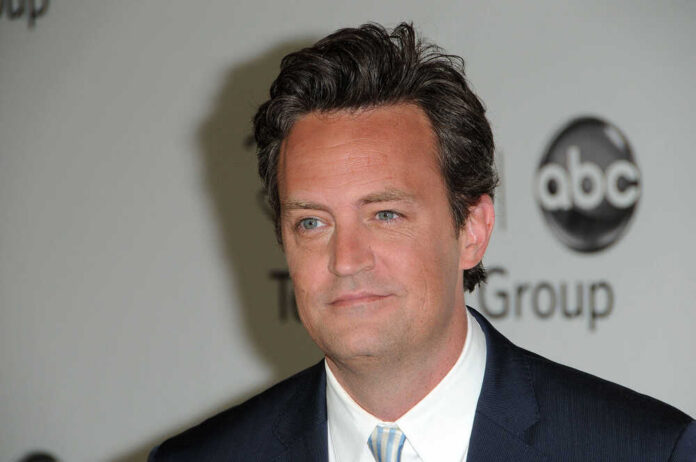
A Hollywood assistant just received more than three years in federal prison for secretly injecting Matthew Perry with powerful street ketamine, raising hard questions about drug accountability, medical corruption, and what it really takes to protect vulnerable people in a culture awash in illegal drugs.
Story Snapshot
- Matthew Perry’s live-in assistant, Kenneth Iwamasa, pleaded guilty to a federal charge tying his conduct directly to Perry’s overdose death.
- Prosecutors say he injected Perry with ketamine repeatedly, including the fatal dose, despite having no medical training.
- The case highlights how illegal drug networks and unethical doctors exploited Perry’s addictions for profit and access.
- Family-impact statements and media framing risk turning complex medical and legal issues into a simple, emotional narrative.
How Matthew Perry’s Assistant Ended Up in Federal Prison
Federal prosecutors in Los Angeles secured a 41‑month prison sentence against Matthew Perry’s former live‑in assistant, sixty‑one‑year‑old Kenneth Iwamasa, after he admitted his role in a ketamine distribution scheme that ended in the actor’s death.[1][2][3] Iwamasa pleaded guilty in August 2024 to one count of conspiracy to distribute ketamine resulting in death, a serious federal offense that effectively treats his participation as homicide‑adjacent under drug laws.[1][2][3] Judge Sherilyn Peace Garnett also imposed a ten‑thousand‑dollar fine and supervised release.[1][3]
According to the plea and prosecution filings, Iwamasa was not some distant supplier; he was at Perry’s side in his home, giving hands‑on injections of ketamine in the weeks leading up to the fatal overdose.[1][2][3] Prosecutors told the court that he injected Perry repeatedly, sometimes up to six to eight times per day, despite prior frightening episodes where Perry lost consciousness or froze up after large doses.[1][2][3] Instead of stopping or seeking professional help, he kept going, treating illicit injections like a routine household chore.[1][2]
Inside the Illegal Ketamine Pipeline Surrounding a Hollywood Star
The case exposes a darker ecosystem around vulnerable celebrities, where unethical doctors and street‑level dealers blend into a shadow healthcare system that looks more like organized drug trafficking than medicine.[1][2][3] Prosecutors say Iwamasa initially worked with two doctors to obtain ketamine for Perry, then shifted to two dealers who supplied dozens of off‑the‑books vials, including those used on the day of his death.[1][2][3] One doctor even allegedly taught the assistant how to inject the drug, effectively deputizing an untrained worker as a private anesthetist.[2][3]
On October 28, 2023, the day Perry died, prosecutors say Iwamasa administered two doses of ketamine before the actor asked him to prepare the jacuzzi and to “shoot me up a big one,” language that underscores how normalized this lethal routine had become.[1] After giving that third, larger dose, the assistant left to run errands instead of remaining on site to monitor Perry’s condition.[1][2] When he returned, he found the “Friends” star face‑down and dead in the hot tub, a scene the Los Angeles County Medical Examiner later tied to acute effects of ketamine with drowning and heart disease as contributing factors.[1][2]
Power Imbalance, Cooperation, and the Question of Causation
Defense accounts presented Iwamasa as a lay assistant, not a doctor, operating under tremendous pressure from a powerful employer who demanded injections and controlled the relationship. Reporting indicates he had no formal medical training, and his lawyer has said he will “regret forever” agreeing to administer the drug. That picture suggests a familiar dynamic: an employee who lacked clinical authority but stayed silent, participating in wrongdoing instead of walking away, because of fear, loyalty, or dependency.
The final sentencing in connection with the ketamine overdose death of "Friends" star Matthew Perry took place Wednesday when the actor's former live-in personal assistant was sentenced in Los Angeles to prison as part of a plea agreement. https://t.co/T7u9KMFe99
— NBC 7 San Diego (@nbcsandiego) May 28, 2026
Iwamasa’s decision to cooperate with the federal government further complicates how the public interprets the record.[2][3] He was reportedly the first defendant to strike a plea agreement and became a key witness against others in the ketamine supply chain, which likely helped reduce his sentence.[2][3] Yet this cooperation also means much of the government’s narrative rests on the words of a man trying to save himself, making it harder for outsiders to separate fully verified facts from incentivized testimony.[2][3]
What This Case Reveals About Drug Accountability in Modern America
The Perry case fits a broader trend where prosecutors increasingly hold intermediaries—assistants, drivers, girlfriends, or informal “caregivers”—criminally responsible when overdose deaths occur.[1][2][3] Instead of treating these figures as bystanders, federal law allows them to be charged as conspirators if their conduct helps obtain or administer drugs that result in death.[1][2][3] That approach reflects a tough‑on‑crime stance toward illicit trafficking but also raises concerns about scapegoating lower‑level, personally entangled participants while others in the medical or pharmaceutical chain escape similar scrutiny.[1][2]
For conservatives who value personal responsibility, limited but effective government, and equal justice under the law, this case raises conflicting instincts.[1][2][3] On one hand, it demonstrates that federal authorities can still dismantle illegal drug networks and punish those who exploit vulnerable people, even when celebrities and doctors are involved.[1][2] On the other hand, the emotionally charged “assistant sentenced for fatal dose” storyline risks oversimplifying a complex mix of addiction, medical failure, illegal prescribing, and personal choices into a single villain narrative, instead of a sober, comprehensive accountability picture.[1][2][3]
Sources:
[1] YouTube – Matthew Perry assistant sentenced to prison in overdose death case
[2] Web – Matthew Perry’s assistant sentenced to over 3 years for injecting …
[3] YouTube – Matthew Perry’s former assistant sentenced to 41 months in actor’s …