
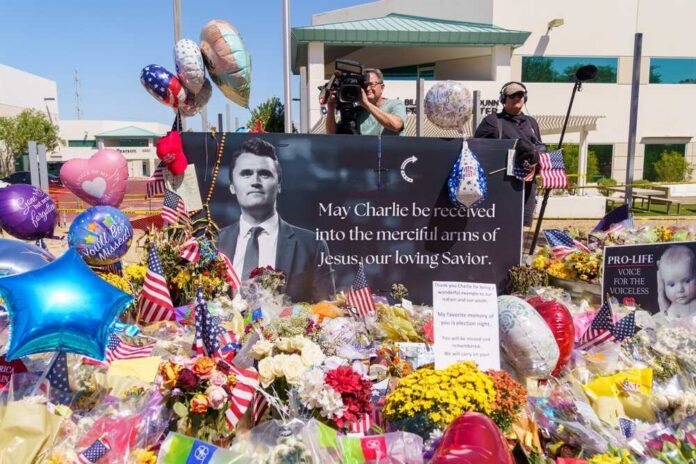
As lawyers for the man accused of assassinating Charlie Kirk push to hide evidence and close parts of a key hearing, the fight over whether America will see the full truth is now front and center.
Story Snapshot
- Defense attorneys for Tyler Robinson want evidence and portions of hearings sealed in the Charlie Kirk murder case.
- Prosecutors and media outlets argue that openness and cameras are essential for public accountability.
- A Utah judge has already refused to ban cameras, citing the public’s right to watch the proceedings.
- The battle pits fair-trial claims against the First Amendment and the public’s demand to see justice done.
Defense Pushes to Seal Evidence and Limit Public Access
Defense lawyers for Tyler Robinson, the man charged with killing conservative leader Charlie Kirk, are now asking a Utah court to seal certain evidence and close parts of upcoming hearings. They argue that intense media coverage and pretrial publicity risk poisoning the jury pool and jeopardizing Robinson’s right to a fair trial. Their filings also accuse Utah County Attorney Jeff Gray and his staff of violating an existing gag order by speaking to the press about the case, and they seek sanctions for those alleged violations.[1]
Attorneys for Robinson emphasize the extraordinary volume of material they must review while building their defense. Judge Tony Graf previously granted their request to delay the preliminary hearing, noting that the defense had received roughly 1,600 files along with several terabytes of digital discovery and calling the delay “neither unexpected or unreasonable.”[2] That continuance to July was framed as necessary preparation time, but for Kirk’s family and many in the conservative movement, each delay feels like one more month without closure or accountability.
Judge Affirms Cameras and Public Access in High-Profile Case
While the defense seeks more secrecy, Judge Graf has already drawn a firm line in favor of public access. He denied a separate motion from Robinson’s lawyers to ban cameras, microphones, and still photography from the courtroom. In a written ruling, Graf found “not sufficient reason to categorically bar cameras,” stressing that electronic media coverage helps “facilitate the public’s right of access to court proceedings.”[2] That ruling means Americans will be able to witness the key hearings and, eventually, the trial, rather than relying solely on filtered secondhand reports.
The judge’s approach sets up a case-by-case balancing act. He has adopted a structured system under which media outlets must request coverage for each hearing, and the court can tailor conditions as needed.[1][2] That structure allows the court to manage genuinely sensitive material while preserving openness as the default. It also reflects a broader principle conservatives have long defended: sunlight is the best disinfectant. When a national figure is murdered, the public has a strong stake in seeing exactly how the justice system handles the accused, step by step.[2]
Secrecy Fight Taps Old Tensions Between Fair Trials and Free Speech
This clash over sealing and contempt motions fits a long pattern in high-profile criminal cases. When a crime draws national attention and wall-to-wall coverage, defense teams frequently ask judges for continuances, gag orders, and sealed filings, arguing that publicity makes it impossible to seat an impartial jury. Prosecutors typically counter that their public comments are limited, sometimes even necessary to correct misinformation, and that normal safeguards like jury questioning and instructions can protect the defendant’s rights.[1]
Empirical studies on pretrial publicity show that heavy exposure to crime coverage can shape juror attitudes and perceptions of guilt, particularly when reporting is emotional or repetitive.[1] But courts differ on how much that effect should justify secrecy. Many judges, like Graf in this case, try to preserve transparency and rely on careful jury selection instead of extreme steps such as sweeping closure of proceedings.[1] For conservatives who worry about weaponized prosecutions and media spin, this is a crucial distinction: protecting a defendant’s rights should not become a backdoor to hiding critical evidence from the very citizens the justice system serves.
What Is at Stake for Conservatives and the Country
For Charlie Kirk’s family, supporters, and millions of Americans who shared his values, the core demand is simple: show the truth. The push to seal evidence and close hearings raises understandable questions about what might be kept from public view and why. Robinson faces the possibility of the death penalty if convicted, a reminder that this is one of the most serious charges a citizen can face, and that both fairness to the accused and transparency for the public must be guarded carefully.
Full Story: Defense Wants Certain Evidence Hidden in Charlie Kirk Assassination Case🚨Plus, prosecutors said they plan to introduce a recorded video statement from Lance Twiggs, described in court as Tyler Robinson’s romantic partner, during Robinson’s preliminary hearing…
— Lauren Conlin (@conlin_lauren) May 19, 2026
Conservatives have watched, for years, a two-tiered justice system that often seems to treat high-profile leftist defendants with kid gloves while throwing the book at those on the right. That reality makes open courts, visible evidence, and on-the-record rulings more important than ever. In the Utah case, the judge’s refusal to ban cameras and his move to unseal prior documents both cut in favor of transparency, even as the defense tries again to narrow public access.[2] How the court rules on the latest sealing request will signal whether ordinary citizens are trusted with the full facts in a case that shook the conservative movement.
Sources:
[1] Web – Utah prosecutors push back against contempt motion in Charlie Kirk …
[2] Web – Judge rejects request to ban cameras in court from man charged …