

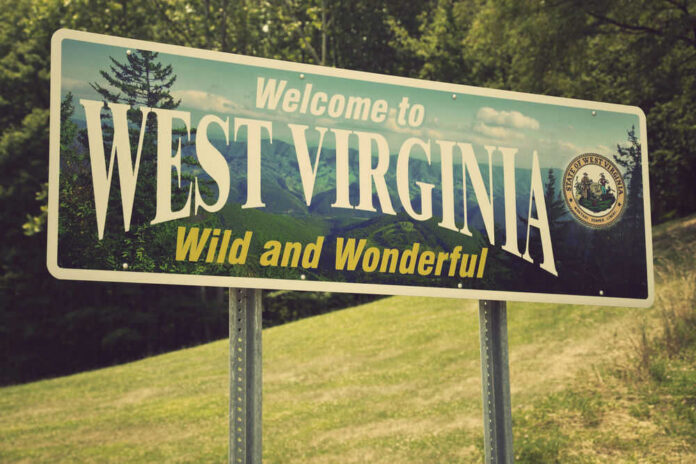
West Virginia’s governor just put a bullseye on Virginia’s business base, betting lower taxes and lighter regulation will pull jobs across the border while Richmond doubles down on big-government instincts.
Story Highlights
- West Virginia Governor Patrick Morrisey launched an explicit campaign to recruit Virginia businesses and workers, starting with Loudoun County [1].
- Morrisey contrasts West Virginia’s lower-tax, pro-growth posture with Virginia’s higher-tax, heavier-regulation trajectory [1].
- A Northern Virginia business survey shows half of respondents believe Richmond policymakers do not understand local business operations [2].
- Critics brand Governor Abigail Spanberger’s direction anti-business, while one primary-state document shows her rescinding a prior executive order, complicating attribution [3][5].
Morrisey’s Cross-Border Pitch Targets Virginia Firms
West Virginia Governor Patrick Morrisey said he will spend time in Loudoun County and throughout Virginia to pitch companies and workers on relocating to West Virginia, highlighting a newly announced 275-acre commercial tax district intended to sharpen the state’s competitive edge [1]. Morrisey described a deliberate comparison strategy to show how different tax and regulatory choices affect families and job creators. The cross-border focus signals an aggressive, retail-style recruitment effort aimed at Northern Virginia’s deep pool of employers and talent [1].
Morrisey framed the choice starkly, arguing Virginia “burdens its citizens and job creators with higher taxes,” while West Virginia offers “freedom, fiscal responsibility, and a tax climate” built for investment and growth [1]. He tied the message to concrete tools, including special tax districts that can redirect a portion of state revenues back to counties to fund local development. The governor projected the approach could drive hundreds of millions of dollars in investment in West Virginia’s Eastern Panhandle, adjacent to Virginia’s business corridors [1].
Special Tax Districts and Border Economy Strategy
West Virginia lawmakers advanced a framework enabling special tax districts to capture and reinvest state revenues locally, aligning incentives for pro-growth infrastructure and site readiness in border counties [1]. State Senator Jason Barrett reported more Virginians are already crossing the line to spend money and support businesses on the West Virginia side, reinforcing Morrisey’s focus on the Eastern Panhandle as a launch point for relocations and expansions [1]. The targeted approach seeks quick wins by leveraging proximity, commute patterns, and existing supplier networks shared across the state boundary [1].
Morrisey paired policy and messaging with a clear goal: quantify and market West Virginia’s lower costs and faster permitting to executives weary of uncertainty in Richmond [1]. By emphasizing predictable rules and a lighter tax load, the governor is positioning his state as a practical refuge for employers watching margins amid inflation and higher operating expenses. The tactic mirrors long-running interstate competition in which leaders use tax, regulation, and permitting speed to woo firms from neighboring states [1].
Virginia Business Sentiment Shows Frustration With Richmond
A Northern Virginia Chamber and Pinkston survey found that half of responding owners and executives believe state legislators and policymakers in Richmond do not understand local business operations, underscoring concerns about policy direction under Governor Abigail Spanberger [2]. Chamber executive Clayton Medford urged the governor to engage with business leaders to shape an economic path, noting that reducing taxes consistently ranks as a top priority, alongside housing, transportation, and regulatory burdens for the region’s employers [2].
The survey reflects perception rather than confirmed relocations, but it clarifies what decision-makers are watching: total tax load, predictability, and cost of growth in high-demand corridors [2]. The Virginia Republican Party amplified these concerns, arguing Spanberger’s direction risks higher taxes, heavier red tape, and threats to right-to-work protections that safeguard worker choice and attract investment, though the allegations are framed as partisan messaging rather than an itemized record of enacted policy changes [3].
Attribution Limits and Policy Clarity Matter
The available record shows a gap between political claims and hard relocation data, with no comprehensive list of Virginia firms moving to West Virginia explicitly due to Spanberger-era policies in hand [1][2]. Some contested Virginia measures were proposals that never reached the governor’s desk, which weakens attempts to attribute immediate business flight to her signed actions [1]. A primary-source document shows Spanberger rescinded a prior executive order, reflecting administrative adjustments and complicating the narrative that she has already imposed a sweeping anti-business package [5].
Business climate debates involve real tradeoffs, including arguments that higher taxes fund services businesses also rely on, as a university political scientist acknowledged in broadcast commentary [4]. For conservatives focused on growth and limited government, the near-term takeaway is tactical: Morrisey is making the sale now, with policy tools and a border-based strategy, while Virginia’s leadership faces pressure to demonstrate tax restraint, regulatory balance, and responsiveness before perception hardens and capital moves for good [1][2][4].
Sources:
[1] Web – Gov. Morrisey targets Virginia businesses with West Virginia tax pitch
[2] Web – Virginia businesses urge Spanberger steer away from new taxes
[3] Web – Abigail Spanberger Would Wreck Virginia’s Economy
[4] YouTube – Inside Scoop: Spanberger tosses affordability out the window along …
[5] Web – [PDF] NUMBER TEN (2026) RESCISSION OF EXECUTIVE ORDER NO …