
Illinois Gov. JB Pritzker’s fresh push to use the 25th Amendment against President Trump shows how quickly “constitutional” language can be repurposed into a political weapon.
Quick Take
- Pritzker released a new video urging removal of President Trump, repeating a claim that “something genuinely wrong” is happening with Trump’s fitness.
- The immediate spark was backlash to a Trump Truth Social post that Pritzker framed as a national-security risk.
- The 25th Amendment process does not run through governors or Congress; it hinges on the vice president and the Cabinet.
- The dispute lands amid an already tense federal-state relationship after a Supreme Court decision involving Trump v. Illinois.
Pritzker’s 25th Amendment Push Returns to Center Stage
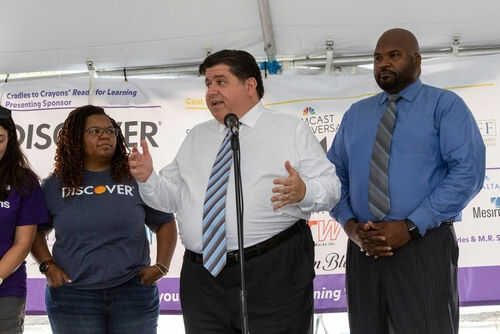
Gov. JB Pritzker (D-Ill.) renewed calls for invoking the 25th Amendment to remove President Donald Trump, arguing the president is mentally unfit and poses a national-security threat. Reporting indicates Pritzker amplified his message in a Wednesday video posted on X and pointed back to earlier remarks from 2025, portraying his current demand as consistent rather than impulsive. The latest round followed public controversy tied to a Trump Truth Social post that drew sharp criticism.
Pritzker’s most quoted line—saying there is “something genuinely wrong” with Trump—captures a broader pattern in national politics: opponents increasingly treat questions of temperament and stability as justification for extraordinary remedies. The practical problem is that repeating a claim does not make it evidence. The available reporting highlights Pritzker’s allegation and urgency, but it does not show a formal medical evaluation, a documented incapacity determination, or any move by the actual constitutional actors who would decide.
What the 25th Amendment Actually Requires—and Why That Matters
The 25th Amendment, ratified in 1967, sets a high bar for declaring presidential incapacity. The key decision-makers are the vice president and a majority of the Cabinet (or another congressionally designated body), not a governor and not a cable-news cycle. That distinction matters because it separates political pressure from constitutional process. As of the latest developments described in the research, no invocation has occurred and no formal steps have been announced.
For voters already cynical about Washington and the permanent political class, this episode underlines a familiar frustration: major figures talk as if removal is simple, but the system is intentionally hard to manipulate. Conservatives tend to see the 25th Amendment rhetoric as an attempted end-run around elections. Many liberals view it as a safeguard against perceived danger. Either way, without a documented incapacity finding from those empowered to act, the push remains political messaging.
How a Single Post Became a National-Security Talking Point
The immediate catalyst, according to the reporting, was a Trump Truth Social post that Pritzker cited as so alarming it justified removal “before it’s too late.” The research notes uncertainty around the exact phrasing of the post as repeated in reactions, which limits outside verification from the provided materials alone. What is verifiable is the sequence: a controversial post, rapid backlash, and a governor using it to argue not merely that Trump is wrong, but that Trump is unfit to serve.
That escalation is significant in 2026 because it blurs two debates that should be kept separate: policy disputes versus incapacity claims. A constitutional remedy for incapacity is not designed to settle disagreements over rhetoric, foreign policy posture, or tone. When politicians collapse those categories, the country risks normalizing the idea that any sharp controversy can become grounds for extraordinary constitutional action. That invites retaliation when power shifts, deepening public distrust in institutions.
Federal-State Tensions Provide the Backdrop
Pritzker’s posture also fits a longer-running Illinois-versus-Trump narrative. The research points to a December 23, 2025, Supreme Court decision blocking a Trump administration effort involving National Guard deployment in Illinois, after which Pritzker praised the ruling as a check on “abuse of power.” The legal fight highlights the ongoing friction between Democratic-led states and a Republican-controlled federal government—especially when disputes touch law enforcement authority and executive power.
Shorter Pritzker: Trump Deserved It and I'll Justify It By Completely and Hilariously Wrecking Myself https://t.co/h0kS8itQQi .
— Victoria Taft, The Adult in the Room, FITF Squad (@VictoriaTaft) April 27, 2026
Politically, the incentives are obvious even when the facts remain narrow: Pritzker is seeking a third term as governor, and national resistance to Trump remains a proven Democratic fundraising engine. Republicans, meanwhile, can point to the episode as further evidence that opponents will frame nearly any controversy as an existential threat. The durable takeaway for Americans who feel trapped between elites is that neither side seems eager to de-escalate—despite broad agreement that government often fails to deliver basic competence.
Sources:
Statement From Governor Pritzker on the Supreme Court’s Decision in Trump v. Illinois