
A tense White House briefing spotlights press freedom tensions amid national security controversies.
Story Snapshot
- White House Press Secretary Karoline Leavitt cuts off CNN’s Kaitlan Collins.
- Incident follows leaked Signal texts raising security concerns.
- Trump administration’s adversarial media relations history continues.
- Questions arise about transparency and press freedom.
Confrontation Over Leaked Messages
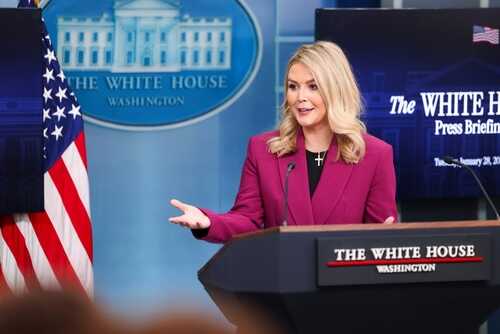
During a White House press briefing on March 28, 2025, Press Secretary Karoline Leavitt abruptly cut off CNN reporter Kaitlan Collins. Collins was pressing for responses regarding the administration’s handling of leaked Signal messages, which allegedly contained sensitive military information. Leavitt’s refusal to engage further with Collins underscores the ongoing contentious relationship between the Trump administration and the media, particularly CNN.
The confrontation came a day after a similar incident where President Trump himself cut off Collins during a press exchange. This pattern of interaction highlights the administration’s strict control over its messaging and reluctance to entertain questions from perceived adversarial media. The briefing room has become a battleground for transparency and accountability, raising concerns among press freedom advocates.
Broader Context of Media Relations
The Trump administration’s history with mainstream media is marked by frequent confrontations and a preference for controlling narratives. This latest incident with Leavitt is in line with previous actions taken by former press secretaries. The administration’s approach often involves limiting access to journalists and media outlets deemed hostile, which critics argue undermines the principles of a free press.
Leaked Signal messages have intensified scrutiny on the administration’s internal communications, with journalists demanding more clarity on national security matters. The administration’s evasion on such critical issues has drawn criticism and elevated tensions in press briefings. This adversarial stance could potentially impact public trust in both the media and the government.
Implications for Press Freedom
In the short term, the administration’s stance may lead to increased scrutiny and more cautious journalistic practices. Long-term effects could involve the erosion of press freedom norms and set a precedent for future administrations. As the public relies on the media for governmental transparency, these interactions could shape perceptions of media trustworthiness and influence public discourse.
CNN Reporter Cut Off When Asking What Happens If Pam Bondi Can’t Indict Trump’s Enemieshttps://t.co/xw65ZKlzr7
— Mediaite (@Mediaite) September 22, 2025
The administration risks reputational damage and accusations of lacking transparency. Meanwhile, journalists face challenges in accessing information and may experience heightened public rebuke. Politically, these dynamics reinforce existing partisan divides over trust in media and government transparency, fueling ongoing debates about the role of the press in democracy.
Sources:
‘Who has said that?’: Leavitt snaps at CNN’s Kaitlan Collins …
Karoline Leavitt cuts off CNN’s Kaitlan Collins
Karoline Leavitt refuses to take CNN’s Kaitlan Collin’s follow