

The U.S. government is now weighing immigrants’ social media posts for signs of antisemitism, terrorist sympathy, or outright anti-Americanism—and it can cost applicants a visa or green card even if they otherwise “qualify.”
Quick Take
- DHS and USCIS say officers will review applicants’ social media for antisemitic content, support for designated terrorist groups, and anti-American sentiment when deciding immigration benefits.
- The update is effective immediately and applies to pending and future cases, expanding how online activity influences discretionary decisions.
- Officials argue immigration benefits are a privilege tied to national security; free-speech advocates warn the policy could punish protected expression and chill debate.
- The move arrives after roughly 300 visa revocations were publicly discussed and amid intense political conflict over campus protests tied to the Israel-Hamas war.
What DHS and USCIS say is changing
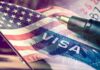
DHS and USCIS announced a policy update directing immigration officers to consider certain online activity when adjudicating immigration benefits, including visas, green cards, and student-related requests. The stated targets include antisemitic content, expressions that support terrorist organizations such as Hamas, Hezbollah, and the Houthis, and other extremist promotion. Officials also signaled that “anti-Americanism” can weigh heavily in discretionary decisions—even where an applicant meets baseline eligibility requirements.
The policy is described as effective immediately and applies to both new filings and cases already in the pipeline. That “pending cases” detail matters because many immigration benefits are not purely checkbox approvals; officers routinely make judgment calls on credibility, discretion, and whether a person poses a security risk. By formalizing social media review as a factor, the administration is giving adjudicators clearer permission to treat certain online advocacy as disqualifying rather than merely “concerning.”
National security screening meets a free-speech collision
DHS leadership framed the update as a direct response to antisemitic violence and terrorism advocacy, warning that the First Amendment cannot be used as a “shield” for supporting violence. That argument is likely to resonate with Americans who believe the federal government has been too lax about vetting, especially after years of border strain and high-profile protest movements that spilled into intimidation or property damage. The administration’s message is simple: entry is optional, and America can set conditions.
Free-speech advocates counter that the government risks blurring the line between protected political expression and genuine terrorism support, especially when “antisemitism” is argued in public debate rather than proven in a narrow, legal sense. Critics warn that broad social media screening could encourage “fear and silence,” particularly among foreign students and immigrants who may self-censor online to avoid misinterpretation. The hard question becomes who decides what is “anti-American,” and whether that term can be applied consistently across administrations.
Why “discretion” is the fulcrum—and why that worries skeptics
Several immigration decisions hinge on discretionary judgment, which gives the executive branch significant latitude. Analysts observing the update noted that labeling certain conduct “overwhelmingly negative” can effectively predetermine outcomes without changing the statute itself. From a conservative, limited-government perspective, discretion cuts both ways: it can help protect the homeland, but it also concentrates power in unelected bureaucracies that many voters—right and left—already suspect are unaccountable and politically motivated.
Real-world stakes: revocations, campus protests, and high-profile cases
The announcement followed public reporting that roughly 300 visas had already been revoked, with more actions underway. It also comes amid the post-October 2023 protest climate, when authorities faced pressure to respond to demonstrations that many Americans viewed as crossing into harassment or explicit support for violent actors. A widely cited example involves a Columbia University protest leader and green card holder reportedly facing deportation proceedings, illustrating how the administration’s posture can extend beyond would-be entrants to people already in the country.
Scoop: Immigrants Can Now Be Denied a Green Card for Being Anti-American Terrorist Sympathizers https://t.co/k2dUJAVrN9 pic.twitter.com/E1tSAHIS7L
— Twitchy Team (@TwitchyTeam) April 26, 2026
Politically, the move lands in a familiar place for 2026: Republicans argue the federal government has a duty to prioritize safety and loyalty to American civic norms, while Democrats and civil-liberties groups focus on speech protections and the risk of viewpoint discrimination. At minimum, the policy underscores a broader, bipartisan frustration: immigration enforcement often swings by executive action, not durable legislation. That leaves Americans stuck with whiplash, and it leaves immigrants navigating shifting rules driven by politics rather than stable standards.
Sources:
Anti-Americanism Now a Key Factor in Immigration Benefit Decisions
U.S. starts monitoring immigrants’ social media for antisemitism
USCIS To Consider Anti-Americanism, Antisemitism and Terrorist Activity When Adjudicating Certain