

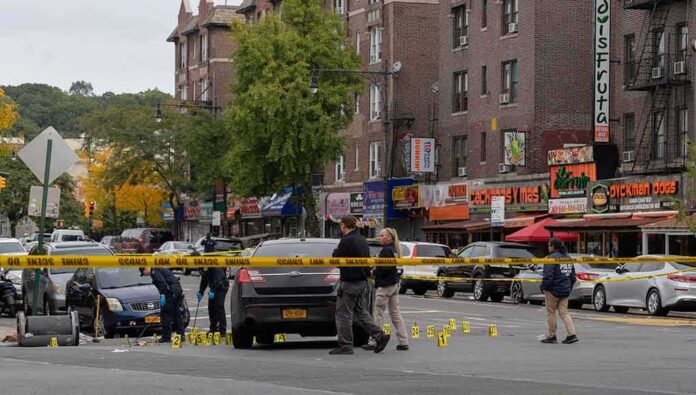
A driverless Waymo car flagged a firearm violation, pulled itself over in San Francisco, and police then seized an unserialized rifle from two juveniles, according to officials.
Story Highlights
- Waymo halted a ride after detecting a firearm-related terms-of-service violation, then contacted police.
- San Francisco police recovered an AR-style unserialized “ghost gun” and detained two juveniles.
- The stop happened Sept. 3 around 4 a.m. in the Richmond District, police said.
- Officers also found suspected marijuana and mace; the investigation remained active.
Police Say Ghost Gun Found After Waymo Alert
San Francisco Police Department officers said they made a high-risk stop of a Waymo robotaxi after a company alert early on Sept. 3. Officers said they found an AR-style rifle without a serial number, often called a ghost gun. Police reported detaining two juveniles, a boy and a girl, tied to the gun. Officers also logged suspected marijuana and mace at the scene. Police described the case as open and active following the stop in the 800 block of 40th Avenue.
A Waymo spokesperson told reporters the car pulled over because of a violation of the company’s terms of service involving a firearm. The company said it cooperated fully with San Francisco police. The public reports did not spell out how Waymo detected the issue. They did not say if a sensor, a human monitor, a passenger report, or another method triggered the alert. Company policy language was not published in full in the accounts cited.
Time, Place, and What Officials Confirmed
Reports align on time and place. The stop happened shortly before 4 a.m. on Sept. 3 in the Richmond District, near the 800 block of 40th Avenue. Police and media described two juvenile suspects. The firearm was described as an AR-style assault rifle with no serial number. Police accounts also list suspected marijuana and mace recovered from inside the vehicle. Outlets quoted police saying the investigation remained active after the stop and arrests.
Police-focused reports call the rifle a ghost gun because it lacked a serial number. That term is common in recent cases involving homemade or privately assembled firearms. California officials have warned about youth gun possession trends and unserialized weapons for several years, and departments regularly publicize seizures tied to juveniles and ghost guns as part of ongoing enforcement updates.
Why This Matters for Safety, Privacy, and Policing
This event shows how a private company’s rules can lead to a police response when a ride breaks safety terms. Autonomous vehicles carry cameras and data systems that can aid investigations. Police in several cities have already used video or logs from driverless vehicles in cases, often with a legal process like a warrant or court order. That practice treats these cars as rolling sensor platforms that can help or complicate police work, depending on the facts.
The San Francisco stop followed a different path. Waymo reported a firearm-related rule violation and halted the ride, and police then found a ghost gun. That is a direct line from company policy to law enforcement action. Some prior episodes involved police asking for stored video after the fact. Here, the company’s safety action came first. That raises real questions for parents and city leaders about youth access to weapons and how tech companies enforce their safety rules.
Law-and-Order Takeaways Under Today’s Standards
Police action removed an untraceable rifle from a car carrying two minors, according to the reports. That outcome supports a basic law-and-order goal: stop violent crime before it starts. Responsible gun owners follow the law and record numbers. Ghost guns dodge both. When teens ride with an unserialized rifle, public safety is at risk. Swift cooperation between a company and police can prevent tragedy, and in this case, it appears to have done that.
Great job Waymo!!! Waymo pulls over, calls cops on juvenile riders who had ‘ghost gun,’ authorities say https://t.co/yaoeZhh3wl
— Janet Wagner (@janetswags) September 12, 2026
At the same time, rules must be clear and lawful. Companies should publish plain, firm safety policies and follow consistent steps for alerts. Police should anchor every search and seizure in the Constitution. Courts have long balanced safety with rights. That standard must hold with robotaxis too. The reports here do not detail the full detection method or charging documents for each minor. Those records often stay sealed in juvenile cases, which limits public detail.
Sources:
youtube.com, latimes.com, independent.co.uk, sanfranciscopolice.org, sfchronicle.com