
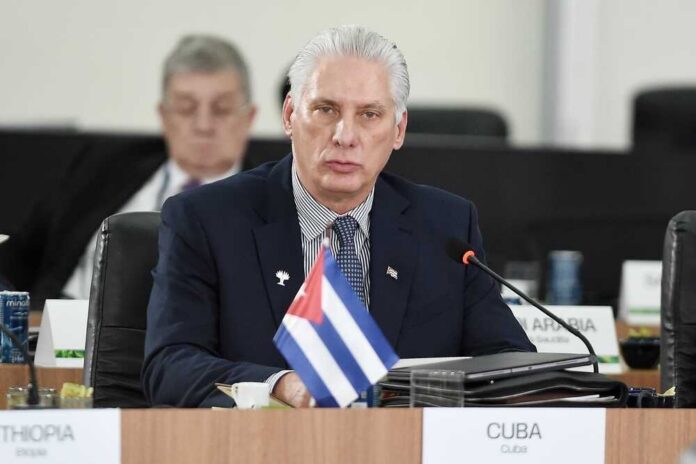
Cuban President Miguel Díaz-Canel’s threat of “guerrilla-style” resistance against potential U.S. military action drew open laughter from U.S. Senator Marco Rubio, exposing the crumbling communist regime’s desperate attempt to appear formidable amid crippling energy blackouts caused by Trump administration oil sanctions.
Story Snapshot
- Díaz-Canel warned of a “war of all the people” involving mass civilian resistance if the U.S. attacks Cuba, predicting “immense losses” for both nations in a Newsweek interview
- Senator Rubio publicly laughed off the threat when asked by reporters, signaling U.S. skepticism about Cuba’s ability to mount meaningful resistance
- The warning comes as Cuba suffers 20-hour blackouts and shortages triggered by Trump’s January 2026 executive order blocking oil shipments to the island
- Trump administration designated Cuba a “threat to U.S. national security” due to its ties with Russia, China, and Iran, hinting the island could be targeted after Venezuela and Iran
Empty Threats from a Failing Regime
Cuban President Miguel Díaz-Canel issued stark warnings of guerrilla warfare in an exclusive Newsweek interview published April 7, 2026, his first with U.S. media since 2023. The Cuban leader invoked Fidel Castro-era doctrine of “war of all the people,” promising widespread civilian participation in resistance if Washington launches military action. He predicted both nations would suffer “incalculable” losses in any conflict. Yet his bluster rang hollow to observers watching Cuba’s energy grid collapse under the weight of Trump’s oil embargo, leaving citizens in darkness and desperation.
Rubio’s Reaction Speaks Volumes
When reporters asked Senator Marco Rubio about Díaz-Canel’s guerrilla threat, the Florida Republican couldn’t suppress his laughter, responding with a dismissive “L-O-L.” His reaction underscores widespread U.S. skepticism about Cuba’s military capabilities and the regime’s credibility. Rubio’s public ridicule serves a strategic purpose, amplifying the narrative that Cuba’s communist leadership is engaging in empty saber-rattling to distract from domestic failures. The senator’s mockery resonates with conservatives frustrated by decades of Cuban regime posturing while its people suffer under authoritarian rule and economic mismanagement masked as resistance to American imperialism.
Blockade Brings Island to Its Knees
The Trump administration’s January 2026 executive order blocking oil shipments to Cuba has devastated the island’s energy infrastructure, triggering 20-hour blackouts and cascading shortages of food, medicine, and transportation. The sanctions target Cuba’s alliances with adversarial powers including Russia, China, and Iran, which the White House cited as justification for declaring the regime a national security threat. Cuban civilians bear the brunt of the crisis as hospitals struggle without power and basic services collapse. Díaz-Canel blames the U.S. blockade for the chaos, while also attempting to maintain dialogue on migration, security, and drug trafficking issues through what both sides acknowledge are “difficult” bilateral talks.
Paper Tigers and Real Consequences
Díaz-Canel dismissed comparisons to recent U.S. actions in Venezuela and Iran that led to leadership changes, claiming Cuba’s “collective leadership” structure and ideological cohesion make it immune to such interventions. Yet his reassurances expose the regime’s vulnerability rather than strength. Trump previously hinted Cuba is “next” on his target list, though no official intervention plans have been confirmed. The communist leadership’s reliance on Cold War-era guerrilla rhetoric reveals bankruptcy of strategic options beyond threatening protracted resistance. For ordinary Cubans enduring blackouts and shortages, the regime’s defiant posturing offers no relief, only the promise of more suffering if tensions escalate into actual conflict neither side appears prepared to wage.
The disconnect between Díaz-Canel’s fighting words and Cuba’s on-the-ground reality illustrates a broader truth many Americans recognize: authoritarian regimes often resort to nationalist bluster when facing domestic collapse caused by their own failed policies. Whether Trump ultimately moves beyond economic pressure remains uncertain, but Rubio’s laughter captured what many observers believe—that Cuba’s threats deserve mockery rather than concern. As both the left and right increasingly question government competence and honesty, this spectacle of a failing regime threatening the world’s most powerful military highlights how disconnected political elites can be from reality, whether in Havana or Washington.
Sources:
Díaz-Canel lanza advertencia a EE.UU.: Habrá guerra – CiberCuba
Cuba Threatens ‘Guerrilla-Style’ Fight — Rubio Can’t Keep a Straight Face – PJ Media
Díaz-Canel dice buscar diálogo con EE.UU. mientras amenaza con guerra – CiberCuba