
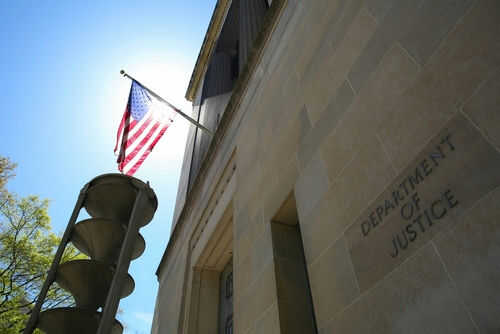
The Justice Department’s reported move to recruit prosecutors without prior experience shows just how deep the federal staffing crunch has become—and why Americans should watch closely for what fills that vacuum.
Story Snapshot
- DOJ prosecutorial offices have faced major staff losses, including a steep decline in U.S. Attorneys’ Offices and the Civil Rights Division’s police-misconduct unit.
- Recruitment efforts have reportedly shifted toward emphasizing alignment with President Trump’s anti-crime agenda, drawing criticism and prompting additional departures.
- Fewer attorneys and fewer veteran prosecutors have contributed to scaled-back investigations and fewer civil-rights prosecutions in certain categories.
- DOJ leadership says it is prioritizing limited resources and continuing to enforce civil-rights laws, while former officials warn that politicized hiring undermines credibility.
Staffing losses hit the DOJ where experience matters most
DOJ components that depend on seasoned courtroom lawyers have been hit by a wave of departures, according to multiple reports describing an agency struggling to keep veteran talent. U.S. Attorneys’ Offices reportedly saw a significant decline in staffing over a recent 12-month period, with experienced prosecutors leaving at higher rates. Inside the Civil Rights Division, one key section focused on police misconduct shrank dramatically from prior staffing levels, limiting how many matters it can pursue at once.
For ordinary Americans, the practical question is straightforward: when the government loses institutional knowledge, cases slow down, mistakes rise, and consistency suffers. Prosecutorial work is not entry-level clerical labor; it involves charging decisions, constitutional limits, evidentiary rules, and courtroom judgment built over years. The research provided suggests that the staffing decline is not isolated to one office, but is broad enough to change enforcement capacity across the country.
Recruiting “for the agenda” intensifies the controversy
Reports indicate that recruitment messaging from DOJ leadership has, in at least some instances, stressed support for President Trump’s anti-crime agenda. That approach has been described by former officials as an ideological litmus test, and it has reportedly triggered backlash from career prosecutors who view the department’s legitimacy as tied to neutral, evenhanded application of the law. In a department built on credibility with judges and juries, perceived partisanship can become its own operational risk.
It also points to additional departures following alleged interference in prosecutorial decision-making. Those accounts are contested in the sense that they largely rely on sources describing internal friction, while DOJ spokespeople have argued the department remains committed to enforcement and is focusing resources where they believe they will be most effective. What is not meaningfully disputed is the underlying reality of a staffing squeeze and the resulting pressure to fill vacancies quickly.
Scaled-back police-misconduct work raises questions about equal justice
The staffing decline has been linked to scaled-back probes in the Civil Rights Division unit that historically pursued cases involving police misconduct, including patterns of excessive force. Reports describe fewer lawyers available to open or sustain complex investigations, and fewer civil-rights charges in at least one category compared with prior years. DOJ representatives have argued that prioritization is necessary and that enforcement continues, but limited headcount inevitably narrows what can be done.
From a constitutional perspective, conservatives often insist that government power must be bounded and accountable—especially when force is used. That principle cuts both ways: Americans want law enforcement protected from political witch hunts, but they also expect genuine misconduct to be addressed under the rule of law. A smaller, less experienced federal team increases the odds that decisions swing with politics or media pressure rather than consistent standards, because fewer seasoned attorneys remain to slow the pendulum.
Ethics oversight and the risk of insulating Washington from accountability
As staffing and morale issues unfold, DOJ has also proposed a rule that would expand the attorney general’s ability to review and potentially pause state ethics investigations involving DOJ lawyers. Supporters may view that as a necessary safeguard against politically motivated state actions. Critics argue it concentrates power in Washington and weakens an external check on federal legal actors. Either way, the proposed change highlights how personnel strain, internal policy fights, and accountability mechanisms are now colliding.
A separate court ruling described in the research also underscores how quickly disputes over process and proper authority can end up in federal court. When hiring and staffing decisions are controversial, they do not stay internal; they become legal and political flashpoints that affect public trust. For voters who want a DOJ that is tough on violent crime but restrained by the Constitution, that trust is hard to rebuild once it is lost.
What to watch next as DOJ tries to rebuild its bench
The central uncertainty is whether DOJ can recruit enough qualified attorneys without lowering standards that protect due process and professional competence. Some reporting suggests the experience requirement was effectively loosened amid hiring difficulties, while other details—like exact headcount—vary depending on whether reports are counting trial attorneys or total staff. If the department can stabilize retention, it can rebuild capacity; if departures continue, policy “prioritization” may become permanent shrinkage.
DOJ Drops Experience Requirement for New Prosecutors Amid Hiring Struggle https://t.co/64GyAQ2EgM
— Mediaite (@Mediaite) March 17, 2026
Americans should also watch how DOJ balances anti-crime priorities with constitutional guardrails. A department short on veteran prosecutors can still be aggressive, but aggression without experience can produce uneven outcomes, courtroom losses, and public skepticism. It paints a picture of a DOJ under strain—trying to staff up while managing internal disagreement over mission and neutrality. Limited data remains on the specifics of any new experience requirements, but the staffing crisis itself is well supported across the cited reporting.
Sources:
DOJ unit on police misconduct sees staffing plunge, probes scaled back
Justice proposes DOJ limit state ethics investigations lawyers
Trending Now: Running Out of Lawyers and Poor People Update for February 13, 2026
DOJ faces staffing crisis as prosecutors quit over politicization
Trump DOJ improperly installed New Jersey prosecutors, judge rules
DOJ officials call pro-Trump federal prosecutors dangerous