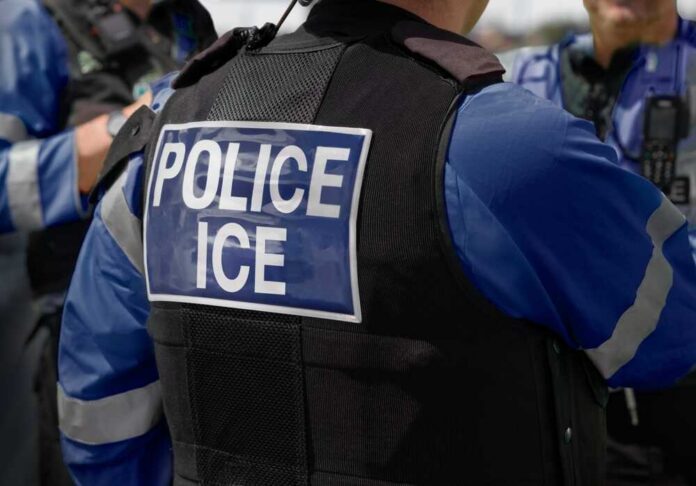
Democrats’ DHS funding blockade is now colliding with spring-break travel chaos—pushing President Trump to threaten a dramatic ICE deployment at America’s airports.
Quick Take
- President Trump said ICE agents could be sent to U.S. airports starting Monday, March 23, if Democrats don’t approve DHS funding without limits on ICE operations.
- A partial shutdown that began Feb. 14 has left TSA employees working without pay, fueling staffing shortages, long lines, and hundreds of resignations.
- Reports indicate ICE agents are not trained to run TSA-style checkpoint screening, raising operational questions if the plan moves forward.
- Democrats are tying DHS funding to ICE policy demands after fatal Minneapolis-area incidents earlier in 2026, while Republicans reject separating TSA funding from the broader DHS/ICE fight.
Trump’s ultimatum: fund DHS or expect ICE at airports
President Donald Trump said Saturday, March 21, that he is prepared to deploy Immigration and Customs Enforcement agents to airports beginning Monday, March 23, if Democrats continue blocking Department of Homeland Security funding unless ICE operations are restricted. The threat was posted publicly as the shutdown stalemate dragged into peak spring-break travel. Trump framed the move as a way to restore order and speed airport processing during a period of heavy passenger volume.
The immediate backdrop is a Transportation Security Administration workforce under stress. Because TSA personnel are classified as essential, they have continued working despite the lapse in DHS funding, and the financial pressure has started to break staffing levels. Reports cite at least 366–376 officers quitting since the shutdown began, alongside increased call-outs. The real-world result has been long security lines at major hubs and warnings that smaller airports could face temporary closures if absences accelerate.
What the shutdown is doing to TSA employees and travelers
The shutdown began Feb. 14 and, by late March, the human impact was increasingly visible. TSA officers have reported severe household strain, including reliance on food banks, delayed bills, and other emergency measures that come with missing paychecks. Some airport and local officials have tried to fill gaps with practical support such as meal vouchers and transportation help. For travelers, especially families on tight schedules, the pain point has been predictable: longer waits, missed flights, and mounting frustration.
That pressure is also creating a feedback loop that makes staffing problems harder to solve. As more officers resign or call out, the burden on remaining personnel increases, which can produce more burnout and more departures. TSA leadership has warned that the staffing situation could force operational cutbacks, especially at smaller airports where a few absences can cripple a shift. The research available does not provide a precise forecast for how quickly conditions could stabilize without a funding deal.
Operational reality: ICE enforcement isn’t TSA screening
A key fact in the reporting is that ICE agents are not trained for airport security screening operations. TSA checkpoint work involves specialized procedures, equipment, and coordination focused on aviation threats and passenger throughput, while ICE’s mission centers on immigration enforcement. That mismatch is why critics argue the proposed deployment could complicate airport operations rather than fix them, depending on what “help TSA” practically means. The public details so far do not explain how ICE would integrate into existing TSA workflows.
The political standoff driving the crisis
Democrats’ refusal to approve DHS funding without ICE-related conditions is tied, in the reporting, to events earlier in 2026 involving fatal shootings by ICE agents in Minneapolis, including the deaths of Alex Pretti and Renee Good. Negotiators have discussed a limited White House package—body cameras, restrictions around sensitive locations, and visible identification—while Democrats have pressed for additional changes including warrants and limits on masks. Multiple funding votes have failed, keeping the shutdown pressure in place.
Republicans have resisted carving TSA funding out from the broader DHS and immigration enforcement dispute. That strategy keeps the focus on the core fight over ICE authorities and oversight—while also ensuring the travel disruption remains a central public consequence of the impasse. The confirmation fight around Trump’s DHS secretary nominee has also become part of the broader political proxy war over ICE’s future authorities and constraints, further raising the stakes for both parties.
Constitutional and civil-liberties questions won’t disappear at the terminal
Airport security areas are already high-control environments, which is why any shift in personnel and mission raises legitimate legal and civil-liberties questions. Some Democrats warn the plan could increase wrongful detentions or harassment, particularly after Trump’s rhetoric singled out Somali immigrants and referenced Minnesota. The sources available do not lay out how ICE would determine probable cause, how travelers’ rights would be protected, or what oversight would apply in the terminal setting—details that matter when enforcement expands into daily civilian life.
For Americans who are tired of chaos at the border and tired of Washington using ordinary life as a bargaining chip, the situation is a reminder of how quickly “politics in D.C.” becomes a problem for working families. The facts in the reporting point to one near-term reality: without a funding deal, TSA staffing will likely stay strained, and airports will remain a high-visibility pressure point. What remains unclear is whether the ICE threat becomes an executed plan—or a lever to force Congress back to the table.
Sources:
https://time.com/article/2026/03/21/ice-airports-tsa-wait-times/
https://www.politico.com/news/2026/03/21/trump-ice-airports-tsa-dhs-00839340