

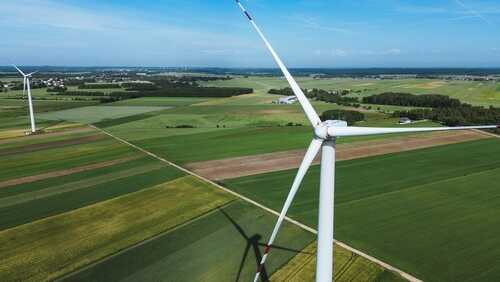
Germany’s wind energy ambitions are tangled in military red tape as radar restrictions threaten to blow renewable goals off course.
At a Glance
- A proposed German law could allow the military to block wind turbine construction across one-third of the land designated for wind power.
- The restrictions are due to concerns that the rotating blades of wind turbines can interfere with military radar signals, compromising air defense.
- Technical solutions to the problem exist, but the debate is over who should pay for the costly upgrades.
- The German Wind Energy Association has warned the new rule could derail the country’s ambitious renewable energy expansion goals.
A New Roadblock for German Wind Power
Germany’s ambitious plan to massively expand its wind energy capacity is facing a major new hurdle from its own military. A draft law being debated in parliament would give the German army the right to block the construction of wind farms in large “exclusion zones” around its radar installations, a move that the German Wind Energy Association (BWE) warns could make up to one-third of the nation’s designated wind power land off-limits.
“New rule discussed in parliament could grant the army the right to block up to a third of the country’s territory for wind power,” BWE president Bärbel Heidebroek said in a statement reported by Recharge News.
The Radar Interference Problem
The conflict stems from a legitimate technical issue: the large, rotating blades of wind turbines can interfere with radar signals. This can create “blind spots” for both civilian air traffic control and, more critically, for military air defense systems, potentially compromising national security.
This issue is not unique to Germany. As detailed in a report by Windpower Monthly, France has some of the strictest restrictions in Europe, which has severely hampered its wind energy development.
A Question of Political Will, Not Technology
While the radar interference issue is real, technical solutions to mitigate it already exist. These include upgrading military radar systems to more advanced models that can filter out the “clutter” from turbines or building smaller “infill” radars to cover any blind spots.
The problem, however, is that these solutions are expensive, and the current debate in Germany is over who should bear the cost—the military or the wind farm developers. “If there is the political will for wind farm and radar operators to work together, they can find a solution in most cases,” says Jacopo Moccia of the industry group WindEurope.
Other countries have found a path forward. The United Kingdom has had success with a collaborative model where the industry and the military work together to fund mitigation solutions. The United States has established a “Siting Clearinghouse” to identify and resolve these conflicts early in the planning process. The new German law threatens to derail a similar collaborative approach, jeopardizing the country’s ability to meet its climate goals.