
Panama’s bold seizure of strategic canal ports from a Hong Kong firm marks a major win against Chinese influence, vindicating President Trump’s warnings and bolstering U.S. security interests.
Story Highlights
- Panama Supreme Court voids 1997 concession to CK Hutchison subsidiary, leading to immediate government takeover of Balboa and Cristóbal ports on February 23, 2026.
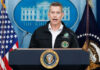
- White House welcomes the move, aligning with Trump’s 2025 accusations of China “running the Panama Canal.”
- Danish firm APM Terminals steps in temporarily, ensuring operations continue without disruption amid U.S.-China rivalry.
- CK Hutchison cries foul, files arbitration claiming an “unlawful campaign” with no compensation for decades of investment.
- Action secures Panama’s sovereignty and global trade routes critical to America’s economic strength.
Supreme Court Ruling Triggers Port Seizure
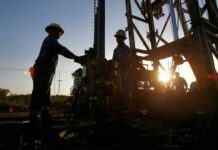
Panama’s Supreme Court struck down the concession law in January 2026, invalidating the 1997 contract and 2021 extension awarded to Panama Ports Company, a CK Hutchison Holdings subsidiary. The government issued a decree on February 23 authorizing the Panama Maritime Authority to occupy Balboa on the Pacific side and Cristóbal on the Atlantic entrance. Officials seized cranes, vehicles, and systems for “urgent social interest.” CK Hutchison halted operations after authorities arrived, protesting the abrupt action.
Trump’s Vision Realized Amid U.S.-China Tensions
President Trump accused China of dominating the Panama Canal in 2025, prompting CK Hutchison’s failed attempt to sell ports to a BlackRock-led consortium blocked by Beijing. The White House praised Panama’s takeover as a sovereignty assertion that reduces Chinese leverage over this vital chokepoint handling 5-6% of world trade. Panama balances ties after joining China’s Belt and Road while facing U.S. pressure, echoing past disputes like 2024 drought fees. This development strengthens America’s strategic position.
Temporary Management Ensures Continuity
APM Terminals, a subsidiary of Danish shipping giant A.P. Moller-Maersk, assumed temporary administration to maintain port efficiency. Led by Alberto Aleman Zubieta, the Panama Maritime Authority guarantees job stability for about 1,000 workers. Two new contracts await AMP board approval, promising neutral oversight. Maersk denies involvement in disputes, focusing on seamless operations. Shippers and traders face minimal short-term disruptions despite the high-stakes transition.
Panama’s move sets a precedent for reviewing foreign concessions in strategic assets, potentially favoring Western operators and accelerating de-Sinicization in Latin American infrastructure. This aligns with conservative priorities of countering globalist overreach and protecting U.S. interests abroad.
CK Hutchison Fights Back with Arbitration
CK Hutchison labels the seizure the “culmination of an unlawful campaign,” filing International Chamber of Commerce arbitration over lost assets without compensation after nearly 30 years of operation. The firm sought a last-minute agreement but faced threats of prosecution. Potential lawsuits against Maersk loom. Panama prioritizes national control, with President Mulino’s administration executing the decree post-ruling. Long-term, canal-related activities contribute 6% to Panama’s GDP.
Arbitration outcomes remain uncertain, but Panama’s firm stance bolsters ties with the U.S. under President Trump. This victory counters years of perceived Chinese encroachment, reassuring Americans frustrated by past administrations’ weak stances on strategic vulnerabilities. Job assurances mitigate social unrest, while political gains favor limited foreign influence in critical trade lanes.
Sources:
Panama orders control of canal ports operated by Hong Kong firm after Supreme Court ruling
Panama orders occupation of 2 key canal ports after Supreme Court ruling
Panama orders occupation of 2 key canal ports after Supreme Court ruling