
As Washington finally gets serious about safeguarding Venezuelan oil money, American taxpayers and long‑suffering Venezuelan families are asking the same question: will this cash be used to rebuild lives—or to prop up corrupt socialist elites again?
Story Highlights
- Venezuela’s oil once generated most of its export earnings and government revenue, but decades of socialist mismanagement and corruption collapsed the industry.
- Control over Venezuelan oil income is now split between Maduro’s regime, opposition figures, foreign creditors, and U.S. authorities.
- Trump-era sanctions, court fights over Citgo, and new licenses give the U.S. major leverage over where Venezuelan oil dollars ultimately flow.
- Conservatives argue any safeguard plan must block Maduro, protect U.S. interests, and prioritize ordinary Venezuelans—not globalist deals or woke NGOs.
How Socialist Misrule Turned Venezuela’s Oil Wealth Into a Cautionary Tale
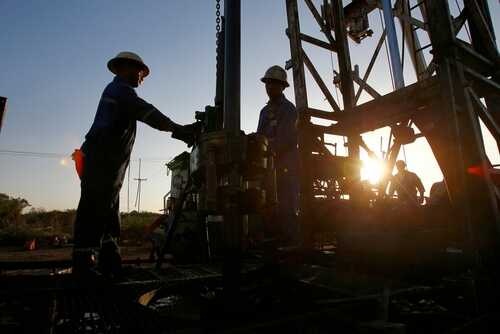
For over half a century, Venezuela lived off oil, with crude providing about ninety percent of export earnings and the majority of government revenue, yet that extraordinary wealth never translated into lasting prosperity. Instead, foreign companies were first replaced by a state oil giant, PDVSA, and then that company was bent into a political tool under Hugo Chávez and Nicolás Maduro. Hundreds of billions in oil dollars funded off‑budget schemes, subsidies, and patronage, while infrastructure, production capacity, and basic institutions rotted.
When global prices fell and production plunged after years of underinvestment and purges of technical staff, the consequences were brutal for ordinary Venezuelans: hyperinflation, shortages, collapsing services, and one of the largest refugee crises in the Western Hemisphere. The regime’s answer was not reform but tighter control—driving out independent voices, centralizing power, and using what oil revenue remained to sustain security forces and loyalists. The country’s vast reserves became a lifeline for a failing socialist project instead of a foundation for genuine development.
Sanctions, Parallel Governments, and a Battle Over Every Barrel
By the late 2010s, the United States responded to mounting repression and economic collapse with escalating sanctions against PDVSA, Venezuelan officials, and key financial channels, effectively cutting the regime off from normal access to U.S. markets. Washington and several allies recognized opposition leader Juan Guaidó as interim president for certain legal purposes, which shifted control of some external assets—especially Citgo’s holding company—away from Maduro’s inner circle. That recognition created a rare check on the regime’s ability to freely cash in foreign holdings.
At the same time, years of defaults and expropriations left Venezuela exposed to aggressive creditor lawsuits seeking repayment through asset seizures abroad, particularly in U.S. courts. Citgo, a U.S.-based refiner historically owned by PDVSA, became the prime target, with judges overseeing complex processes to sell shares and satisfy claims. These overlapping pressures—sanctions, opposition oversight, and creditor actions—turned every barrel of Venezuelan oil and every dollar of external revenue into contested ground, forcing debates on how to shield future income from both dictatorship and predatory grabs.
What “Safeguarding Oil Revenue” Really Means for Americans and Venezuelans
As Trump-era and successor policies evolved, U.S. agencies such as Treasury’s sanctions office began issuing tightly conditioned licenses allowing limited Venezuelan oil transactions, often involving companies like Chevron. These licenses were structured to restrict Maduro’s discretionary cash, diverting funds toward debt servicing, operational costs, or controlled accounts. The idea was simple but powerful: if Venezuelan oil is going to flow at all, the money should not end up in slush funds for repression or corrupt enrichment, but in channels that can eventually support reconstruction.
Policy experts and some opposition figures have floated mechanisms like escrow accounts, sovereign funds with independent boards, and multilateral trusteeship to manage new revenues. These arrangements aim to insulate cash from regime capture and from chaotic creditor grabs, while preserving value for a future democratic government and for basic humanitarian needs. For American conservatives, the key test is whether such structures serve U.S. energy security, protect creditors who played by the rules, and prevent another round of globalist “aid” that never reaches families on the ground.
Why Conservatives Care: Borders, Energy Security, and the Price of Failure
For many on the American right, Venezuela is not some distant problem; it is a living indictment of unchecked socialism, reckless state control, and elite mismanagement of national wealth. When an oil-rich country collapses, the fallout does not stay inside its borders. Millions have fled, pressuring neighboring states and pushing desperate migrants toward the United States—fueling exactly the kind of illegal immigration crisis that burdens our communities, strains public services, and undermines the rule of law at the southern border.
Energy security is also squarely on the line. Venezuela holds the world’s largest proven oil reserves, and how that production is managed affects global markets, American pump prices, and the leverage hostile actors like Russia and Iran can gain. If Washington allows Maduro and his allies to regain unrestricted control of oil cash, it risks empowering another anti-American regime, undermining U.S. producers, and inviting more instability. Conservatives see a clear alternative: tightly condition any opening on real reforms, transparent revenue structures, and firm protections for U.S. strategic interests and investors.
Designing a Revenue Strategy That Blocks Dictators and Globalists Alike
Going forward, the central challenge is not whether Venezuelan oil will be produced, but who captures the cash and under what rules. A conservative approach emphasizes hard constraints over wishful thinking: escrow arrangements governed by clear U.S. and international law; independent boards insulated from Maduro loyalists and far-left NGOs; strict reporting to prevent off‑budget misuse; and priority for debt resolution, infrastructure repair, and humanitarian basics rather than ideological projects. Every safeguard must be built to withstand political swings in Caracas and Washington alike.
I'm going to wait for @Brad_Setser analysis of this move before I get excited for Venezuelan people
Tied also to the recent EO https://t.co/LUxSb2MSgohttps://t.co/uh5EXFwVGk pic.twitter.com/QZzOaaEVtK
— alina (@ramshackle78) January 10, 2026
For American readers frustrated with years of appeasing dictators and funding failed experiments, the stakes are straightforward. If Venezuelan oil dollars are locked into disciplined, transparent structures, they can help stabilize a broken country, reduce migration pressures, and bolster global energy supply without writing a blank check to socialism. If not, those same dollars will once again bankroll corruption, drive more families to flee north, and hand leverage to regimes that despise American values. The choice is not abstract—it is about whether we finally learn from Venezuela’s hard lesson.
Sources:
History of the Venezuelan oil industry – Wikipedia
Venezuela’s oil policy: historic achievements, current challenges – Venezuelanalysis
Venezuela: The Rise and Fall of a Petrostate – Council on Foreign Relations
What is the history of Venezuela’s oil and how did it shape OPEC and America? – Fortune
The collapse of the Venezuelan oil economy – Becker Friedman Institute (PDF)
Oil Discovered in Venezuela – EBSCO Research Starters