
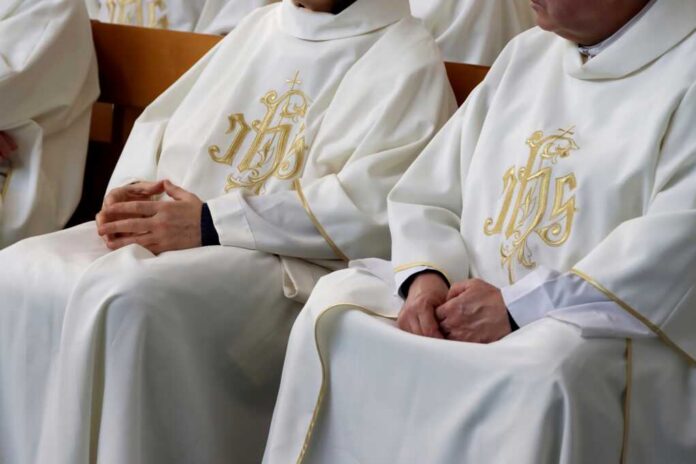
As Irish dioceses quietly normalize “Mass-style” lay-led services, many faithful are asking whether a synodal experiment is hollowing out the priesthood and the sacraments from the inside.
Story Snapshot
- Irish bishops are restructuring parishes and planning wider use of lay-led liturgies amid priest shortages and synodal language about “co-responsibility.”
- Critics warn these services can blur the line between genuine Catholic Mass and non-sacramental gatherings, weakening belief in the Eucharist.
- Official guidance admits lay-led worship is distinct from Mass and meant for situations without available priests, not as a routine replacement.
- The fight in Ireland mirrors wider global battles over tradition, authority, and whether “synodality” masks doctrinal drift.
Irish Lay-Led Liturgies: From Rare Exception To Quiet New Normal
In dioceses across Ireland, bishops and church planners are openly preparing for fewer priest-led Masses and a growing reliance on lay-led liturgies as part of pastoral restructuring.[5][6] Bishop Denis Nulty of Kildare and Leighlin has warned that parish Mass schedules must be reduced and that lay-led liturgies will increasingly “provide” coverage in newly created pastoral areas, effectively institutionalizing these services rather than treating them as rare stopgaps.[5] Live-stream timetables list “Lay Led Liturgy” alongside daily Mass, signaling operational normalization.[4] For many conservative Catholics, this looks less like renewal and more like managed decline.[6]
Academic work on rural Irish parishes confirms that the shift has been building for years, driven by steep priest shortages and aging clergy.[6] Researchers note that many country churches now have only one weekend Mass, and lay-led liturgies or other shared prayer forms are increasingly proposed as the “solution” to keep churches open.[6] Supporters frame this as ordinary adaptation and “co-responsible” leadership by lay people, echoing synodal language that calls for broader lay participation in ministerial roles and decision-making structures across Ireland. The same facts, however, can be read as evidence of a deeper crisis in vocations and sacramental life.[1][6]
What Lay-Led Worship Is — And Is Not — In Catholic Teaching
Official liturgical guidance makes a sharp distinction between the Holy Sacrifice of the Mass and any lay-led celebration of the Word or prayer.[2] Documents describing “Sunday celebrations in the absence of a priest” state that communities may gather for Morning or Evening Prayer or for a Celebration of the Word with or without Holy Communion when no priest is available, while insisting that these rites must remain clearly distinct from a Eucharistic liturgy.[2] Guidance explicitly says that, where Holy Communion is distributed, the altar is not used, and the service is not a Mass.[2] Lay leaders can preside at funerals, marriages outside Mass, or liturgies of the Word only with the bishop’s permission and proper training, underscoring that the norm remains priestly celebration of the sacraments.[2][3]
Conservative critics in the Catholic press argue that Irish dioceses are stretching these emergency provisions into a new normal that confuses the faithful.[1] The Catholic Herald points out that canon law envisions such lay-led celebrations only in genuine emergency conditions, with explicit authorization from the local bishop, not as a routine substitute where priests still exist within reasonable travel.[1] The article warns that Ireland already struggles with poor understanding of the Eucharist, and that quasi-Mass lay services risk further eroding belief in the Real Presence and the uniqueness of the ordained priesthood.[1] It also cautions that blurring roles can “clericalize” laity while diminishing the spiritual identity and mission tied to Holy Orders.[1]
Voices Of Resistance: Defending The Mass And The Priesthood
Faithful Catholics in Ireland and abroad are increasingly pushing back against lay-led liturgies that look and feel like Mass but lack a priest and a valid sacrifice.[1][4] In a widely shared video focused on the Diocese of Killala, a lay commentator argues that lay-led liturgies can only be justified in truly extreme situations, such as persecuted communities with no realistic access to clergy.[4] He insists that Catholics fulfill their Sunday obligation through the Holy Sacrifice of the Mass and that a lay-led service, however devout, does not replace Mass in the life of the Church.[4] He notes that Ireland still has thousands of Sunday Masses and urges people to travel rather than accept a non-sacramental substitute in their local parish.[4]
Conservative writers extend this critique to the broader synodal project in Ireland, warning that “co-responsibility” can become a slogan for quietly shifting authority away from the priesthood and toward bureaucratic structures that are less accountable to tradition.[1] Ireland’s national synodal synthesis acknowledges widespread suspicion of existing church structures but strongly highlights demands for more lay ministry and shared leadership. Diocesan materials describe the synod as a journey of listening, dialogue, and joint decision-making about mission and governance. For Catholics committed to doctrinal continuity, the key question is whether this process deepens fidelity to the Eucharist and the ordained priesthood—or slowly replaces them with committees, processes, and liturgies that approximate Mass without its sacrificial heart.[1][2][4][6]
Sources:
[1] Web – Mass… Without Priests?! Synodal Church vs. Catholic Church
[2] Web – Lay-led liturgies won’t save the Irish Church – The Catholic Herald
[3] Web – Mass Rocks as a Possible Future – Home
[4] Web – Irish parishioners to oversee funerals – Detroit Catholic
[5] Web – Schedule – ChurchServices.tv live mass and services from Churches …
[6] Web – Bishop Nulty warns of fewer Masses and rise of lay-led liturgies in …