Britain is locking in billions for Ukraine’s air defenses—and taxpayers on both sides of the Atlantic are being asked to accept an open-ended commitment with few publicly defined limits.
Story Snapshot
- Prime Minister Keir Starmer publicly reiterated “unwavering” UK support for Ukraine while emphasizing a peace outcome based on Ukrainian sovereignty and security.
- The UK government announced a £100 million air defence package and said £600 million in air defence support was committed over a two-month period as of late March 2026.
- Starmer’s diplomacy included meetings with President Volodymyr Zelenskiy in London and in Yerevan, Armenia, alongside coordination with Western partners.
- Official statements frame the policy as both a moral stance and a hard security measure meant to deter wider Russian aggression in Europe.
Starmer’s message: “no let up” as aid and diplomacy accelerate
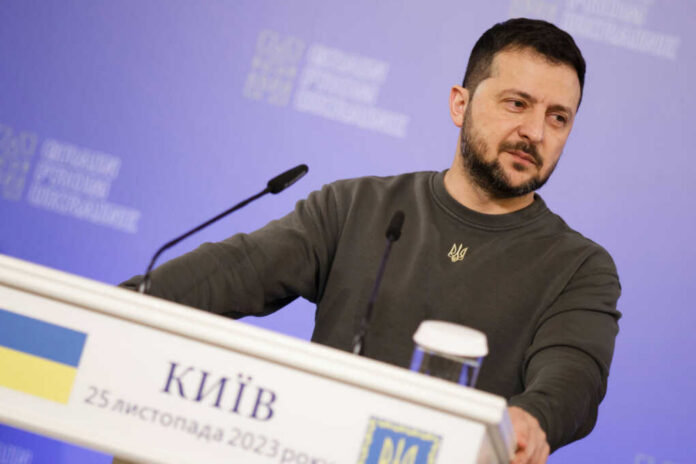
UK Prime Minister Keir Starmer has used a series of public remarks and high-level meetings to restate that Britain will continue backing Ukraine against Russia. Downing Street has described Starmer as pursuing a “lasting peace” grounded in Ukraine’s sovereignty and security, not a settlement imposed by force. The posture is reinforced by continued leader-to-leader engagement with Ukrainian President Volodymyr Zelenskiy, including meetings reported in both London and Yerevan, Armenia.
Starmer’s approach reflects a broader Western strategy: keep military assistance flowing while maintaining diplomatic unity, including coordination with NATO partners. For supporters, the logic is straightforward—help Ukraine hold the line now to reduce the risk of a wider European war later. For skeptics, the key question is how governments define success, timelines, and accountability when “unwavering support” becomes a standing policy rather than a clearly bounded emergency response.
What the UK is funding: air defense as the centerpiece
The UK government has put air defense at the center of its latest commitments, announcing a £100 million air defence package intended to help protect Ukrainian cities and critical infrastructure from continued strikes. The same official release said that £600 million in air defence support had been committed over a two-month period as of March 2026. Public details in the provided material do not specify exact systems, delivery schedules, or measurable performance targets.
That focus on air defense is strategically significant because it aims at protecting civilian life and keeping core services running—electricity, transport nodes, and other infrastructure that modern economies depend on. It also highlights a hard truth that resonates with many Americans: advanced defense technology is expensive, ammunition is finite, and sustaining high-tempo support requires industrial capacity and long-term budgeting. Limited public specifics can fuel distrust among voters already wary of elite-driven foreign policy.
Domestic politics and public trust: why this hits a nerve
In the United States, President Donald Trump’s second-term “America First” instincts have kept pressure on allies to carry more of the burden, and Starmer’s announcements will be read through that lens. Many conservative-leaning voters agree Russia’s aggression must be deterred, but they also want clarity on where commitments end—especially after years of inflation anxiety, debt growth, and frustration that government often seems more responsive to institutions than to families balancing groceries, mortgages, and energy bills.
On the left, there is also skepticism—less about national interest and more about inequality and whether constant overseas obligations crowd out domestic priorities. The shared overlap is mistrust: many citizens, across ideologies, increasingly believe government systems protect entrenched “elites” and bureaucracies before they protect working people. When leaders promise support “for generations to come,” the statement can sound principled—or like a blank check—depending on whether leaders provide transparent milestones.
Strategic implications: deterrence, escalation risk, and unanswered details
Supporters argue that sustained backing strengthens deterrence by signaling that Russia cannot wait out the West, and that defending Ukraine helps stabilize Europe’s security architecture. Critics counter that deterrence still requires boundaries and a credible plan for ending the conflict on acceptable terms. The research provided points to broad goals—sovereignty, security, and lasting peace—while leaving major operational questions unanswered, including the types of equipment, the pace of delivery, and what conditions would signal progress.
For U.S. readers, the takeaway is not that Britain’s support is inherently wrong, but that democratic legitimacy depends on specifics: clear objectives, transparent costs, and oversight that the public can understand. Without that, foreign policy becomes another arena where voters suspect decisions are made above their heads—feeding the same anti-establishment frustrations that have reshaped politics across the West. The closer governments get to long-term commitments, the more those accountability demands will grow.
Sources:
British premier reaffirms unwavering support for Ukraine following calls with Trump, Zelenskyy
Starmer reaffirms the UK’s absolute support for Kyiv against Russia