
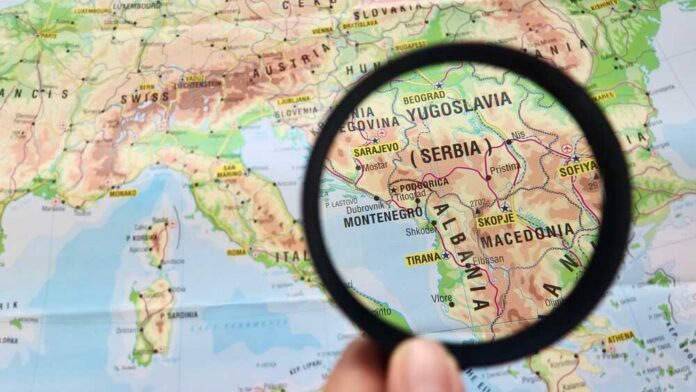
Albania’s bold move to designate Iran’s Revolutionary Guard Corps (IRGC) as terrorists aligns with President Trump’s strong stance against global terror threats, defying leftist appeasement of regimes that fund chaos abroad.
Story Highlights
- Albania labels IRGC a terrorist group, joining US and allies in isolating Iran’s paramilitary force amid its internal turmoil.
- IRGC, founded in 1979, suppresses dissent, backs proxies like Hamas and Hezbollah, and controls vast economic empires threatening stability.
- Timing coincides with reported death of Supreme Leader Khamenei, exposing IRGC power struggles under successor Mojtaba.
- This action bolsters anti-terror efforts, echoing Trump’s policies prioritizing American security over globalist weakness.
Albania’s Designation Targets IRGC Terror Network
Albania declared Iran’s Islamic Revolutionary Guard Corps a terrorist organization, citing its role in funding proxies and destabilizing regions. This decision follows precedents set by the United States in 2019, United Kingdom, and Canada, which recognized the IRGC’s Quds Force activities supporting Hezbollah and Hamas. Albania’s Prime Minister Edi Rama called for the designation after U.S. and Israeli strikes heightened tensions. The move pressures Tehran during its leadership vacuum, reinforcing NATO ally resolve against Iranian aggression. Conservatives applaud this rejection of regimes that export revolution while America secures borders under President Trump.
IRGC Origins and Expansion Undermine Stability
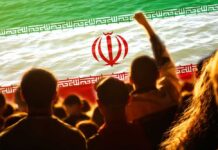
Ayatollah Ruhollah Khomeini established the IRGC in April 1979 to protect the Iranian Revolution from internal threats and the regular army’s potential disloyalty. It unified revolutionary militias as a counterweight to the shah-loyal Artesh, formalized in Iran’s constitution. During the 1980-88 Iran-Iraq War, the IRGC grew massively, gaining autonomy under leaders like Ali Khamenei. Post-1989, it infiltrated economics, intelligence, and suppressed protests like the 2009 Green Movement. With 125,000 personnel plus Basij militia, it reports directly to the Supreme Leader, controlling missiles and regional influence.
IRGC leadership, including Quds Force and Basij commanders, operates parallel to state structures, building economic empires and rival intelligence networks. This entrenchment bypasses elected leaders, designed as a “people’s army” for regime protection. Experts note its role fueling Mideast conflicts through proxies. Albania’s label exposes these threats, aligning with Trump’s focus on dismantling terror networks that leftist policies once ignored.
Current Turmoil in Iran Heightens Global Risks
Early March 2026 reports confirm Supreme Leader Ali Khamenei’s death in a U.S.-Israeli attack, thrusting son Mojtaba into succession amid military and political turmoil. Mojtaba struggles for IRGC loyalty, as its independent networks challenge control. Ongoing operations include Basij protest suppression and regional headquarters targeting Kurds and others. Israel faces persistent hostilities from IRGC-backed Hamas in Gaza and Hezbollah in Lebanon. Albania’s timely designation could strain Tirana-Tehran ties but aligns it with the U.S.-led bloc.
Impacts Echo Conservative Priorities
Short-term, the designation risks IRGC retaliation via proxies or cyber means but exploits Iran’s leadership fractures, potentially sparking internal escalations. Long-term, it bolsters global terrorist labels, isolating Iran economically and politically while disrupting IRGC smuggling and oil networks. Affected parties include the Iranian regime, proxies losing funding, and regional groups like Kurds facing IRGC ops. This advances limited government abroad by weakening overreaching terror structures, mirroring Trump’s homeland security victories like mass deportations and border walls that ended Biden-era invasions.
Expert Kamal Abdul Karim describes the IRGC as a complex network hard to control post-Khamenei. CFR analysis highlights its independence fueling conflicts. Britannica and USIP detail its evolution into a powerhouse suppressing reform. Consensus views it as entrenched and suppressive. Albania’s stand vindicates conservative warnings against globalism that empowers such forces, empowering patriots who value sovereignty and family safety over open-border follies.
Sources:
https://www.cfr.org/backgrounders/irans-revolutionary-guards
https://iranprimer.usip.org/resource/revolutionary-guards
https://www.usmcu.edu/Portals/218/Iran%20Guard%20PDF.pdf
https://www.thetimes.com/world/middle-east/article/what-is-irgc-iran-revolutionary-guard-fbcmfhqfz