When President Trump told reporters that “Russia should make a deal” with Ukraine, he signaled a hard push to stop a bloody war that global elites seem content to let drag on.
Story Snapshot
- Trump used the G7 summit to link his Iran talks and a push for a negotiated end to the Russia‑Ukraine war, saying Ukraine is his next focus.[1][2]
- The White House confirmed Ukraine was a top summit priority and that Trump would work the issue directly with President Volodymyr Zelenskyy and other leaders.[2]
- Trump and Zelenskyy say their teams have already agreed on most points of a multi‑point peace framework and U.S.-backed security guarantees for Ukraine.[3]
- Critics in Europe and the foreign policy class warn that talks are “on hold” and fear any deal that does not keep the war going on their terms.
Trump Ties Iran Breakthrough To A Push For Peace In Ukraine
At the G7 summit in France, President Donald Trump told reporters that after clinching what he described as major progress on Iran, he is “going to be focusing on” ending the Russia‑Ukraine war next.[1] He framed both crises as linked parts of a wider push to stop endless conflict that drains Western taxpayers and risks a larger war. The White House had previewed this pivot, saying ahead of the summit that Ukraine would be high on Trump’s agenda with allied leaders.[2]
Trump also made clear that he is not chasing feel‑good speeches but real results. He said he had “very good” talks with both Ukrainian President Volodymyr Zelenskyy and Russian President Vladimir Putin, and that his team had put forward a detailed proposal rather than vague slogans.[1] That stance fits Trump’s long‑running promise to use deals and leverage, not open‑ended checks, to wind down foreign wars and let America focus again on its own borders, energy, and economy.
Inside Trump’s ‘Make A Deal’ Message To Moscow And Kyiv
After meeting Zelenskyy at the summit, Trump said directly that “Russia should make a deal” with Ukraine because Moscow has “lost tremendous numbers of people” in the fighting. He stressed that continued bloodshed serves no one and that leaders have a duty to stop sending young men into the meat grinder. That is a sharp contrast with many European politicians who talk about “fighting to the last Ukrainian” while their own citizens struggle with high energy bills and inflation.
Behind the scenes, Trump’s team has worked on an actual framework. Reporting describes a United States proposal of roughly two to three dozen points, which Trump called “not the final offer” but a serious starting text to close the war. Zelenskyy has publicly said there is a “20‑point peace plan” with about ninety percent already agreed, along with United States‑Ukraine and broader security guarantees that he says are fully or almost fully settled.[3] Trump has said the hardest remaining issue is territory, and that negotiations will decide how to handle areas along the current front lines.[3]
Talks, Phone Calls, And A Peace Track Under Fire
Trump’s “make a deal” line was not a one‑off sound bite. The Kremlin’s own account of a recent Trump‑Putin call says Trump “again stressed the need to stop hostilities” and signaled he was ready to push European partners and Kyiv toward talks. While Moscow’s spin always serves its interests, it still confirms that Trump used precious phone time to press for ending the shooting, not to green‑light more escalation. That alone cuts against claims that he is indifferent to Ukrainian lives.
The White House has backed that picture of steady engagement. Officials said before the summit that Trump would attend a working session with Zelenskyy and other leaders on Ukraine, not just hold quick photo ops.[2] Public briefings also describe Ukraine as part of a larger conflict‑resolution agenda that includes Iran and efforts to prevent the war from spilling over into a wider clash between the North Atlantic Treaty Organization and Russia.[2] For many conservatives, that fits the core duty of a president: keep America strong, avoid world war, and defend our own people first.
Why The Global Establishment Is Nervous About A Deal
European and Ukrainian officials often insist that Russia is “not ready to speak about peace,” and some outlets frame the G7 as “Zelenskyy and Europe versus Trump.” Analysts in the traditional foreign policy world argue that any quick deal could lock in Russian territorial gains in eastern Ukraine and reward aggression. They point to ongoing Russian advances in Donbas and heavy fighting around key cities as proof the battlefield remains fluid and dangerous. Their answer tends to be more weapons, more time, and more money from Western taxpayers.
Trump told Russia to make a deal.
That is the part that matters.
ㅤ
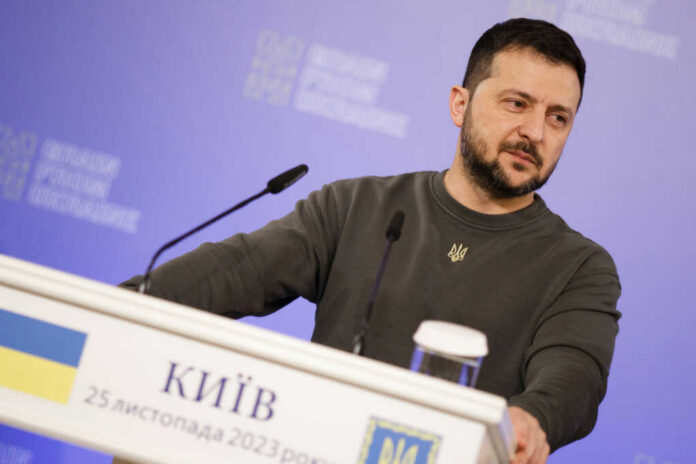
At the G7 summit in France, after what he called a “very good” meeting with Ukrainian President Volodymyr Zelenskyy, U.S. President Donald Trump said Russia should make a deal and that he would do what he can.
ㅤ… pic.twitter.com/ZZPsjq5Nk6— Meanwhile in Ukraine (@MeanwhileInUA) June 16, 2026
Those critics also admit a basic problem: most of the exact terms on the table are still secret or only partly leaked. The full United States draft plan has not been released, and talks have been described as “on hold” or still under review by allies. That silence feeds suspicion on all sides. For many on the American right, the bigger risk is not diplomacy itself but letting unelected global bureaucrats drag the war out for years while U.S. debt explodes, our border stays open, and working families pay for someone else’s forever war.
Sources:
[1] Web – Trump says Russia ‘should make a deal’ with Ukraine
[2] Web – Trump touts deal to end Iran war at G7, says he seeks …
[3] Web – White House Says Iran, Ukraine, High On Trump’s G7 …