
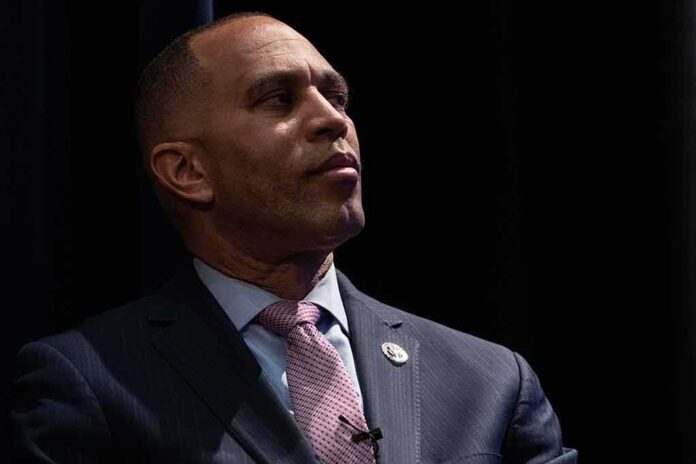
A recorded interview captured Rula Jebreal calling Hakeem Jeffries a “monkey” and “errand boy,” sparking a racism backlash grounded in her own words.
Story Highlights
- Video shows Jebreal using “monkey” and “errand boy” to describe Jeffries, then denying racist intent.
- Commentator Wajahat Ali appeared to nod along without pushback during the exchange.
- The slur lands amid recent fights over racist rhetoric toward Jeffries from multiple sides.
- The episode exposes a double standard in media outrage and political discourse.
Recorded Words Fuel Accusations Of Racism
A YouTube discussion posted on September 2 captured journalist Rula Jebreal saying Hakeem Jeffries “is a bought and paid by AIPAC monkey,” followed by, “I don’t mean it in a racist way,” and calling him “basically an errand boy.” The clip also includes her saying, “Hakeem Jeffries is a traitor.” These quotes appear in the same segment and are audible in sequence. The source is a primary recording, not hearsay or a paraphrase.
Jebreal’s “not racist” disclaimer did not soften the impact. Many viewers heard a classic dehumanizing slur used against Black Americans. The insult targeted the House Democratic leader by name and referenced lobbying fights over Israel policy. The slur and the follow-on “errand boy” phrase created a one-two punch. The reaction centered on the words themselves, not a disputed transcript or anonymous account.
Silence On Set And A Familiar Double Standard
Commentator Wajahat Ali, who hosted the exchange, appeared to nod along as Jebreal spoke. The moment drew criticism because he did not challenge the slur in real time. A write-up from Twitchy highlighted the lack of pushback, framing it as tacit approval of racially charged language aimed at a Black leader. The gap between outrage standards on left-leaning shows and the treatment of conservatives was a core complaint from critics.
Recent history shows how fast leaders and media pile on when a Republican guest uses loaded terms at Jeffries. In May, a radio host’s “cotton-picking” remark triggered quick condemnation as racist, and it became a news cycle of its own. That episode set a clear baseline: some words cross a bright line. The Jebreal clip invites the same metric. Many are asking why the line shifts when the speaker is a progressive pundit.
Why This Matters For Standards, Not Sides
Public debate suffers when standards bend with the speaker’s politics. If “monkey” is racist when hurled from the right, it is racist when hurled from the left. Equal rules protect everyone and lower the temperature. Jebreal’s added “not racist” line does not erase the history of that word. Words carry weight because of what they have meant in America, not only what a speaker says they now mean. The primary record fixes what was said.
Viewers deserve a media culture that rejects dehumanizing speech across the board. Hosts should challenge it, producers should correct it, and networks should apply one policy, not two. Conservatives are tired of selective outrage that smears their side while excusing allies. This moment is a stress test for the press. It asks a simple question: Do the rules still apply when the target is a Democrat some progressives dislike? The answer should be yes, every time.
Sources:
twitchy.com, youtube.com, dpcc.house.gov