
An Iranian missile strike that flattened a civilian apartment building in Haifa is now colliding with a growing reality at home: America’s Middle East commitments are pulling Trump’s second-term coalition in two.
Story Snapshot
- Israeli rescuers recovered four bodies from a seven-story Haifa building after an Iranian ballistic missile strike and an 18-hour search.
- The victims were a family unit—parents, their son, and his partner—killed when the structure collapsed from a direct hit.
- Emergency services reported additional casualties, including an 82-year-old seriously injured and a toddler lightly injured, plus others treated for minor wounds and shock.
- The recovery effort relied on multi-agency coordination and cellphone-assisted locating inside unstable concrete rubble.
What Happened in Haifa: A Direct Hit on Civilians
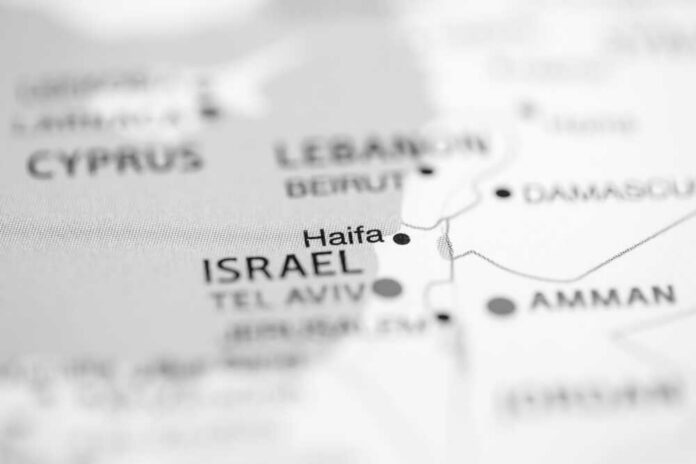
Israeli rescue forces said four missing people were found dead and extracted from the rubble of a residential building in Haifa after an Iranian ballistic missile struck the site on Sunday. The missile hit a terraced, seven-story structure, causing catastrophic collapse. The victims were reported to be parents, their son—identified as a Herzliya resident—and the son’s partner. Rescue teams worked for roughly 18 hours to complete the search and recovery.
Medical responders described a large-scale emergency scene that went beyond the fatalities. Reports said an 82-year-old man was evacuated in serious condition, and a toddler was treated for lighter injuries. Additional residents and bystanders were treated for mild wounds and shock, and a gas balloon reportedly exploded near the scene, complicating conditions. The result was a grim reminder that missile exchanges in this conflict land on families—not just military targets.
How Rescuers Found the Victims: Technology and “Impossible Conditions”
Israeli emergency services emphasized the complexity of the operation: unstable rubble, damaged infrastructure, and the need for careful, systematic searching. Multiple organizations took part, including firefighters, elite rescue units, the IDF Home Front Command, and national-level responders. One reported factor that helped narrow the search was locating a missing person’s cellphone, which guided teams to a more precise area inside dense, broken concrete. That detail underscores how modern recovery often depends on small signals amid chaos.
Reports also show how information evolved as the operation progressed. Early accounts indicated two bodies had been recovered overnight while two people remained missing; later updates confirmed all four were found by Monday. That timeline matters because it illustrates the limits of real-time reporting during mass-casualty events—and why families often endure long hours of uncertainty. The confirmed outcome closed the search phase, but it also intensified the broader political and strategic questions around escalation between Iran and Israel.
Why This Matters to Americans in 2026: The Coalition Split Over Another War
President Trump’s second-term administration now owns whatever comes next from Washington, whether the U.S. stays narrowly focused on deterrence or slides into direct conflict. Among MAGA voters—especially those who backed Trump for border enforcement, energy dominance, and a break from nation-building—there is growing discomfort with anything that resembles another open-ended Middle East war. The Haifa tragedy is real and human, but it also becomes a pressure point: sympathy for civilians can coexist with skepticism toward U.S. intervention.
That skepticism is sharpened by the last decade’s domestic pain points many conservatives cite—high energy prices, inflation linked to fiscal mismanagement, and distrust of globalist commitments that never seem to end. When foreign crises escalate, Americans often feel the immediate downstream effects through higher fuel costs and greater federal spending, while Congress and the bureaucracy expand authorities that can spill back onto domestic liberties. Limited data in the current reporting does not detail U.S. policy decisions, but the political tension is visible: security commitments abroad can collide with voters’ demand for restraint.
The Hard Question Ahead: Support, Restraint, and Constitutional Guardrails
The Haifa strike highlights a core dilemma for a conservative, America-first audience: how to support an ally under missile attack without handing Washington a blank check. The Constitution places war powers with Congress, and any step toward direct U.S. involvement should be debated openly, not smuggled in through emergency authorizations or vague “security” rationales. As this conflict evolves, the most responsible approach is to insist on clarity—mission, costs, timeline, and legal basis—before America is pulled further in.
For now, the facts on the ground in Haifa are stark: a direct strike, a collapsed residential building, and four members of one family recovered after a long, dangerous search. The political aftershock in the United States is still forming, but the warning signs are familiar to anyone who watched past “limited” engagements become multi-year commitments. Conservatives who demanded secure borders, lower costs, and less federal overreach will be watching closely to see whether Washington honors restraint—or repeats history.
Sources:
https://www.israelnationalnews.com/news/425068
https://www.ynetnews.com/article/r19irkgn11g