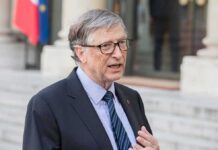


Homeland Security Secretary Markwayne Mullin defended a plan to livestream the firing-squad execution of Fort Hood shooter Nidal Hasan, framing it as accountability and deterrence tied to “restoring American values.”
Story Highlights
- Mullin said a public stream poses “no elevated risk” and that viewers can choose not to watch.
- Defense leaders recommended the stream, and President Trump approved the plan, according to reports.
- Hasan was convicted for killing 13 and wounding 32 at Fort Hood; execution is scheduled for December 3.
- Critics from both parties and international groups warn of propaganda and moral risks.
Mullin’s Rationale: Deterrence and Public Accountability
Homeland Security Secretary Markwayne Mullin said televising Hasan’s execution would show that attacks on America bring a fitting punishment. Mullin told Face the Nation he does not see an “elevated risk” from a livestream and added, “No one has to watch it if they don’t choose to”. He tied the message to deterrence and national resolve, arguing Americans deserve to see justice and that transparency reinforces accountability after a lawful conviction and sentence.
Defense Secretary Pete Hegseth recommended a livestream, and reporting said President Trump approved the plan, with the Pentagon announcing the stream would proceed. Supporters argue the broadcast would warn would-be attackers that America responds with certainty and proportion. They frame the step as consistent with common-sense justice and public truth-telling about the evil of mass murder. This view centers on deterrence through clarity, not spectacle, and on restoring trust in equal consequences for heinous crimes.
The Case Background: Fort Hood, Conviction, and Method
Former Army Major Nidal Hasan was convicted for the 2009 Fort Hood shooting, which killed 13 people and wounded 32. ABC News reported that the execution is scheduled for December 3 at Fort Hood by firing squad. Supporters of transparency say the facts are not in dispute: a lawful court-martial, a final sentence, and a date certain. They argue the government is not rushing judgment but closing a long chapter with a clear signal that attacks on service members will meet firm justice.
Beneath the policy debate, two issues are distinct. One is the punishment itself, which follows the conviction. The other is whether to broadcast it. Backers say airing the event shows the public the state’s solemn act rather than hiding it behind closed doors. They say sunlight can build trust, reduce rumor, and prevent myths. Critics counter that video changes the nature of the event and risks turning justice into a show, even when the sentence is lawful and deserved.
Backlash and Open Questions About Risks
Opponents from both parties argue a livestream could hand extremists a propaganda tool and resemble conduct of hostile regimes. Senator Jack Reed called the plan a “gift to anti-American terrorist recruiters,” while Senator Thom Tillis said public executions are linked to oppressive dictatorships. The United Nations human-rights office warned a broadcast would be tantamount to a public execution and breach the prohibition of torture; the U.S. Conference of Catholic Bishops also condemned the idea. These objections stress dignity, youth exposure, and global optics.
Mullin on livestreamed execution: ‘No one has to watch’ https://t.co/31HyKaieiL
— The Denver Gazette (@DenverGazette) October 12, 2026
Administration messaging has not been fully aligned. The Pentagon announced the stream, but later reporting said President Trump had not made a final decision, and Vice President JD Vance suggested it might not happen. Mullin’s claim of “no elevated risk” came without a public threat assessment to address martyrdom or copycat concerns. Critics argue that without a released risk review, deterrence gains are unproven and platform risks remain. Supporters respond that evil should not be hidden and that justice must be seen to be believed.
Conservative Lens: Justice, Transparency, and Guardrails
Conservatives want government to punish evil swiftly, lawfully, and without apology. Hasan’s guilt is established, and the sentence is final. The question is whether a public broadcast advances justice or muddies it. If leaders proceed, they should publish clear guardrails: access limits, age restrictions, delay buffers, and takedown rules to block exploitation. That approach would align transparency with responsibility, deny extremists free propaganda, and respect grieving families while showing that America means what it says about justice.
Sources:
dw.com, thehill.com, newsweek.com, politico.com, yahoo.com