
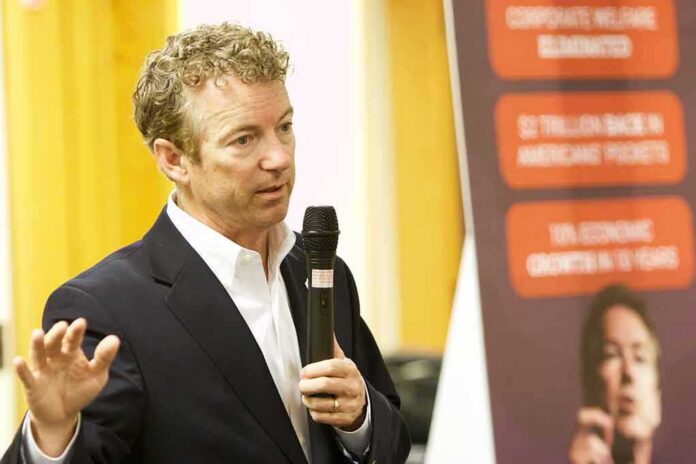
Senator Rand Paul stopped a no-vote rush on the Kids Online Safety Act, warning it could chill free speech and fuel surveillance creep.
Story Highlights
- Rand Paul blocked a unanimous-consent push to pass the Kids Online Safety Act without a roll-call vote.
- Paul argued the bill’s “duty of care” would pressure platforms to censor lawful speech.
- Sponsors say the bill targets product design and youth safeguards, not content bans.
- Critics warn it would drive age verification and tracking that threaten privacy.
What Paul Blocked And Why It Matters
Senator Rand Paul of Kentucky objected to passing the Kids Online Safety Act by unanimous consent, which would have skipped a recorded vote. Paul said the bill’s duty-of-care mandate would “inevitably” push platforms to curb protected speech to avoid risk. He warned of a “Pandora’s box of unintended consequences,” and pressed for open debate and amendments before any final action. A prior Senate tally showed strong support, but Paul insisted process and rights still matter.
The move came as backers framed the bill as a child-safety product design fix, not speech control. They point to requirements for tools, audits, and features that claim to reduce harm to minors. The official bill text states its goal is to protect children online and requires platforms to add safeguards for users under age 17. Supporters say parents would gain new controls and ways to report abuse, including options to limit recommendations and stranger contact.
What The Bill Says Versus What Critics Fear
Congressional materials describe design-focused obligations, including “reasonable care” in features that increase minors’ usage and safety tools that restrict contact and exposure pathways. Those claims back sponsor statements that the measure targets features, not content. Yet civil-liberties groups counter that any duty tied to “harm” triggers real-world pressure to remove or downrank lawful but controversial speech, because platforms reduce liability by over-moderating gray areas.
Privacy advocates add a second risk: to follow any minor-specific duty, platforms must identify who is a minor. That pushes companies toward age verification or age estimation for everyone, sweeping in adults, too. The National Taxpayers Union warned Section 9 could function as a backdoor to invasive age checks and drive continuous monitoring to manage legal risk. The group said these incentives could lead to more content removals to stay safe from penalties.
Free Speech Stakes For Conservatives
Paul’s stand resonates with conservatives who have seen “safety” rules turn into speech policing. He argued the bill’s new legal duty would cause platforms to censor to avoid lawsuits, which hits pro-life, faith-based, and other right-leaning views first during enforcement fights. He cited warnings from aligned advocates that vague standards can target messages they value, like pro-life content. He said any fix for child safety must protect First Amendment rights while addressing real harms.
That concern meets a long pattern in internet policy fights. Lawmakers name design harms, but enforcement often leans on content decisions. When penalties loom, trust-and-safety teams remove more than they should. Courts can take years to sort boundaries. Meanwhile, users lose posts and reach. Skeptics say a broad duty-of-care will turbocharge that cycle and lock in “safety” as a standing reason to silence lawful speech in edge cases.
The Privacy Cost Of Age Gates And IDs
Opponents warn that age checks rarely work without identity checks. They argue that means more data collection, document uploads, face scans, and tracking. Once those systems exist, breaches, data sales, and mission creep follow. The National Taxpayers Union highlighted the risk that regulators could stretch rulemaking into de facto digital identification to access basic online services, a step many limited-government voters reject outright. Paul flagged that risk as reason to slow down.
Rand Paul Blocks Rushed Attempt To Pass KOSA Without A Vote
For a measure framed as child protection, KOSA spends an intriguing amount of time imagining an identity system.
https://t.co/MWKl6auZKB— Steve Williams (@HISteveWilliams) October 2, 2026
Sponsors reply that KOSA does not mandate age verification in the text and focuses on product design and parental tools. But critics answer that legal incentives force platforms there anyway. If companies cannot tell who is a minor, they cannot meet a minors-only duty. That gap leads to broader checks in practice, they say, which threatens the privacy of families and chills speech across the board. Paul’s block seeks a full debate to square child safety with core rights.
Sources:
reclaimthenet.org, blackburn.senate.gov, congress.gov, blumenthal.senate.gov