A fast-moving California island fire has put a rare ecosystem at risk while investigators still have not locked down the exact ignition source.
Quick Take
- Officials and news reports say the Santa Rosa Island fire was human-caused, but the exact origin remains under investigation.
- Reporting points to a stranded sailor’s distress flare as the likely trigger, but that theory is not yet a final finding.
- The blaze has burned a large share of the island and moved through habitat tied to rare Torrey pines.
- The public record so far relies on secondary reporting, not a released formal cause-and-origin report.
Fire Burns Through a Rare Coastal Refuge
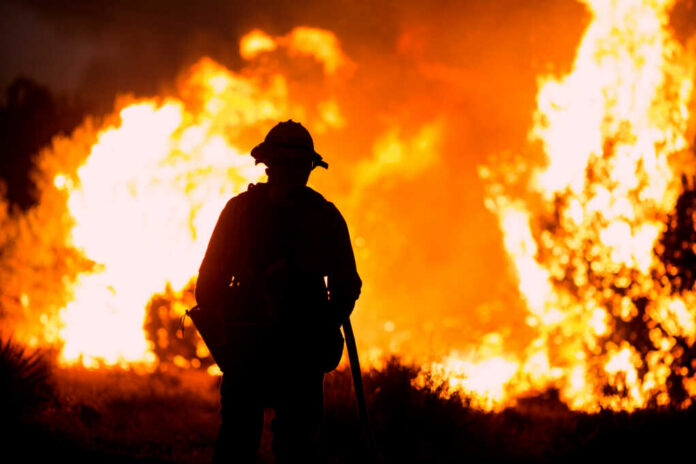
NASA reported that the blaze spread across the southern side of Santa Rosa Island, one of the Channel Islands off the California coast, and officials said the fire was human-caused while investigators continued to sort out the exact circumstances . That distinction matters. Human-caused does not automatically mean the first public theory is confirmed. In this case, the available record still leaves room between broad attribution and a finished investigative conclusion [1][2].
Inside Climate News said the fire swallowed nearly a third of the island and passed through a stand of Torrey pine trees, a rare species in the United States found naturally only in a few places [2]. That makes this more than another wildfire headline. For readers who care about stewardship, the loss of irreplaceable habitat is the real story. Once rare coastal habitat burns, recovery can take years, and some ecological damage may never fully reverse.
What the Reporting Says About the Ignition
News accounts tied the likely ignition to a stranded sailor who allegedly used a flare after his boat grounded on the island, but the reporting used cautious language and did not present a final official determination [2][3]. That caution is important. The public has seen too many cases where an early explanation becomes social-media certainty before investigators finish the work. A flare, a grounding, and a rescue timeline may fit the narrative, but fit is not proof.
The same reporting also described a visual clue: an “SOS” marking in burned vegetation near the area where the fire started [2]. That detail may help investigators narrow the origin point, but it is still circumstantial in the material provided. No formal investigator report, sworn statement, or forensic analysis was included in the sources here. For now, the strongest fact is still the narrow one: officials say the cause remains under investigation [1][2].
Why the Distinction Matters for the Public
The difference between “human-caused” and “flare from a sailor” is not semantic hair-splitting. It is the difference between an open investigation and a conclusion that could shape blame, policy, and public perception. Conservative readers know how often institutions and media rush to narrative before evidence. In a wildfire case, that rush can obscure accountability, especially when a rare national park habitat and a potentially preventable accident are both involved [1][2].
A large wildfire has burned nearly a third of Santa Rosa Island in California’s Channel Islands National Park — an area home to dozens of rare plants and animals, including some found nowhere else in the world. https://t.co/2dGemGUIjL pic.twitter.com/4QG8YvqmFh
— CNN (@CNN) May 21, 2026
The public record now points in one direction, but it does not close the case. Until officials release a formal cause-and-origin finding, the flare theory remains a reported hypothesis rather than settled fact [1][2]. Meanwhile, the fire’s damage to fragile island habitat is already real, and the scale of the burn has placed one of California’s most unusual natural areas under immediate strain [2]. Readers should watch for the final report, not the loudest summary.
Sources:
[1] Web – Fire threatens rare wildlife and fragile habitats on Santa Rosa Island
[2] Web – Fire in the ‘Galapagos of North America’ Risks Species Found …
[3] Web – Largest fire ever recorded on Santa Rosa Island endangers ‘gem of …