
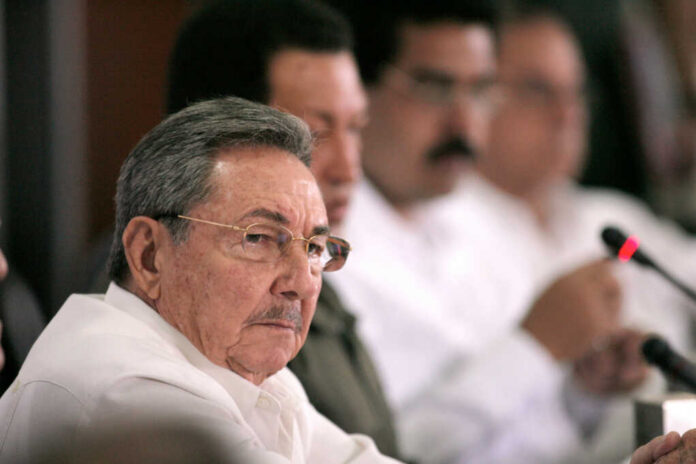
A long-awaited U.S. indictment of Raúl Castro is finally forcing a communist strongman to face American justice for the killing of four unarmed pilots over international waters.
Story Snapshot
- Federal prosecutors have unsealed a U.S. grand jury indictment charging former Cuban ruler Raúl Castro over the 1996 Brothers to the Rescue shootdown.[1][3]
- The charges stem from Cuban fighter jets destroying two civilian Cessna aircraft in international airspace, killing four men on a humanitarian mission.[1][2]
- Florida’s Republican delegation and Cuban‑American families have pressed multiple administrations for decades to pursue accountability.[4]
- The Trump Justice Department’s move signals a tougher stance on communist regimes that spill American blood while hiding behind politics.[1][4]
Deadly 1996 Shootdown Finally Comes Back to Haunt Havana
On February 24, 1996, two small Cessna planes flown by the Miami‑based group Brothers to the Rescue took to the skies on what participants viewed as humanitarian missions, looking for desperate Cuban rafters fleeing communism across the Florida Straits.[1][2] Cuban fighter jets intercepted the unarmed aircraft and shot them down in international airspace, killing four volunteers: Mario de la Peña, Carlos Costa, Pablo Morales, and Armando Alejandre.[2] The attack triggered international condemnation but, for decades, little concrete justice.
Reports from the time, and from later investigations, consistently identify a Cuban MiG‑29 fighter jet as the aircraft that carried out the lethal attack.[1][2] Witness accounts and aviation data placed the shootdown over or near international waters, well outside any legitimate claim of Cuban self‑defense.[2] For many Americans, particularly Cuban‑American families in Florida, the image of communist pilots firing missiles at unarmed civilian planes became a permanent symbol of the Castro regime’s contempt for human life and international law.
From Pressure Campaign to Indictment in the Trump Era
In the years since the shootdown, victims’ families and South Florida lawmakers repeatedly pressed Washington to pursue criminal charges against those responsible, arguing that the United States has a moral obligation to defend its citizens and residents against foreign tyrants.[2][4] Former Cuban leader Fidel Castro was the head of state in 1996, while his brother Raúl Castro commanded the Cuban armed forces, placing him at the top of the military chain of command when the planes were destroyed.[1] That structure has formed the backbone of calls to hold Raúl personally accountable.
CBS News reported that U.S. officials familiar with the matter said the United States was moving to indict Raúl Castro, the now‑94‑year‑old former president of Cuba, in connection with the downing of the planes.[1] Other outlets likewise described the Department of Justice preparing to seek a grand jury indictment, a necessary step for federal charges. A Spanish‑language report noted that the Trump administration was weighing formal charges related to the Brothers to the Rescue incident, reflecting a broader shift toward confronting Havana rather than appeasing it. Those moves set the stage for today’s unsealing of the case.
Congressional Republicans and Exile Families Keep the Heat On
Long before the indictment was announced, Florida’s Cuban‑American representatives in Congress built a coordinated push to ensure the case did not quietly die in Washington’s bureaucracy.[3][4] A House press release documented how Representatives María Elvira Salazar, Mario Díaz‑Balart, Carlos Giménez, and Nicole Malliotakis formally called for an indictment of Raúl Castro, tying their demand directly to the 1996 murders.[4] Their message was clear: communist dictators should not enjoy a pass from American justice simply because the crimes are decades old or politically inconvenient.
Video coverage captured those lawmakers holding press conferences and live events, urging the Trump administration and the Department of Justice to move from talk to action.[3] They emphasized that previous administrations had failed the families by treating the case as a diplomatic headache instead of a prosecutable crime.[3] For many in the Cuban‑American community, that failure mirrored a broader pattern: Washington elites talking tough about human rights while quietly tolerating abuses when committed by leftist regimes that align with globalist interests.
What the Charges Mean—and What They Do Not Prove Yet
Florida officials earlier reopened a state criminal investigation into Raúl Castro’s role, underscoring renewed interest in accountability at multiple levels of government.[2] The indictment now unsealed by federal authorities reportedly includes counts such as conspiracy to kill United States nationals, destruction of aircraft, and murder tied to each of the four men aboard the Brothers to the Rescue planes.[1][3] These charges reflect longstanding U.S. statutes that allow prosecution when American citizens or residents are targeted abroad.
By JOSHUA GOODMAN, ALANNA DURKIN RICHER and ERIC TUCKER MIAMI (AP) — The Justice Department is preparing to seek an indictment against former Cuban President Raúl Castro, three people familiar with the matter told The Associated Press on Frid… https://t.co/VEJAMjmw8W
— Capital Gazette (@capgaznews) May 15, 2026
At the same time, the public record still has gaps that conservatives who care about due process should recognize. Reporting so far does not reproduce the full text of the indictment, meaning outside observers cannot yet examine the exact legal theory, evidence cited, or jurisdictional arguments in detail.[1][2] Earlier coverage also acknowledged that prosecutors would need grand jury approval, underscoring that accusations against a foreign leader must still pass ordinary constitutional safeguards.[1][3] Justice must be firm, but it must also be grounded in verifiable facts rather than politics alone.
Why This Case Matters for American Strength and the Rule of Law
The Brothers to the Rescue indictment lands in a broader pattern where old cases of state‑sponsored violence become tests of whether the United States still has the will to defend its people.[1][2] For decades, families of the four slain volunteers watched global elites normalize relations with Havana, loosen sanctions, and romanticize the Cuban regime, even as basic accountability for a blatant attack on unarmed pilots remained elusive. That disconnect fueled deep frustration among conservatives who believe American citizenship should mean something when foreign dictators shed our blood.
By moving toward prosecution now, the Trump administration signals that communist strongmen cannot count on time, diplomacy, or “engagement” narratives to erase their crimes.[1] The case also sends a warning to other hostile regimes that might contemplate targeting Americans or our allies, whether in international airspace or on the high seas. For readers who are tired of seeing globalism, appeasement, and double standards undermine U.S. sovereignty, this indictment is not just about one aging dictator. It is about reasserting that the United States remains willing to defend its citizens, enforce its laws, and stand with the families who refused to forget.
Sources:
[1] Web – U.S. moving to indict Cuba’s Raúl Castro, sources say – CBS News
[2] YouTube – Cuba’s Raul Castro’s indictment is set to coincide with Miami event …
[3] YouTube – Lawmakers press for indictment of ex-Cuban President Raúl Castro
[4] Web – Salazar, Díaz-Balart, Giménez, and Malliotakis Call for Indictment of …