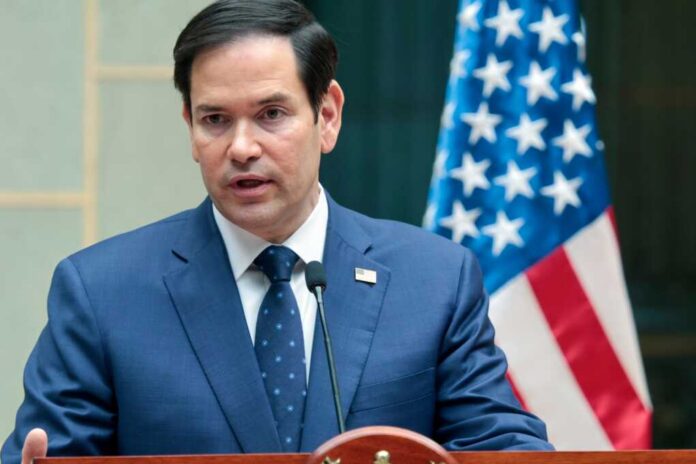
Secretary Marco Rubio’s State Department just slashed the fee to renounce U.S. citizenship by 80%, making it easier for Americans to abandon their birthright amid lingering FATCA burdens from past leftist overreach.
Story Snapshot
- Fee drops from $2,350 to $450 starting April 12-13, 2026, reversing Biden-era hikes tied to FATCA tax rules.
- Secretary Rubio signed the rule, prioritizing expatriation rights despite processing costs exceeding the new fee.
- Relief for “accidental Americans” after lawsuits claimed unconstitutional barriers, but no refunds for 8,700 recent payers.
- Expect renunciation surge, costing Treasury $8.9 million annually in lost revenue to general fund.
Fee Reduction Details
The U.S. State Department announced on March 12, 2026, an 80% cut in the renunciation fee from $2,350 to $450. This change applies to consulate appointments starting April 12-13, 2026. The final rule appeared in the Federal Register on March 13, signed by Secretary Marco Rubio. Pre-April appointments still require the higher fee, with rescheduling recommended for those affected. This corrects a 2015 increase implemented to offset surging renunciations.
FATCA Legacy and Accidental Americans
FATCA, enacted in 2010 under prior administrations, forces global banks to report U.S. citizens’ accounts, creating compliance nightmares for expatriates. Renunciations jumped from 956 in 2010 to 3,436 in 2014, prompting the fee hike. “Accidental Americans”—those born in the U.S. but living abroad lifelong—faced high barriers. The Association of Accidental Americans (AAA) filed lawsuits alleging constitutional violations to the right to expatriate, pressuring this policy shift after years of advocacy.
The process remains rigorous: in-person oaths at consulates abroad, Form 8854 exit tax filing, and six-month processing for Certificate of Loss of Nationality. Prior tax debts persist, underscoring that renunciation trades U.S. protections for FATCA relief. This affects roughly 9 million citizens abroad, signaling government recognition of FATCA’s overreach.
Stakeholder Roles and Government Trade-Offs
Secretary Rubio’s signature reflects Trump administration commitment to expatriation rights, even as processing costs exceed $450 per case. AAA, based in Paris, drove change through D.C. class-action suits now moot on fees. Democrats Abroad tracked developments. State Department statements cite reducing cost burdens, yet fees fund Treasury—not operations—leading to $8.9 million annual revenue loss. No refunds announced for 8,700-8,755 who paid higher fees since 2023 promises.
The State Department has slashed by about 80% the fee for Americans to formally renounce their U.S. citizenship.https://t.co/lnzPpbHvi6
— abc27 News (@abc27News) March 14, 2026
Expats gain mobility, easing dual-citizen security clearances for global firms and defense contractors. Employers anticipate HR shifts, while tax advisors predict exit-tax consultations. Long-term, renunciants lose U.S. passports, visas, and protections, highlighting trade-offs of fleeing burdensome policies.
Impacts and Broader Conservative Concerns
Short-term surges will backlog consulates already facing one-year waits. Long-term, easier exits spotlight FATCA’s flaws—globalist tax grabs trapping Americans abroad. Conservatives welcome Rubio’s correction of fiscal mismanagement remnants, affirming individual liberty to expatriate without excessive fees. Yet Treasury losses raise questions on fiscal responsibility. Businesses prepare for mobility booms, advising trade-offs like visa needs for U.S. returns.
Sources:
U.S. State Department Reduces Renunciation Fee – Democrats Abroad
State Department Cuts Fee to Renounce U.S. Citizenship From $2,350 to $450 – VisaHQ
Renunciation Fee Cut – Greenback Tax Services
State Department cuts fee to renounce US citizenship by 80% to $450 – Fox News
U.S. Renunciation Fee Drops to $450 in April 2026 – 1040 Abroad