
When 10 of 12 jurors say “not guilty” yet the federal government still locks a man up and plans a retrial, it raises hard questions about justice and power.
Story Snapshot
- Ten jurors rejected the government’s arson case, but a mistrial means an October retrial and jail for the suspect.
- Prosecutors relied on ChatGPT logs, mood diaries, and politics instead of direct proof that he lit the first fire.
- Defense experts say fireworks likely sparked the blaze, and that the fire scene sat unsecured for nearly two weeks.
- Thousands of civil suits and city liability stakes hang over the case, adding pressure to “find someone to blame.”
Jury Rebuke And A Rare 10–2 Deadlock
Ten out of twelve jurors in Los Angeles said federal prosecutors failed to prove that Jonathan Rinderknecht started the deadly Palisades Fire.[7] They told the judge they were stuck, with ten voting not guilty and only two voting guilty on all three federal charges. The judge declared a mistrial and immediately set a new trial date for October 19, ordering Rinderknecht jailed until then despite the strong juror doubt.[7]
Defense attorney Steve Haney said jurors “resoundingly found that the government’s case was not strong” and lacked enough evidence for a conviction.[7] Legal analysts across national outlets have called the deadlock a major setback for the Department of Justice, which poured heavy resources into the case.[6] For many observers, the 10–2 split looks less like confusion and more like a clear message: the government did not meet the constitutional standard of proof beyond a reasonable doubt.[6]
What The Government Used As Evidence
Prosecutors never produced direct evidence that Rinderknecht started the New Year’s Day Lachman Fire that later fed the Palisades blaze.[7] They instead showed he was in the area and leaned on a digital trail, claiming he was driven by anger at wealth inequality and a desire to “take revenge on society.”[1] Investigators pulled records from his phone, email, Uber account, social media, and OpenAI, reviewing thousands of ChatGPT conversations that he used as a kind of diary.[3]
Those chats included questions like “Why am I so angry all the time?” and speculative prompts about someone hypothetically starting a fire in the Palisades out of frustration about inequality.[3] Prosecutors also highlighted that he used ChatGPT to ask if someone could be held responsible for a fire accidentally started by a cigarette, and that he screen‑recorded his 911 calls and prompts.[3] They argued that these recordings showed an effort to shape a future narrative, painting him as a vengeful, unstable figure rather than proving any specific act of arson.
Defense: Circumstantial Case And A Compromised Scene
The defense hammered the lack of direct proof and the way the fire was investigated. Haney told media that “all they did was attack his character because there’s no evidence, no direct evidence at all that he maliciously started a fire.”[6] Expert witnesses for the defense testified that the original Lachman Fire was most likely sparked by fireworks, giving jurors a concrete alternative explanation that did not require an intentional arsonist.[4]
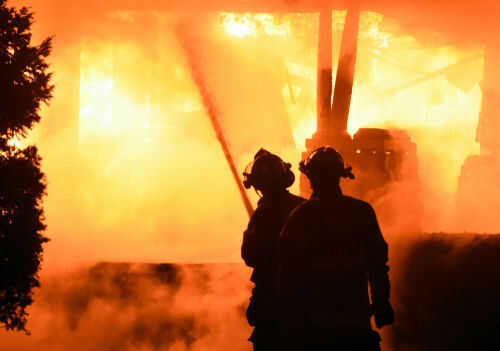
Defense witnesses also said the fire scene was left unsecured for 13 days, long enough for physical evidence to be disturbed or contaminated, which violates standard guidance for fire and arson investigations.[23] No accelerants were found at the origin point, and investigators could only say the fire began with an “open flame,” not a clear ignition device.[1] Rinderknecht’s actions that night cut against the usual picture of an arsonist: he called 911 more than a dozen times and stayed nearby while firefighters battled the blaze, rather than fleeing the scene.[3]
ChatGPT, Mood Evidence, And A Worrying Trend
Throughout the trial, federal attorneys leaned on artificial intelligence logs and emotional diary entries instead of hard forensics. They pointed to his ChatGPT use to argue he was obsessed with fire and angry at the world, including rants to Uber passengers about capitalism and the “crumbling” of humanity.[5] Yet the judge blocked the government from showing jurors AI‑generated dystopian fire images, ruling they were not proper evidence of motive or intent.[1]
🇺🇸 What happened
A federal judge declared a mistrial in the arson trial of Jonathan Rinderknecht after jurors could not reach a unanimous verdict over whether he ignited the 2025 Palisades…✅ Confirmed: A federal judge declared a mistrial on June 26, 2026, after the jury… pic.twitter.com/a2ZOHttFRe
— The States Brief (@TheStatesBriefX) June 27, 2026
This case fits a growing pattern where arson prosecutions rest almost entirely on circumstantial evidence.[18] In many such trials, there is no witness who saw the defendant light a match or drop a cigarette; instead, the entire case turns on expert opinions about fire origin, digital mood trails, and theories about motive.[18] Courts have increasingly warned investigators that they must follow solid scientific standards, not “junk science,” because weak methodology can easily lead to wrongful convictions in complex fires.[25]
High Stakes: Civil Lawsuits And Government Accountability
The Palisades Fire was one of the most destructive wildfires in California history, destroying thousands of homes and killing at least a dozen people.[6] There are now thousands of civil lawsuits pending against the City of Los Angeles and its fire department, with plaintiffs arguing officials failed to contain the blaze.[2] If federal prosecutors eventually secure a conviction, it could shift blame away from local agencies and reduce the city’s exposure, raising questions about institutional incentives.[2]
Defense lawyers have already suggested that Rinderknecht is being used as a convenient target for wider failures in reservoir management and fire containment, though those claims will need more evidence.[9] For many conservative observers, the picture looks familiar: a massive disaster, possible government missteps, and then a single citizen facing years of prosecution based on mood diaries and AI prompts. With a retrial coming and a man jailed despite a 10–2 vote for acquittal, this case will remain a test of whether our justice system values direct evidence and individual rights over narrative and political pressure.
Sources:
[1] YouTube – 10 of 12 jurors say Palisades Fire suspect isn’t guilty. Now he faces …
[2] Web – Palisades Fire suspect Jonathan Rinderknecht heads to trial – CNN
[3] Web – A deadlocked jury in the Palisades Fire trial leaves attorneys …
[4] Web – Judge declares mistrial in Palisades Fire suspect’s federal trial
[5] Web – Mistrial declared after jury deadlocks in arson trial over deadly 2025 …
[6] Web – United States v. Jonathan Rinderknecht – Department of Justice
[7] Web – Mistrial declared after jury deadlocks in arson trial over deadly 2025 …
[9] YouTube – Jury remains deadlocked in trial of Palisades Fire arson …
[18] Web – [PDF] Circumstantial Evidence in Arson Cases – Scholarly Commons
[23] Web – ELI5:How do fire forensics know if a fire was from an arsonist vesus …
[25] Web – [PDF] Arson in Chicago: Patterns and Correlates