Iran’s leadership is now openly signaling that tourist and “recreational” locations could be dragged into a widening war—an ugly reminder that soft targets and civilians often pay the price when regimes choose escalation.
Story Snapshot
- UNESCO says four of Iran’s 29 World Heritage sites have confirmed damage as fighting spreads and assessments continue.
- Golestan Palace in Tehran—often compared to Versailles—was damaged after a nearby strike, with visible destruction inside the complex.
- UNESCO and heritage-protection groups have urged all parties to follow the 1954 Hague Convention protecting cultural property in war.
- Iran-linked regional escalation has included strikes beyond Iran, alongside threats and warnings that raise concerns for tourism and civilian areas.
UNESCO Confirms Heritage Damage as the Conflict Spreads
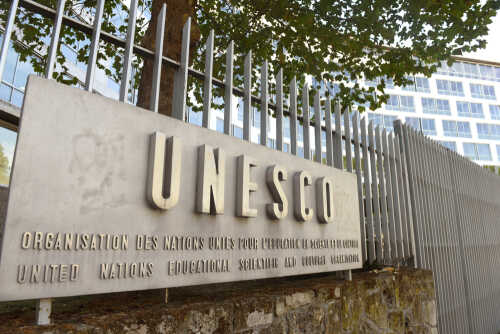
UNESCO has issued warnings that escalating regional hostilities are putting cultural heritage at growing risk, confirming that four of Iran’s 29 UNESCO World Heritage sites have already sustained damage. Assessments are still underway, and the full extent of destruction remains unclear. UNESCO officials say the danger is not confined to one country, as the conflict has generated cross-border strikes and a fast-moving threat environment for protected sites.
That matters beyond museums and postcards. When ancient sites, dense urban districts, and tourism corridors become part of a military map, the line between combat and civilian life can blur quickly. It does not establish whether cultural sites were deliberately targeted or struck as collateral damage. What is clear is that modern conflict routinely creates irreversible losses—especially when long-range missiles and drones are involved.
Golestan Palace Shows What “Collateral” Looks Like on the Ground
Le Monde documented significant damage at Golestan Palace in Tehran after a nearby missile strike on March 1. The complex is roughly 400 years old and is widely described as the “Iranian Versailles,” reflecting Persian design blended with European influence and later Qajar-era expansion. Reported damage includes blown-out windows, shattered mirrors, stained glass damage, and pavement sections lifted by blast effects—harm that cannot be easily undone.
Other heritage losses have also been reported across the region. UNESCO-linked reporting cited damage involving Isfahan’s Masjed-e Jame, a mosque over 1,000 years old representing centuries of architectural evolution. Separate reporting also described Iranian missiles striking Tel Aviv’s “White City,” a UNESCO-listed area known for Bauhaus-era buildings. Together, those examples underline a grim reality: cultural landmarks can be hit even when they are not the supposed focus of military operations.
Heritage Protection Becomes a Test of International Law
UNESCO says it has communicated with parties involved in the conflict and sent letters reminding them of their obligations, including sharing geolocations of protected sites. The U.S. Committee of the Blue Shield also issued a statement urging compliance with the 1954 Hague Convention for the Protection of Cultural Property in the Event of Armed Conflict. Their central point is straightforward: destruction of cultural heritage is irreversible, and protections must be integrated into operational planning.
For Americans who care about law, order, and the idea that rules should mean something, this is a measurable standard. International agreements are only as credible as the willingness of governments and militaries to honor them. The current documentation leaves major unanswered questions, including whether safeguards were followed in targeting decisions and how effectively protected-site data is incorporated during rapid escalation. Those gaps make independent verification and transparent assessments essential.
Tourism and “Soft Targets” Enter the Conversation as Tehran Signals Escalation
The conflict has not stayed inside Iran’s borders. Reporting summarized missile and drone strikes directed toward neighboring countries, alongside pressure on energy infrastructure that disrupted production across parts of the Gulf. In that broader escalation, rhetoric about “recreational areas” and tourist destinations has drawn particular attention because tourism sites are, by definition, civilian spaces. Threatening or implying risk to such areas amplifies public fear and encourages retaliatory logic on all sides.
Limited public details make it difficult to evaluate specific claims about tourism-related threats beyond what has been aired in widely circulated reports. Still, the pattern is familiar: once soft targets are discussed as leverage, everyday people become bargaining chips. That is exactly why UNESCO and cultural-protection organizations are pushing for restraint and compliance mechanisms. Whatever one thinks of the politics, turning heritage and tourism into pressure points almost guarantees lasting damage—physical, economic, and societal.
Sources:
UNESCO Warns of Rising Risks to Iran’s Historic Sites Amid Escalating Regional Conflict
Cultural heritage under threat from Middle East war
Statement: Iran Conflict & Cultural Heritage (March 2026)