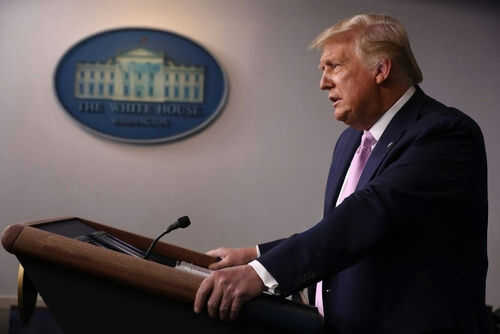
Even supporters of decisive leadership should be asking why a major new war with Iran began without clear public evidence, clear objectives, or a clear vote from Congress.
Quick Take
- U.S. and Israeli airstrikes against Iran expanded quickly, with Iran retaliating against U.S. and allied facilities across the region.
- Iran’s Supreme Leader Ayatollah Ali Khamenei was confirmed killed early in the campaign, a move that could intensify instability and harden Iranian resolve.
- Critics in Congress argue the operation lacks required authorization and risks setting a precedent for unilateral war-making.
- Analysts highlight conflicting White House messages on whether the goal is limited “neutralization” or an Iran-wide political collapse.
Strikes Begin, Retaliation Spreads Across the Region
U.S. airstrikes against Iran, coordinated with Israel, moved from an initial phase into a broader conflict as Iran responded by striking U.S. and allied sites across the Gulf region. Reporting describes Gulf Cooperation Council states hosting U.S. bases as immediate pressure points, with Iranian attacks aimed at creating economic and political costs that push those governments to demand de-escalation. U.S. naval assets also became part of the evolving battlefield.
President Trump’s public messaging shifted rapidly and sometimes contradicted itself. One track emphasized encouraging Iranians to overthrow their government; another floated a short timeline for ending operations; another promised to continue until “objectives” were achieved. For Americans who remember how quickly “limited” operations can expand, the key question is simple: what exactly are the objectives, and what is the defined off-ramp if Iran keeps retaliating?
Khamenei’s Death Raises the Stakes—and the Unknowns
Iranian Supreme Leader Ayatollah Ali Khamenei was confirmed killed early in the campaign, reportedly in an Israeli strike enabled by U.S. intelligence. The timing during Ramadan, a factor that could amplify the martyr narrative and intensify public emotion inside Iran. Removing a top leader can disrupt a regime, but it can also eliminate a known actor and elevate harder-line power centers that are less predictable and less open to compromise.
U.S. intelligence assessments cited by analysts pointed to Iran’s Islamic Revolutionary Guard Corps as a likely beneficiary of any leadership vacuum. That matters because a collapse-without-a-plan scenario can produce outcomes worse than the status quo: fractured authority, internal violence, and a regime that is more militant and more hostile. There are uncertainties about Iran’s internal dynamics and the true endgame, which is exactly why clear strategy and oversight matter.
Congressional Authorization Questions Return—With Constitutional Stakes
Members of Congress, including multiple lawmakers from Massachusetts highlighted, condemned the march toward war as “stupid” and warned about risks to U.S. personnel and the possibility of chaos if the Iranian state fractures. Their central demand is procedural as much as political: major war decisions should not be made by executive action alone. That complaint resonates with constitutional conservatives who view war powers as a core check against rushed, personality-driven decisions.
The conflict as part of a pattern of strikes and escalations carried out without a clear, durable authorization. If the White House can effectively initiate a new war while Congress debates after the fact, the precedent is bigger than Iran. It shifts the balance of power away from the people’s branch and toward a permanent-war footing run by executive decision, intelligence claims, and the urgency of the moment—exactly the dynamic the Founders feared.
The Justification Problem: Competing Claims, Limited Public Proof
The core dispute described is not whether Iran is an adversary—Americans already know Tehran funds proxies and threatens U.S. interests—but whether the public case for immediate, large-scale strikes was established. Analysts argue claims of an imminent Iranian threat and advanced nuclear or long-range missile capability were presented without persuasive evidence. It also points to an internal contradiction: earlier strikes were described as “obliterating” key programs, yet new strikes were later justified as necessary.
For a conservative audience that values strong defense and honest government, the standard should be straightforward: if the evidence is strong, show it; if the mission is limited, define it; if the mission is regime collapse, say so and explain the plan for the day after. It is suggested that the administration’s language was unusually blunt about political aims, but bluntness does not substitute for a lawful process, a coherent strategy, or a realistic assessment of what comes next.
Sources:
Iran War Roundup (March 1, 2026) — The Foreign Exchanges
“War with Iran is stupid”: Mass. congresspeople decry Trump’s military buildup — GBH News
Iran, Trump and foreign policy analysis — The Japan Times
Great Game — Columbia Magazine