
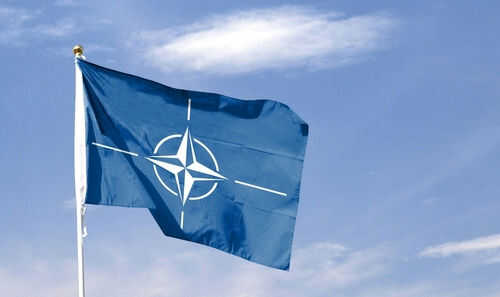
President Trump delivers a stark warning to NATO, declaring the alliance a “paper tiger” that fails America when it needs help most, fueling demands for U.S. withdrawal amid an escalating war with Iran.
Story Highlights
- Trump blasts NATO for zero support in U.S. defense of the Strait of Hormuz against Iran’s blockade during 27+ days of operations.
- U.S. President states “We help NATO, but they’ll never help us,” labeling the alliance unreliable in a true crisis.
- Trump reveals he is “strongly considering” pulling the U.S. out of NATO, praising Middle East allies like Bahrain and Kuwait instead.
- Criticism highlights decades of unfair burden-sharing, with America footing most bills while Europe skimps on defense spending.
- Rift exposes deep frustrations across political lines over elite alliances that prioritize self-interest over American security.
Trump’s Direct Rebuke to NATO
On March 28, 2026, President Donald Trump publicly scolded NATO for its complete absence during U.S. military operations against Iran. American forces, alongside Israel, conducted strikes over 27 days to counter Iran’s blockade of the Strait of Hormuz, a vital global trade route. Trump emphasized NATO’s refusal to assist, stating the alliance offers praise but no action. This marks a sharp escalation from past spending disputes to real-time war demands. U.S. taxpayers fund the bulk of NATO’s budget, yet allies withhold reciprocity when America fights terrorism sponsors like Iran.
Historical Burden-Sharing Imbalance
NATO formed in 1949 under Article 5 for collective defense, invoked once after 9/11 with U.S. leadership. Trump has labeled it a “paper tiger” since the 1980s due to Europe’s chronic underfunding below the 2% GDP target, now pushed to 5%. Iran’s Hormuz blockade disrupts oil flows, prompting U.S. calls for NATO ships to reopen lanes. Allies declined, deeming it outside their European focus. Trump contrasts this with supportive non-NATO partners like Bahrain and Kuwait, who back U.S. efforts without hesitation. This pattern underscores limited government’s principle: alliances must deliver mutual benefits, not one-sided drains.
Escalating Withdrawal Threats
In late March 2026 interviews, Trump told The Telegraph he is “strongly considering” U.S. exit from NATO. He affirmed to Reuters he is “absolutely” weighing withdrawal unless support increases. Remarks include “NATO has done absolutely nothing… we’ll come to understand that.” No formal steps follow yet, but rhetoric tests alliance loyalty amid ongoing Iran conflict. The Secretary General praised U.S.-Israel strikes but committed no forces, prioritizing Russia threats over Middle East escalation. Trump’s stance resonates with conservatives weary of globalist entanglements that weaken American primacy.
Power dynamics favor the U.S. as NATO’s primary funder, contributing hundreds of billions annually. European members resist higher spending, straining relations. This transatlantic divide grows as Iran vows nuclear pursuit, heightening stakes for U.S. unilateral action.
Impacts on America and Global Security
Short-term, Trump’s words intensify tensions, spurring potential U.S. shifts to Middle East partners. Long-term, NATO risks weakening, eroding deterrence against aggressors. U.S. taxpayers gain from slashed contributions, freeing funds for domestic priorities like border security and energy independence. Global trade suffers from Hormuz disruptions, spiking energy costs. Both conservatives and liberals share outrage over elites in Washington and Brussels who prioritize reelection over solving crises blocking the American Dream. Political fallout questions NATO’s viability, with experts split: some hail restraint to avert world war, others decry it as alliance betrayal.
Defense sectors face alliance realignments; energy markets reel from war volatility. Pro-Trump voices see this as testing true allies, aligning with America First values of individual liberty and fiscal responsibility. Critics warn of severe fallout, but facts affirm Trump’s long pattern of demanding fairness.