

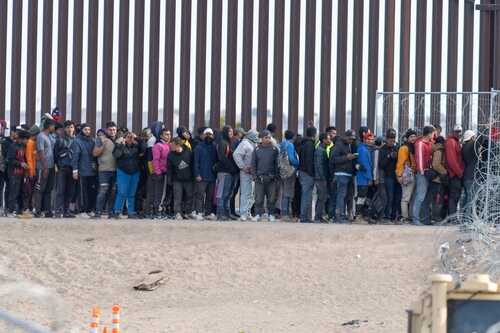
Trump’s new immigration crackdown marks a dramatic reversal, as the nation reels from a record-high surge of 14 million illegal immigrants—raising urgent questions about border security, constitutional rights, and impacts on American families.
Story Snapshot
- The Pew Research Center reports that the unauthorized immigrant population in the U.S. reached a record-high of 14 million in 2023.
- The Trump administration has enacted sweeping restrictions targeting border security, deportations, and sanctuary jurisdictions.
- New laws and Executive Orders sharply limit asylum, parole, and humanitarian relief, sparking legal battles and social unrest.
- The massive expansion of detention and enforcement budgets has raised questions about due process and community stability.
Record Surge in Illegal Immigration Under Previous Administration
The Pew Research Center’s analysis confirms the U.S. unauthorized immigrant population reached an unprecedented 14 million in 2023, up from 10.5 million just two years earlier. This record-breaking increase—driven by arrivals from countries such as India, Venezuela, Cuba, and Ukraine—occurred during the final years of the Biden administration. The surge fueled a political debate, with critics pointing to lax border policies, expanded parole, and broader access to asylum as key contributors.
The number of people in the United States illegally surged to an all-time high of 14 million in 2023, a research group said Thursday, a major increase that still falls well short of estimates from President Donald Trump and some critics of immigration.https://t.co/LrZtL8xRlc
— TribLIVE.com (@TribLIVE) August 21, 2025
Historically, unauthorized immigration peaked at 12.2 million in 2007, declined through the 2010s due to enforcement, and then spiked post-pandemic. Policy changes and global crises drove new migration patterns, overwhelming border resources and courts. The surge coincided with public concern, especially in border states where local communities felt the impact on social services, employment, and public safety. By 2023, the U.S. workforce included nearly 9.7 million unauthorized immigrants, affecting key sectors like agriculture and construction.
Trump Administration’s Immigration Clampdown
Taking office in January 2025, President Trump moved swiftly to reverse previous policies and restore border security. Within days, he declared a national emergency at the southern border, blocked most asylum seekers, ended “catch and release,” and suspended refugee admissions. The administration set an ambitious goal: one million deportations per year, tripling previous records. Daily arrest quotas, expanded expedited removals, and new enforcement powers for local police transformed federal immigration practice, with severe penalties for jurisdictions resisting cooperation. These measures, combined with new laws like the Laken Riley Act, mandated detention for immigrants charged or convicted of crimes, significantly increasing the federal role in local enforcement.
Trump’s “One Big Beautiful Bill Act,” signed on July 4, 2025, radically expanded immigration detention funding, quadrupling ICE’s budget and authorizing indefinite detention—even for families and children. The law eliminated discretionary relief and humanitarian pathways, stripped many lawfully present immigrants of social benefits, and threatened due process protections. Critics warned that these changes put millions of children and low-income families at risk, destabilizing communities and undermining constitutional safeguards.
Conservative Concerns: Constitution, Community, and Common Sense
For many conservatives, the record surge in illegal immigration and subsequent policy overhaul highlight the stakes for constitutional rights and American values. The Trump administration’s aggressive approach seeks to restore order, protect communities, and uphold the rule of law. Yet, the dramatic expansion of detention, enforcement, and executive power raises questions about due process, family unity, and the limits of federal authority. Legal challenges are mounting, and debate continues over the balance between security and liberty.
As the nation adjusts to these sweeping changes, border states and cities remain on the front lines. Employers, families, and local governments face new realities, while the broader political landscape grows more polarized. The Pew report’s data and expert analysis provide a factual foundation for ongoing debate, urging policymakers to reconcile competing priorities—security, compassion, constitutional limits, and economic necessity. With immigration still a top voter concern, the next chapter in America’s immigration story is far from settled.
Sources:
Unauthorized immigrants in U.S. reach record 14 million in 2023, Pew finds – Axios
Undocumented immigrants in U.S. reached record high in 2023, Pew report says – CBS News
U.S. unauthorized immigrant population reached a record 14 million in 2023 – Pew Research Center