
London’s mayor just turned Trafalgar Square into a stage for a massive religious celebration—then framed any pushback as “darkness,” raising hard questions about who gets labeled a “divider” in today’s Western politics.
Story Snapshot
- Sadiq Khan spoke at an Open Iftar in Trafalgar Square during Ramadan 2026 and called it the “biggest iftar in the Western world.”
- Khan praised London’s high-visibility Ramadan celebrations, including four straight years of central London Ramadan lights.
- The Open Iftar model has expanded since 2013 through the Ramadan Tent Project, with events hosted at major cultural and sports venues.
- The “biggest in the Western world” claim appears to be a statement by Khan, not an independently verified metric in the available reporting.
Khan’s Trafalgar Square Speech Puts Culture Politics Front and Center
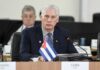
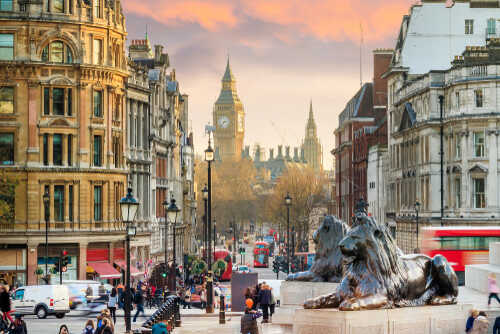
London Mayor Sadiq Khan addressed a packed crowd at the Open Iftar event in Trafalgar Square during Ramadan 2026, describing the gathering as the “biggest iftar in the Western world.” Reporting describes the audience as multi-faith, including Christians, Jews, Hindus, Sikhs, atheists, and Muslims sharing the public fast-breaking meal. Khan’s remarks also condemned what he called “forces of division and darkness” that target Muslims, while portraying London’s approach as defiant and inclusive.
From a constitutional, civic-life standpoint, the key issue is not whether Muslims should be free to celebrate—religious liberty is a core Western principle—but how political leaders use public events to define acceptable speech. When a mayor frames criticism of government-backed symbolism as “division,” that can chill legitimate debate about the role of government and public space. The available sources do not provide details on security costs, permitting conditions, or city sponsorship levels for the Trafalgar Square event.
Open Iftar’s Growth Shows a New Model for Public Religious Display
The Open Iftar initiative began in 2013, launched by students at SOAS University of London, and expanded through the Ramadan Tent Project into a national program. The project’s stated emphasis includes welcoming broad community participation and offering inclusive gatherings that can also serve vulnerable groups, including the homeless. Coverage says the project drew more than one million attendees across UK venues in the prior year, indicating the scale is not limited to London but part of a wider institutional push.
Organizers have taken Open Iftar beyond small community halls into marquee locations such as the British Library, Shakespeare’s Globe, Tottenham Hotspur Stadium, and the National Gallery. That venue list matters because it reflects normalization of religious programming in high-profile civic and cultural spaces. The reporting provided does not include comparative attendance data for other Western cities, so Khan’s “biggest” claim remains a political talking point rather than a statistic the public can easily audit.
Ramadan Lights in Central London Highlight Government-Endorsed Symbolism
Khan also highlighted four consecutive years of Ramadan lights in central London, linking the display to a message of standing firm amid criticism. Separate reporting confirms Khan switched on the 2026 Ramadan lights earlier in the fasting month, reinforcing the mayor’s role as a visible sponsor of the celebration. Supporters view the lights as a positive signal of belonging. Critics, however, often see state-adjacent displays as cultural messaging that can edge from celebration into government endorsement.
The available coverage ties the lights to a broader narrative about confronting “Islamophobia,” but it does not include independent expert analysis, polling, or a detailed accounting of how dissent is handled in city politics. That absence matters because healthy pluralism depends on equal rights plus open debate, not on assigning moral labels to one side. Without more data, readers can evaluate only what is documented: a prominent political figure using citywide symbolism to champion one community’s public observance.
What Americans Should Learn From London’s Approach to Public Identity Politics
For U.S. —especially those frustrated by years of top-down cultural lecturing—the London story offers a familiar pattern: large public rituals celebrated as “inclusion,” paired with rhetoric that treats objections as suspect. In America, the First Amendment protects free exercise and free speech simultaneously, meaning citizens can defend religious liberty while still criticizing government signaling or double standards in public institutions. The reporting does not show London restricting other faiths, but it also does not address whether equal access is consistently applied.
As a practical matter, the London mayor’s “biggest in the Western world” line should be treated as an unverified claim unless organizers publish audited attendance and a clear method for comparison. The more consequential detail is political: leaders can use mass events to bolster coalitions, define a city’s identity, and pressure opponents through moral framing. Limited reporting makes it difficult to quantify impacts beyond symbolism, but the direction is clear—public space is increasingly used to broadcast official cultural priorities.
Sources:
Mayor Sadiq Khan praises London for hosting ‘biggest iftar in Western world’
London mayor Sadiq Khan switches on Ramadan lights in central London