
The Philippines is trying to lock in sovereignty with a pen stroke—renaming more than 100 South China Sea features as Beijing expands its claims and the risk of a miscalculation keeps rising.
Quick Take
- President Ferdinand Marcos Jr. ordered the renaming of 100+ features in the Kalayaan Island Group in the Spratlys, with agencies and schools directed to adopt the new names.
- The move is symbolic but operational: the Philippine mapping agency must update charts and maps, tightening administrative control tied to Palawan.
- China’s embassy in Manila had no immediate comment, but Beijing has long rejected the 2016 arbitration ruling and continues to press sweeping “dash line” claims.
- The order lands during heightened U.S.-Philippine military cooperation, raising questions about deterrence, escalation, and America’s role.
Marcos orders a sweeping renaming to cement control in the Spratlys
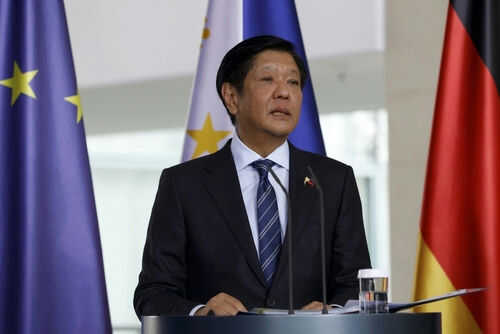
Philippine President Ferdinand Marcos Jr. announced an executive order on March 31, 2026 directing the government to rename more than 100 island and reef features in the Kalayaan Island Group, part of the Spratly archipelago. The palace framed the plan as strengthening administration, governance, and sovereignty in Palawan and the “West Philippine Sea.” Agencies and schools must adopt the updated names, while the national mapping office is tasked with updating official charts.
Philippine officials have not publicly listed the new names, a key limitation for outside verification and for mariners who rely on standardized references. Even so, the structure of the order matters: when a state mandates new terminology across bureaucracies, classrooms, and mapping products, it is not just messaging. It is a governance move designed to normalize jurisdiction, support day-to-day administration, and reinforce the country’s legal posture in a contested zone.
Why “naming” matters when China claims almost the whole sea
The South China Sea dispute is not a simple bilateral quarrel. China, the Philippines, Vietnam, Malaysia, Brunei, and Taiwan all assert overlapping claims, with the Spratlys at the center because of fisheries, shipping lanes, and potential oil and gas resources. Beijing argues historical rights across most of the sea using its “dash line” map, updated in recent years, while Manila leans on international law and its administration of features tied to Palawan province.
The legal fault line is the 2016 arbitral ruling under the U.N. Convention on the Law of the Sea, which found China’s broad maritime claims lacked legal basis in that form—an outcome Beijing rejected. That stalemate has pushed countries toward incremental steps that look small on paper but can harden reality on the water: naming conventions, domestic statutes, patrol patterns, and infrastructure. In that context, renaming becomes a low-cost way to signal “we govern here” without firing a shot.
Old dispute, new pressure: the Kalayaan framework and the West Philippine Sea precedent
The Philippines has treated the Kalayaan Island Group as an administrative reality for decades. A 1978 decree under Ferdinand Marcos Sr. designated certain Spratly features as part of the Philippines and linked them to Palawan. Later, during confrontations with Chinese vessels, Manila began using “West Philippine Sea” as a naming strategy aimed at reinforcing its claim and building public unity. The 2026 order goes further by targeting more than 100 specific features rather than the sea as a whole.
China maintains its own naming systems and narratives, often arguing that fishermen historically used the islands and reefs, and Chinese diplomatic messaging has previously described Philippine presence as an illegal occupation. Those competing stories matter because naming is how governments educate citizens, brief militaries, and present disputes to foreign audiences. When each side institutionalizes its own map vocabulary, practical coordination becomes harder and each encounter at sea carries greater political risk.
How this intersects with U.S. posture and the risk of escalation
The renaming order arrives amid heightened U.S.-Philippine military activity, including major joint exercises that are widely understood as deterrence against Chinese pressure. That matters for Americans because alliance commitments can turn a regional standoff into a Washington problem fast—especially if an incident involves coast guards, civilian fishermen, or close-quarters maneuvering. The available reporting does not show a direct Chinese response to the renaming announcement, leaving open how Beijing will choose to contest it.
For conservatives skeptical of endless overseas entanglements, the strategic dilemma is familiar: the United States wants freedom of navigation and regional stability, but every additional flashpoint increases the chances of being pulled into another costly confrontation. A sovereignty contest fought through maps and schoolbooks can still set the stage for maritime incidents, sanctions pressure, or calls for expanded deployments. The hard truth is that symbolic steps sometimes precede real-world escalation when both sides treat backing down as politically impossible.
With key details like the new names still undisclosed, the most responsible takeaway is limited but clear: Manila is formalizing a sovereignty narrative at scale, and Beijing’s long-running rejection of the legal ruling leaves little room for easy compromise. Americans should watch whether naming changes are followed by operational steps—new patrol patterns, enforcement actions, or infrastructure decisions—because those are the moments when treaty politics, defense planning, and the price of energy and shipping security can begin to touch everyday life at home.
Sources:
Philippines to rename disputed South China Sea islands, boost sovereignty
Philippines to rename disputed South China Sea islands
Philippines rejects Chinese claims to sovereignty over South China Sea