
A federal appeals court just struck down a 158-year-old ban on home distilling, declaring the Reconstruction-era law an unconstitutional overreach of federal power—a rare victory for individual liberty that exposes how government uses taxation as a pretext to control private behavior.
Quick Take
- The 5th Circuit Court of Appeals ruled the 1868 home distilling ban exceeds Congress’s taxing authority and violates constitutional limits on federal power
- The decision eliminates criminal penalties of up to five years in prison and $10,000 fines for home distillers
- The ruling exposes how federal government uses tax policy to regulate private activities unrelated to revenue collection
- Both conservatives and civil libertarians view this as a meaningful check on unchecked federal authority
A Victory Against Federal Overreach
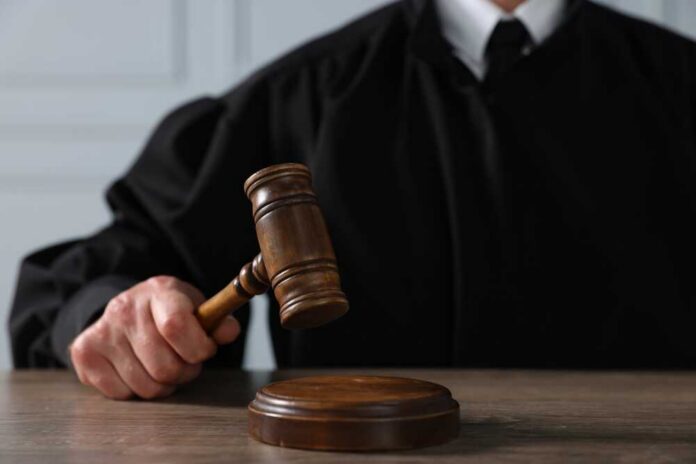
On Friday, April 11, 2026, the 5th U.S. Circuit Court of Appeals in New Orleans declared unconstitutional a federal ban on home distilling that had remained on the books since 1868. The three-judge panel sided with the Hobby Distillers Association, determining that the law exceeded Congress’s taxing power and was not “necessary and proper” to carrying out that constitutional function. This decision strikes at the heart of how federal government has expanded its authority far beyond what the Constitution permits.
A Relic of Reconstruction-Era Control
The ban originated during Reconstruction following the Civil War, ostensibly designed to prevent liquor tax evasion and generate federal revenue. For 158 years, this law remained on the books with minimal enforcement, yet anyone attempting home distillation faced severe criminal penalties: up to five years in prison and fines reaching $10,000. The persistence of this antiquated statute exemplifies how government accumulates power incrementally, with outdated laws surviving long after their original justification disappears.
The Constitutional Problem Government Cannot Escape
Circuit Judge Edith Hollan Jones, writing for the panel, exposed a fundamental problem with the government’s position. The court determined that the prohibition failed to generate tax revenue, undermining its stated purpose. More critically, the law criminalized private activities without clear constitutional basis. Judge Jones warned that accepting the government’s logic would allow Congress to outlaw any in-home activity—remote work, small businesses, hobbies—that might theoretically evade taxation. This unchecked expansion of federal power resembles a general police authority that courts must guard against.
A U.S. appeals court on Friday declared unconstitutional a nearly 158-year-old federal ban on home distilling, calling it an unnecessary and improper means for Congress to exercise its power to tax. https://t.co/wYF5OfnUVI
— Reuters Legal (@ReutersLegal) April 10, 2026
What This Reveals About Federal Power
The ruling exposes a troubling pattern: federal government uses its taxing authority as a pretext to control behavior entirely separate from revenue collection. This represents precisely the kind of government overreach that frustrates Americans across the political spectrum. Whether conservative or progressive, citizens increasingly recognize that elected officials prioritize expanding government control over solving real problems. This decision demonstrates that courts can still enforce constitutional limits when government ventures too far beyond its legitimate authority.
Implications for Individual Liberty and Government Limits
The decision clears a legal path for home distilling without threat of criminal penalties, though Congress could theoretically enact new legislation or states could impose restrictions. More significantly, the ruling establishes important precedent: federal government cannot use its taxing authority as a pretext to criminalize private activities without clear constitutional necessity. This represents a meaningful constraint on federal power and reinforces that individual liberty deserves protection from government intrusion justified only by vague claims of tax enforcement.
For Americans tired of government claiming expansive powers it was never granted, this ruling offers a rare example of the judiciary actually enforcing constitutional limits on federal authority. The 158-year-old ban’s demise proves that even deeply entrenched government overreach can be challenged successfully when citizens stand up for their constitutional rights.
Sources:
Fire Up the Stills: 158-Year-Old U.S. Home Distilling Ban Ruled Unconstitutional
Federal Appeals Court Strikes 158-Year-Old Ban on Home Distilling
Appeals Court Strikes Down 158-Year-Old Home Distilling Ban
Federal Appeals Court Rules Home Distilling Ban Unconstitutional