

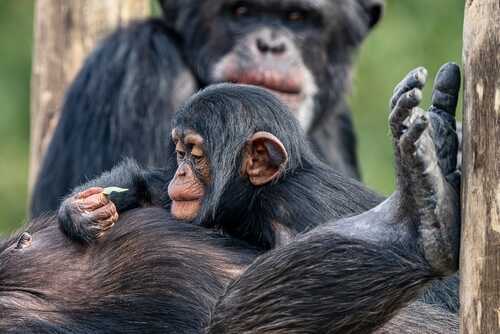
New research reveals that our closest relatives expose a troubling truth about how modern parenting may be suppressing children’s natural development, challenging decades of progressive child-rearing orthodoxy.
Story Highlights
- Young chimpanzees ages 2-5 take three times more physical risks than adults, contradicting human adolescent risk patterns
- 82% of young chimps engage in dangerous behaviors outside maternal supervision, suggesting natural independence
- Researchers warn that intensive human parenting may unnaturally constrain children’s developmental instincts
- Study challenges progressive assumptions about helicopter parenting being beneficial for child development
Natural Development Versus Modern Parenting
Researchers at James Madison University discovered that wild chimpanzees exhibit peak risk-taking behavior during early childhood rather than adolescence, directly contradicting human developmental patterns. Young chimps ages 2-5 demonstrate three times more dangerous canopy behaviors than adults, including free-falling from tree branches and leaping without secure contact points. This finding challenges fundamental assumptions about when risk-taking naturally emerges and suggests that human parenting practices may artificially suppress children’s developmental instincts.
The study, published in iScience, tracked over 100 wild chimpanzees at Uganda’s Ngogo Chimpanzee Project. Lead researcher Lauren Sarringhaus noted that human toddlers likely possess identical risk-taking inclinations but remain constrained by parental oversight. This observation raises serious questions about whether intensive supervision actually serves children’s best interests or merely reflects contemporary parenting anxieties that prioritize safety over natural development.
The Cost of Helicopter Parenting
The research reveals that 82 percent of young chimps engage in risky behaviors while out of their mothers’ reach, indicating that natural development occurs through independent exploration rather than constant supervision. This finding directly undermines progressive parenting theories that emphasize continuous oversight and structured activities. Expert Lou Haux from the Max Planck Institute questions how Western societies developed such intensive caregiving patterns, suggesting they may conflict with evolutionary developmental needs.
Traditional child-rearing approaches that allowed for unsupervised play and physical risk-taking appear more aligned with natural primate development than modern helicopter parenting. The study’s implications extend beyond individual families to broader cultural shifts away from independence-building activities like playground monkey bars, which some anthropologists argue are essential for developing motor skills, skeletal strength, and psychological resilience.
Government Overreach in Child Development
The research arrives as government regulations increasingly restrict children’s access to challenging play environments, from playground equipment standards to liability concerns that eliminate traditional risk-taking opportunities. These policies, often promoted by progressive safety advocates, may inadvertently harm child development by preventing natural skill acquisition and confidence building. The study suggests that regulatory overreach in childhood safety creates developmental mismatches between children’s innate needs and their actual experiences.
Among chimpanzees, thrill-seeking peaks in toddlerhood
Chimps ages 2 to 5 are more likely than older chimps to free-fall from tree limbs in the forest canopies or leap wildly from branch to branch like psychos.https://t.co/kgGqjFGQHC pic.twitter.com/1ys6LL7DoC
— Steve Stewart-Williams (@SteveStuWill) January 12, 2026
Conservative principles of individual liberty and parental authority align with the study’s implications that families, not government bureaucrats, should determine appropriate risk levels for their children. The research provides scientific backing for traditional parenting approaches that emphasise building character through manageable challenges rather than eliminating all potential dangers through regulatory intervention and excessive supervision.
Sources:
Among chimpanzees, thrill-seeking peaks in toddlerhood
Among chimpanzees, thrill-seeking peaks in toddlerhood
The benefits and risks of childhood thrill-seeking play
Chimps reveal why teenagers are notorious for risky behaviors
What chimps reveal about human parenting