

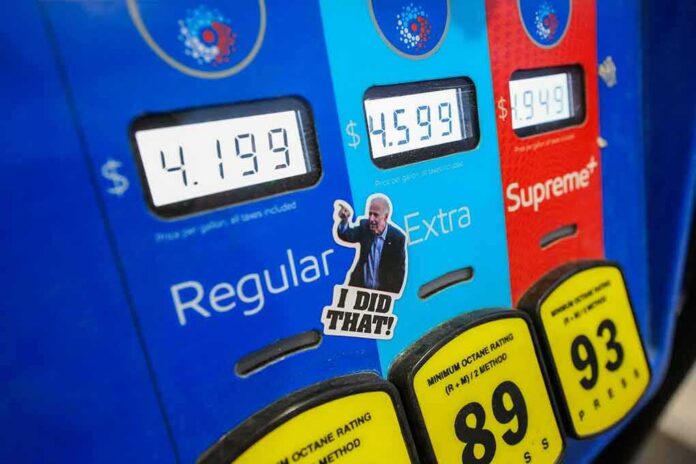
Gas is averaging just over $4 a gallon in mid-August, setting a record for this point in the year and squeezing family budgets nationwide.
Story Snapshot
- AAA data put the national average near $4.03 per gallon in mid-August, a seasonal record.
- GasBuddy’s Patrick De Haan said prices had never been above $4 after Aug. 12 in prior years.
- Bloomberg reported record seasonal highs for gasoline and diesel in the second week of August.
- Federal Reserve data showed $4.006 on Aug. 10, confirming the $4 threshold.
Mid-August Prices Hit Record For The Calendar Window
Yahoo Finance reported the national average for regular gas at about $4.03 per gallon in mid-August, based on American Automobile Association data, marking the highest level for this late in the year. GasBuddy researcher Patrick De Haan said the average had never been above $4 after Aug. 12 in any prior year, underscoring the seasonal record. Bloomberg matched that framing, stating drivers faced a record seasonal high in the second week of August. These sources align on the same mid-August reality.
Federal Reserve data from the St. Louis bank’s gasoline series showed the average at $4.006 on August 10, confirming the $4 mark in this window. Different snapshots can vary by a few cents due to timing and methods, but the thrust is the same. Drivers paid $4 or more at the national average in mid-August. That is not an all-time record for any date, but it is a record for this late on the calendar. Words matter here, and so do wallets.
Why This Matters To Working Families
Every extra dime per gallon adds up for commuters, truckers, and small-town families. Summer budgets already strain under higher food, power, and insurance costs. A national average over $4 in mid-August means fewer dollars for school supplies and back-to-church events. Many readers remember when a strong American energy sector kept prices steadier. When refineries, shipping lanes, and policy send mixed signals, regular people pay. The math is simple at the pump and on the family ledger.
Conservative households value energy independence and predictable costs. High seasonal prices clash with those values. Strong domestic production, fewer red-tape delays, and steady refining capacity help bring prices down. Price spikes also show how global risk and supply routes can hit Main Street fast. When the price board flips to a “4,” weekend trips get cut, and small businesses eat higher delivery costs. That is not theory; that is daily life in every county across America.
Sorting The Numbers Without The Spin
Reporters sometimes blur “record” language. The reporting here is clear. It is a seasonal or calendar-date record, not the highest price in history. Yahoo Finance and Bloomberg pinned that claim to mid-August and to the second week of August, not to all time. The Federal Reserve series supports a national average around $4 on August 10, which fits the same window. Some outlets listed nearby figures like $4.08 earlier in August, showing how timing shifts the exact cents. The core mid-August point stands.
Readers should expect more day-to-day bumps. Seasonal demand, hurricane threats, and global tensions can nudge prices above or below $4 within days. Still, a national average above $4 after August 12 is rare enough to set a mark this year. That makes policy discipline more urgent. Efficient pipelines, smarter permitting, and a clear message that America will lead on reliable energy can calm markets. Families need stable energy costs, not another surprise at the pump before school starts.
Sources:
feedpress.me, finance.yahoo.com, reuters.com, cnbc.com