
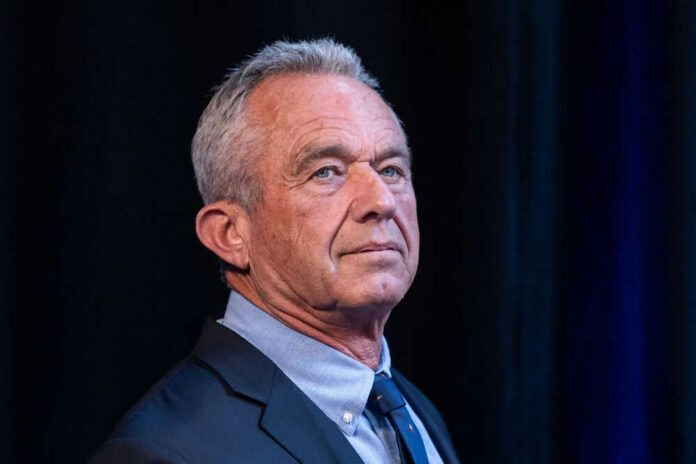
RFK Jr.’s shake-up at HHS is testing whether Washington will finally prioritize accountability in public health—or protect the same bureaucracy that failed Americans during the pandemic era.
Story Snapshot
- HHS Secretary Robert F. Kennedy Jr. has spotlighted the Trump administration’s push to realign federal health priorities under the “Make America Healthy Again” agenda.
- Reported internal changes include a major workforce reduction and a reshaping of federal vaccine advisory panels, moves that supporters call overdue and critics call risky.
- Kennedy’s congressional testimony has centered on funding priorities and management reforms, putting budget discipline and agency performance under a bright light.
- The available public record still leaves gaps on specific “deliverables” Kennedy referenced.
Kennedy’s message: reforms first, results still being defined
HHS Secretary Robert F. Kennedy Jr. has used public appearances and formal testimony to argue that the Trump administration is “delivering” on a reset of federal health policy, especially through the “Make America Healthy Again” framework. The research provided shows a focus on management, staffing, and advisory-panel changes rather than a narrow list of new programs. That distinction matters because Americans increasingly judge government by performance, not press releases.
Kennedy’s profile inside the administration is unusual: he is both a cabinet-level manager and a nationally recognizable figure with a long record of challenging public-health orthodoxies. That combination is fueling intense attention from supporters who want a tougher line on entrenched agencies and from critics who fear disruption. With Republicans controlling Congress in 2026, the key question is less whether reforms can be attempted and more whether they can be executed without damaging core services.
Workforce cuts and management reshuffles put federal health bureaucracy on notice
One concrete detail in the research is a reported 20% workforce reduction at HHS, described as part of Kennedy’s effort to reshape the department. Workforce changes at a federal agency the size of HHS can signal a broader philosophy: a smaller administrative footprint, tighter chains of responsibility, and an expectation of measurable outcomes. For conservatives frustrated by perceived bureaucratic bloat, the political appeal is obvious—especially after years of rising federal spending and persistent distrust of institutions.
The administration has also publicly emphasized management-team changes intended to “accelerate” President Trump’s priorities under the MAHA agenda. Those moves typically indicate an internal drive to align leadership with the secretary’s direction and to reduce resistance inside the agency. However, the research provided does not include a detailed implementation plan, timetables, or performance metrics tied to these personnel changes, making it difficult to evaluate effectiveness beyond the intent to reorganize.
Vaccine advisory-panel changes intensify a trust crisis the government didn’t create—and hasn’t solved
It indicates Kennedy has reconstituted federal vaccine advisory panels with allies and vaccine skeptics and has laid groundwork for further scrutiny of the childhood vaccine schedule. These actions land in the middle of a national trust crisis where many Americans—right, left, and politically exhausted in between—believe public health became too intertwined with politics, mandates, and messaging. From a limited-government perspective, transparency and rigorous review are essential when policy can pressure families, schools, employers, and physicians.
At the same time, changing advisory structures raises practical questions that are not answered in the provided materials: what standards are being used to select members, how conflicts of interest are screened, and how dissenting scientific views are evaluated. The fact pattern supplied shows the direction of travel—more scrutiny and different personnel—without supplying the full procedural details that would let the public judge whether the overhaul strengthens credibility or simply shifts influence from one camp to another.
Congress, budgets, and the real test: can Washington deliver outcomes instead of slogans?
Kennedy’s appearance before Congress on administration funding priorities highlights the most unavoidable constraint in federal health policy: budgets. Even with the GOP holding both chambers, Congress still demands justification for how programs operate and what the public gets for the money. That puts Kennedy’s reforms in the same arena where conservatives have long argued the federal government struggles—spending heavily while failing to prove it is improving everyday life, health, or affordability for working families.
NEW: HHS Secretary Robert F. Kennedy Jr. highlighting how the Trump administration is delivering on the change parents across the country voted for:
“We are ending the era of federal policies that fueled the chronic disease epidemic, and replacing them with policies that put… pic.twitter.com/OEiEAZbW8V
— Fox News (@FoxNews) April 16, 2026
What is documented is a strategy: restructure HHS, realign leadership, and revisit advisory processes. Whether that strategy translates into better care and lower costs will depend on follow-through, transparent benchmarks, and a willingness to withstand the inevitable political counterattack.
Sources:
RFK Jr. reshaping healthcare, HHS, Trump support
Secretary Kennedy enhances management team to accelerate President Trump’s priorities, MAHA agenda