
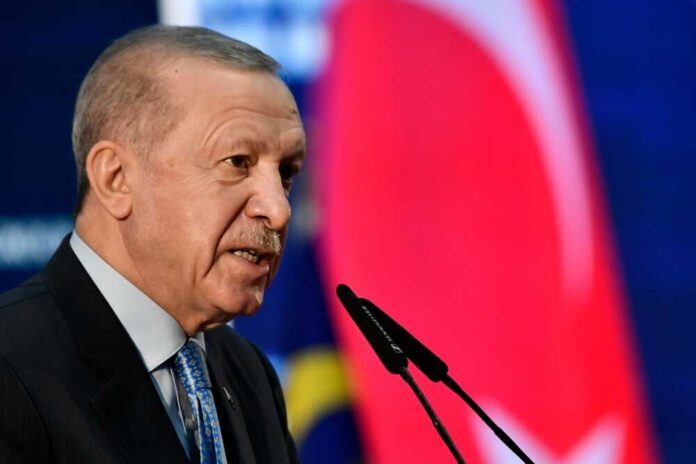
Turkish President Recep Tayyip Erdogan just threatened to invade Israel, invoking past military interventions, right after prosecutors indicted Netanyahu for up to 4,596 years in prison—a brazen escalation that risks dragging the region into chaos.
Story Highlights
- Turkey indicts Netanyahu and 34 officials for genocide and crimes against humanity over 2025 flotilla interception, seeking extreme prison terms.
- Erdogan warns Turkey could “enter Israel” like Libya and Karabakh, tying threats to Israel’s Lebanon strikes amid fragile US-Iran ceasefire.
- President Trump urges Israel to limit operations to preserve peace, as Iran threatens retaliation and Strait of Hormuz disruptions loom.
- This power play bolsters Iran’s axis, undermines American-led stability, and echoes historical anti-Israel rhetoric from Tehran allies.
ErDOGan’s Invasion Threat
Recep Tayyip Erdogan delivered a fiery speech on April 12, 2026, declaring Turkey could “enter Israel” just as it intervened in Libya and supported Azerbaijan in Karabakh. He tied the rhetoric to Istanbul prosecutors indicting Israeli Prime Minister Benjamin Netanyahu and 34 officials that same day. The charges stem from Israel’s 2025 interception of the Global Sumud Flotilla, which Turkey claims carried humanitarian aid to Gaza. Erdogan framed this as showing Israel “its place,” demanding Turkish strength and unity. Such language recalls Turkey’s 2020 military precedents, signaling potential real action amid regional volatility.
Indictment Details and Legal Escalation
Istanbul’s Chief Public Prosecutor’s Office accuses Netanyahu of genocide, crimes against humanity, torture, looting, and unlawful detention. The indictment seeks up to 4,596 years in prison, an extraordinary penalty echoing past flotilla disputes like the 2010 Mavi Marmara incident. Turkey’s Foreign Ministry claims Netanyahu undermines peace through expansionism. This judicial move precedes Erdogan’s threats, positioning Turkey as judge and enforcer. Critics see it as a kangaroo court designed to rally domestic support and pressure Israel legally before any military posturing.
Regional Tensions and US Role
Israel’s ongoing strikes against Hezbollah in Lebanon, including a Litani River bridge hit condemned by President Joseph Aoun as an invasion prelude, fuel the crisis. These occurred on the US-Iran war ceasefire day, with reports of over 100 strikes in 10 minutes. Iranian officials warn of retaliation, hands “on the trigger,” and possible truce withdrawal. President Trump, in his second term, urged Netanyahu to scale back to protect the Pakistan-mediated ceasefire. Turkey aligns with Iran, criticizing Israel while boasting mediation roles, weakening American efforts for stability.
Broader Implications for America First
Short-term risks include ceasefire collapse, Iran-Turkey proxy escalations, and oil disruptions via Strait of Hormuz closure. Long-term, eroded Turkey-Israel ties empower the Iran axis, heightening threats to US allies. Israelis face direct security dangers; Lebanese civilians suffer strikes; Gaza aid claims remain contested. Erdogan’s bid for dominance exploits frustrations with globalist failures, mirroring American concerns over elite-driven foreign entanglements that prioritize power grabs over peace. This departs from founding principles of sovereignty and limited intervention, alerting citizens on both sides to deep state overreach abroad.
This Nation Just Threatened to Invade Israel After Indicting Its Leaders https://t.co/Po9es4s99V
— Jack Clancy 🇺🇲 🇮🇱 AmYisraelChai (@JohnPaulDetriot) April 13, 2026
Sources:
This Nation Just Threatened to Invade Israel After Indicting Its Leaders – Townhall
Threat? Any Language – Hoover Institution